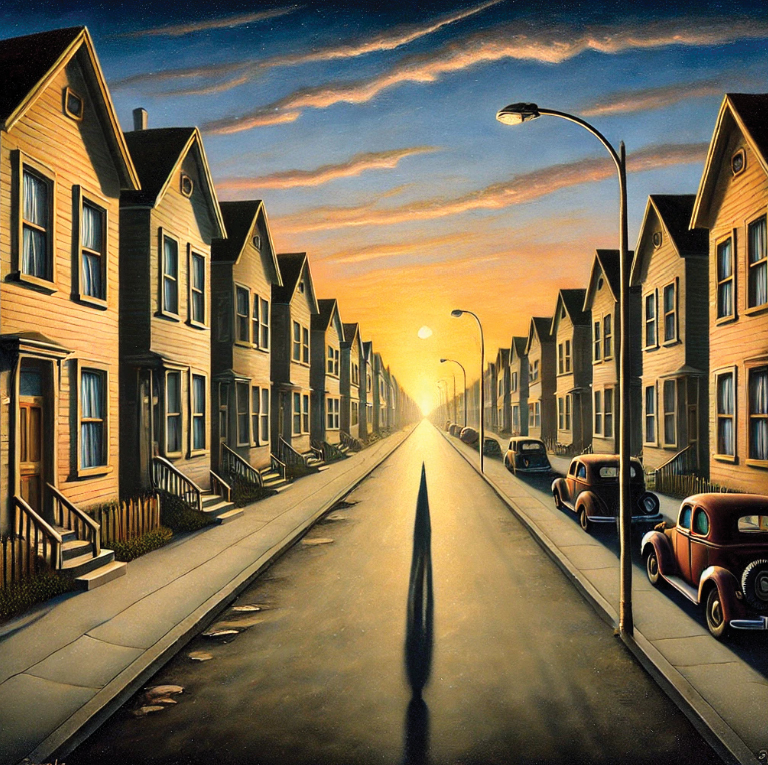
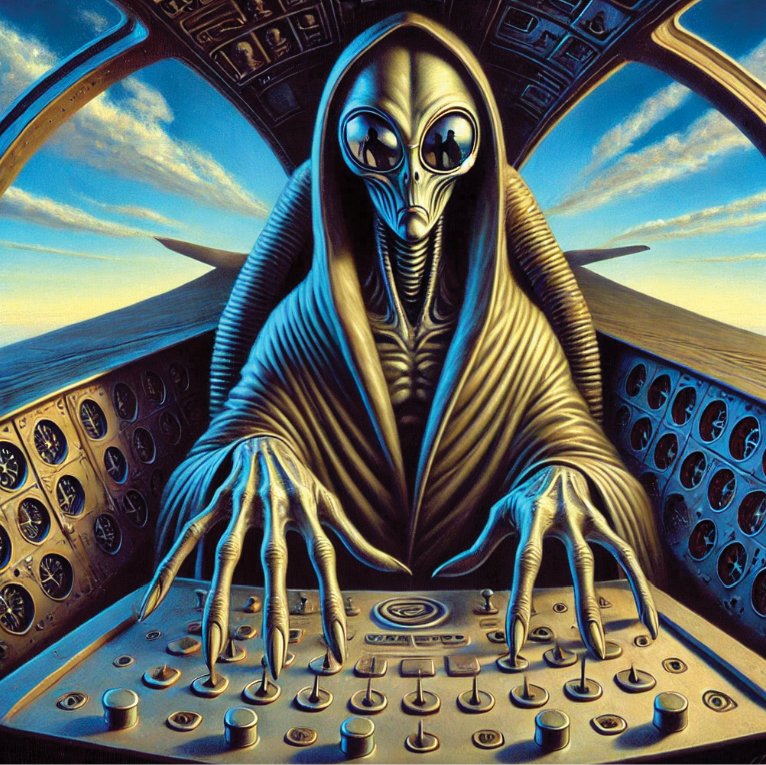
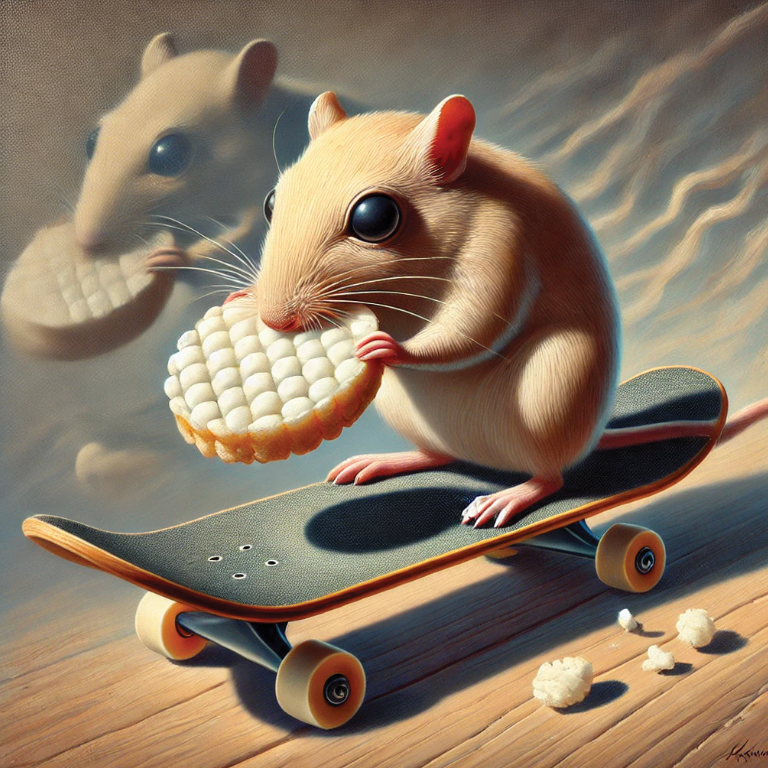
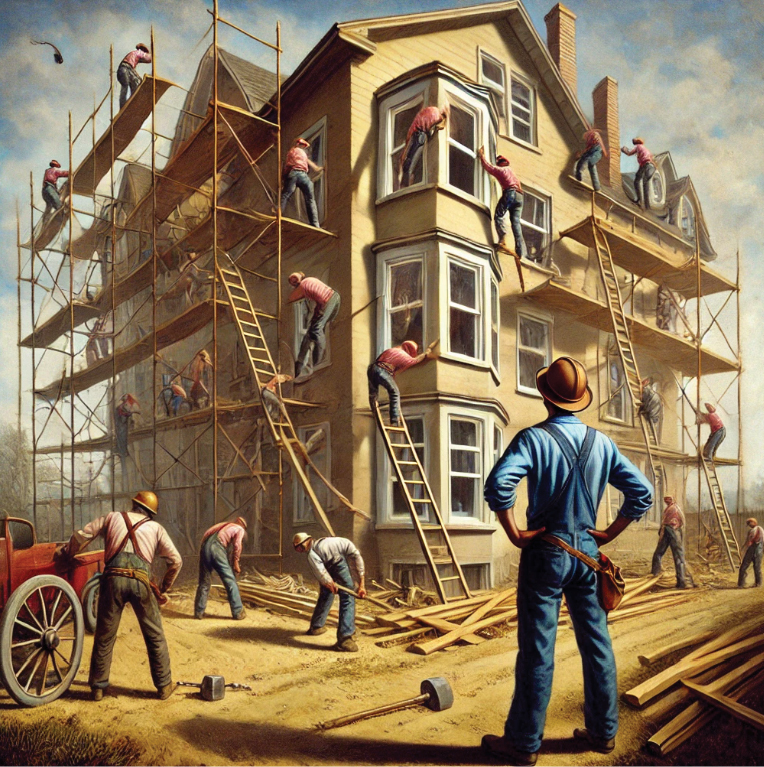
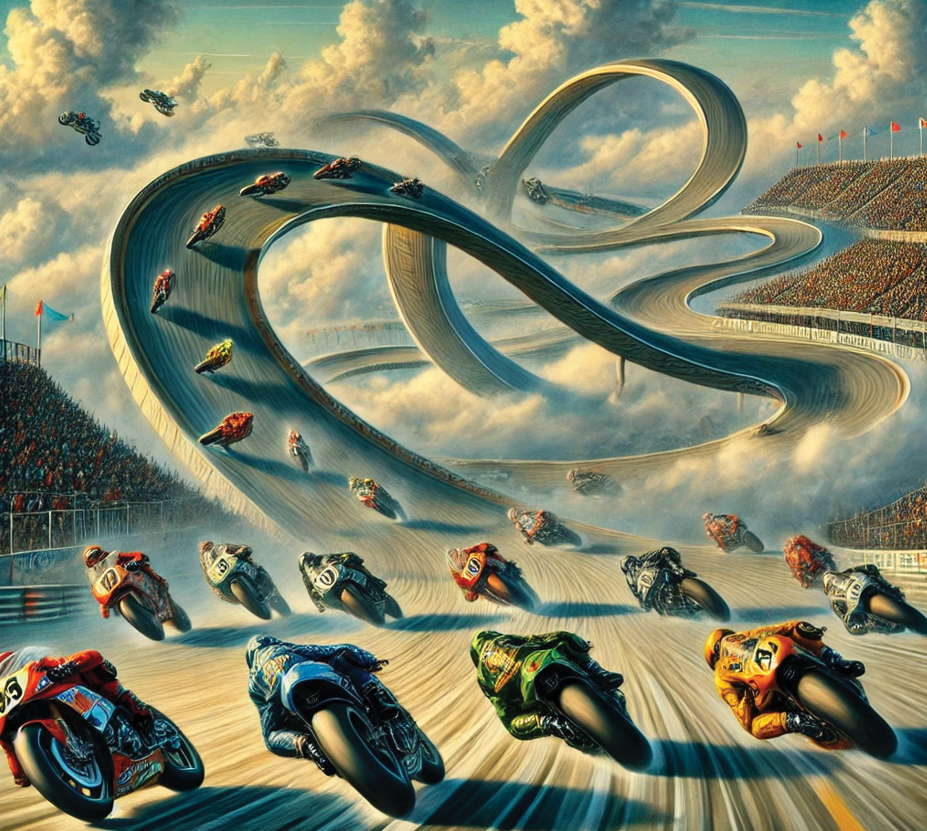
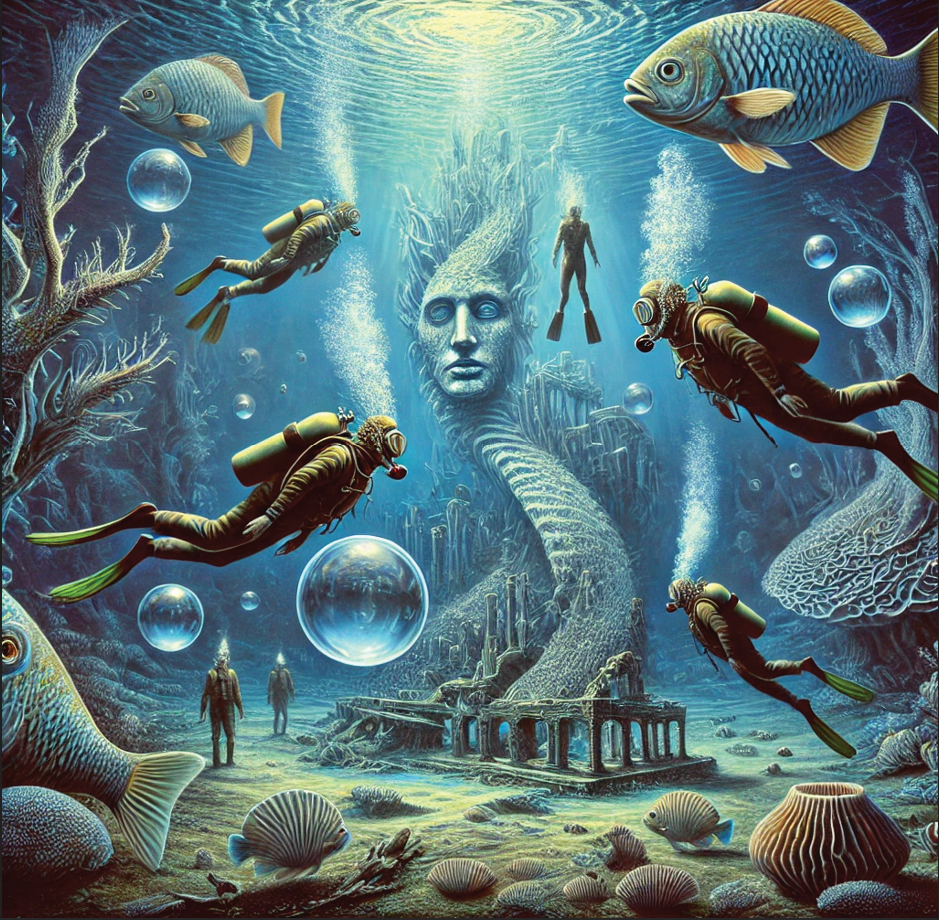
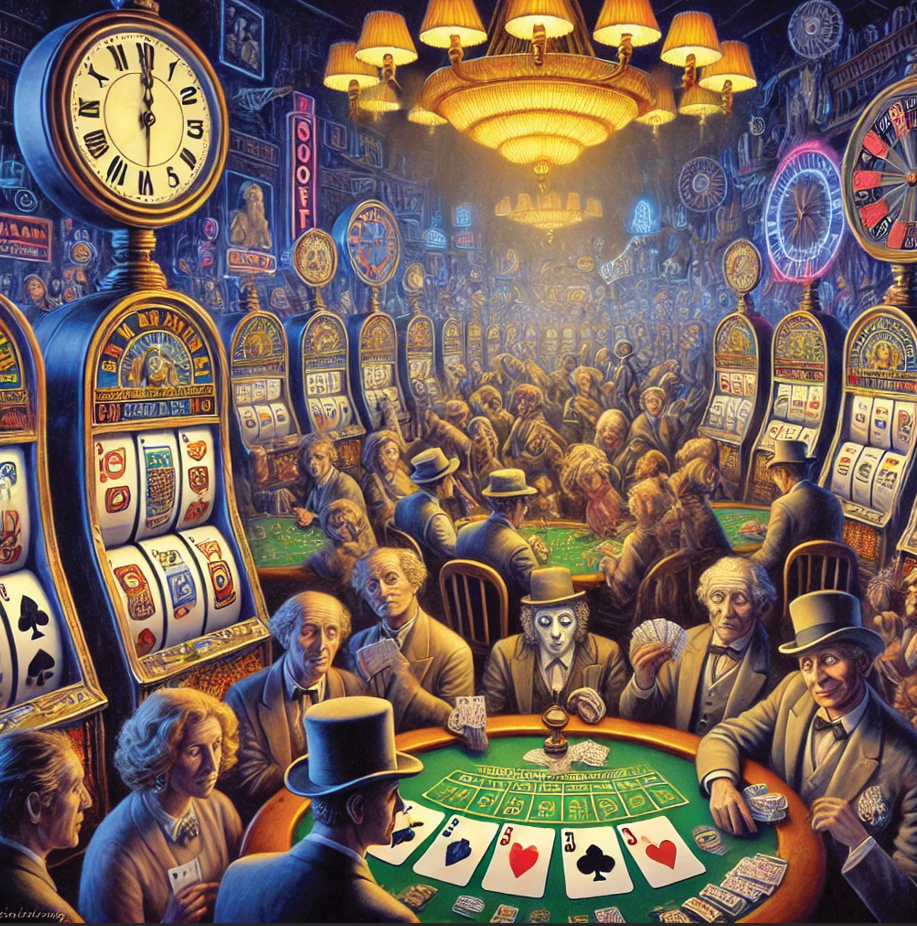
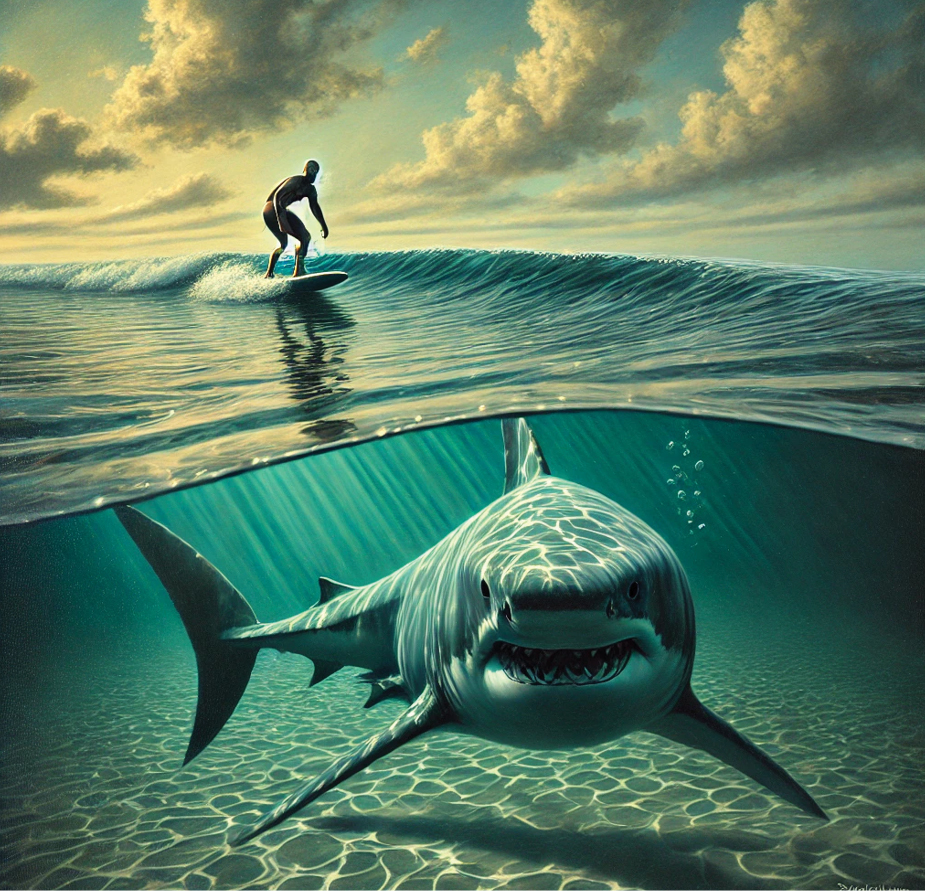
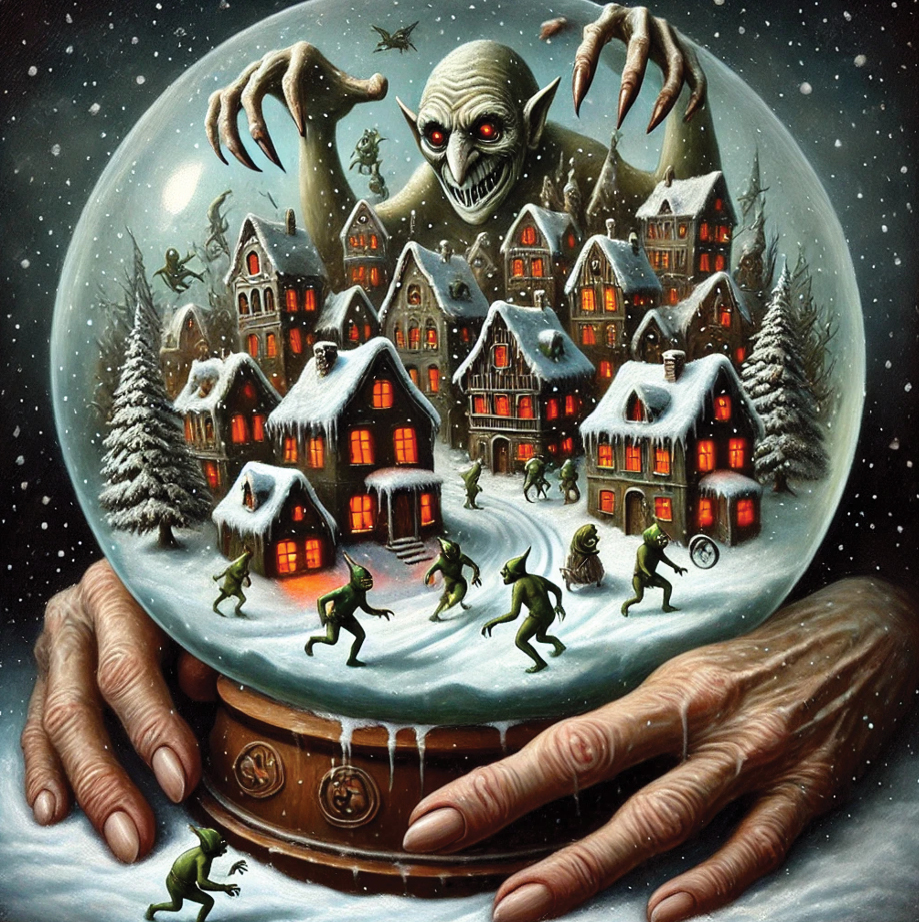
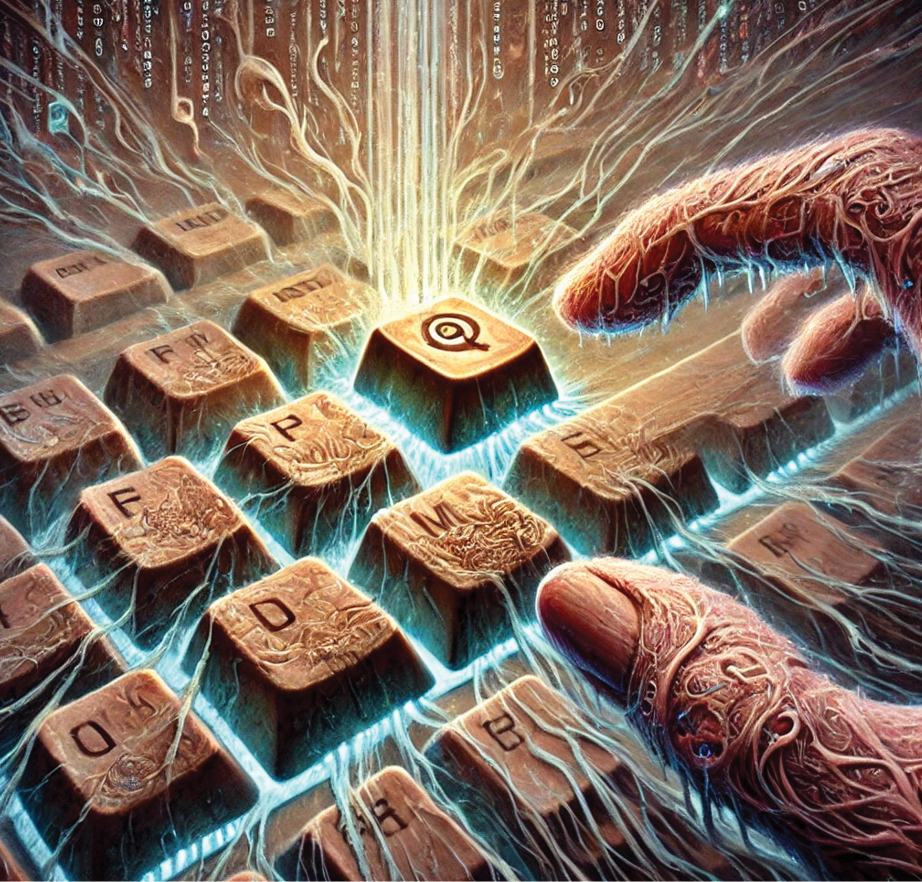
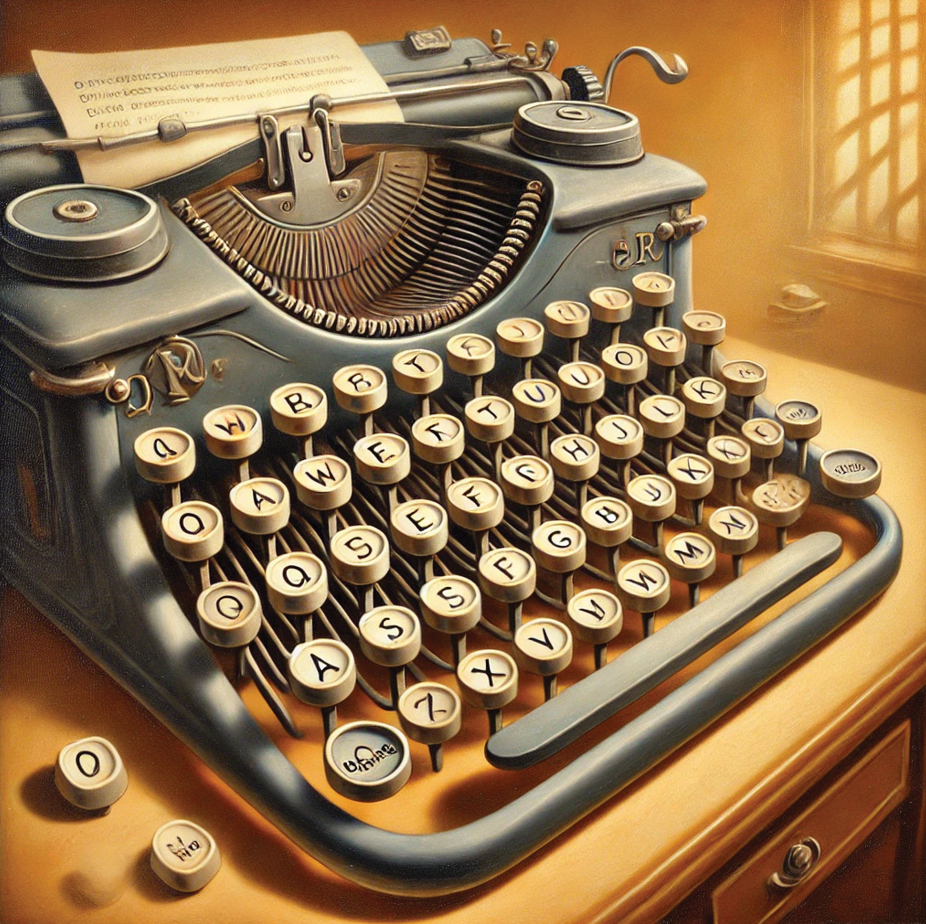
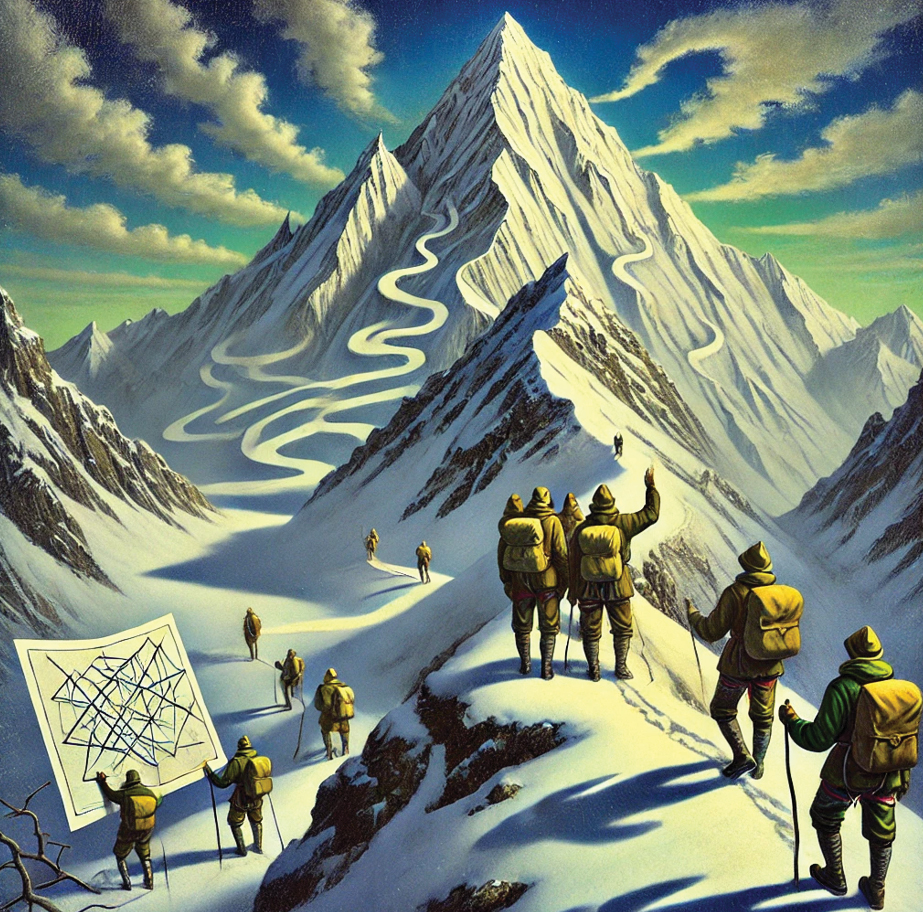
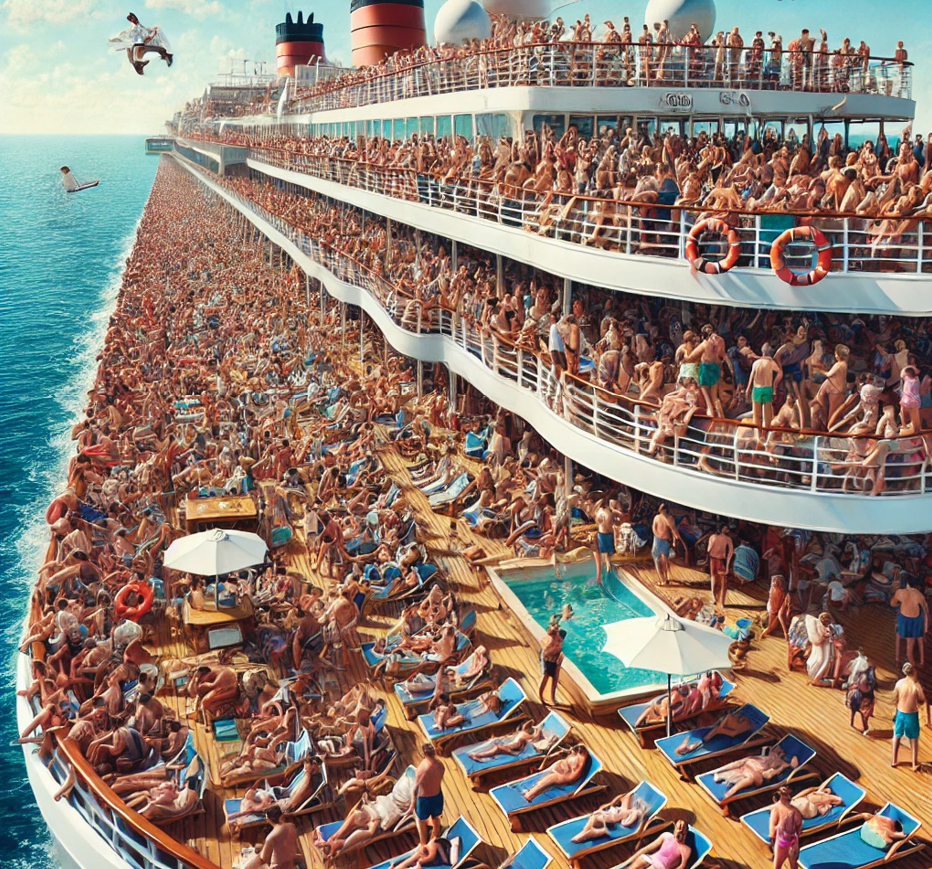
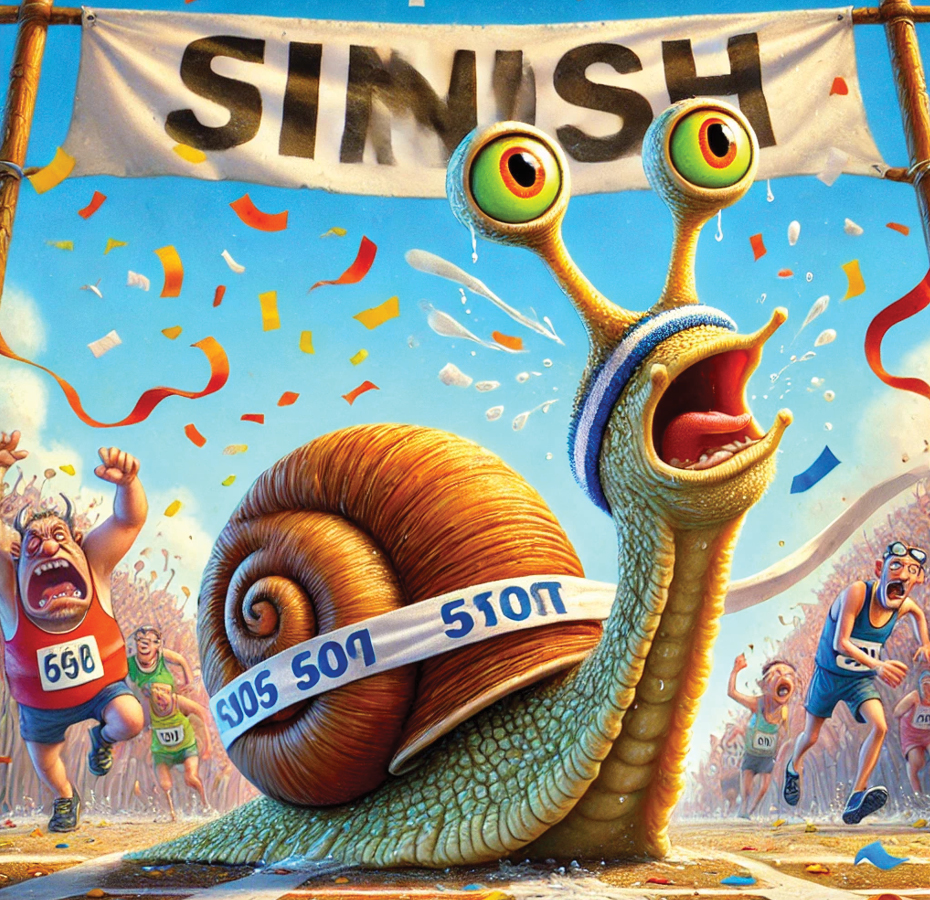
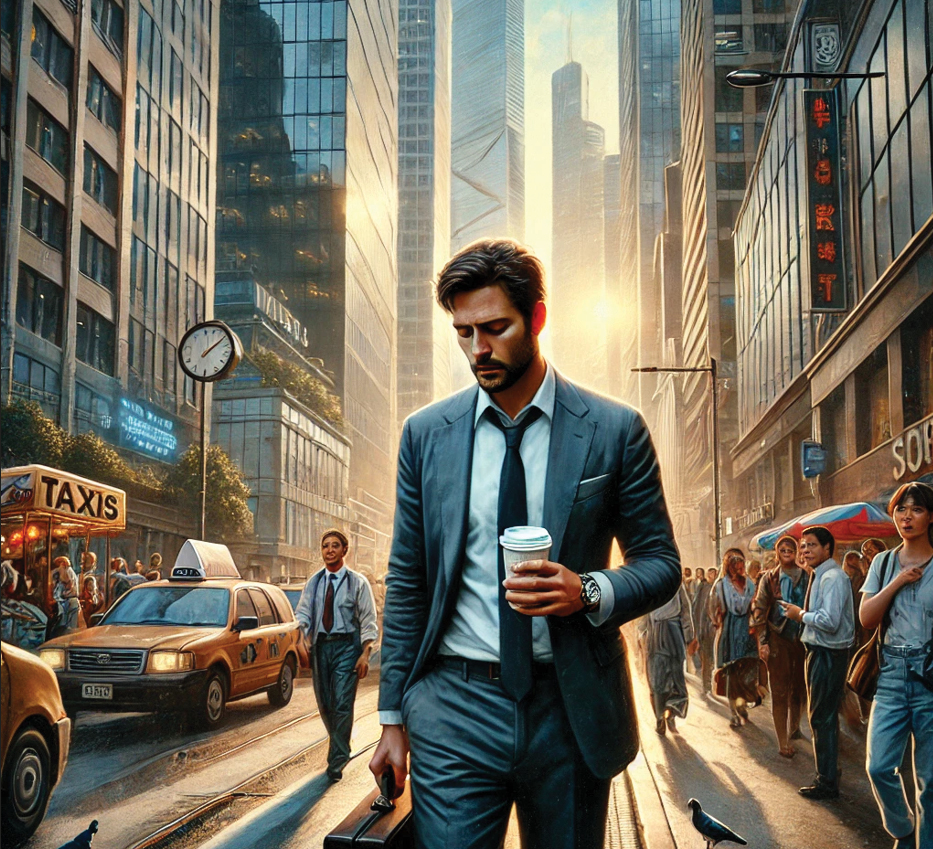
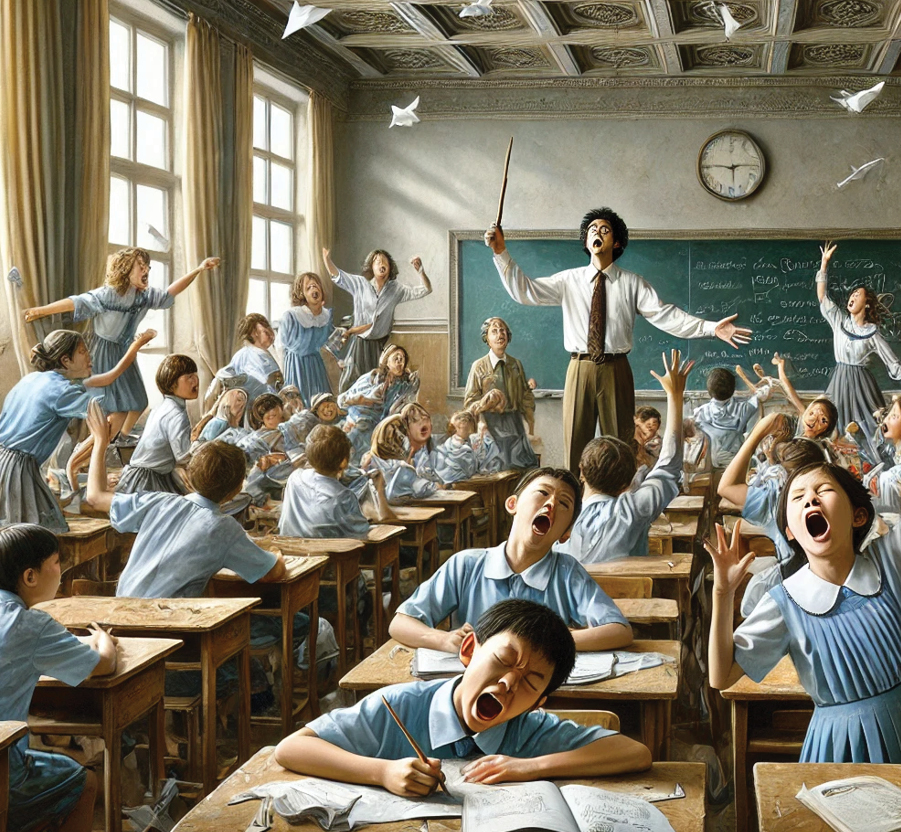
Welcome, dear reader, to the most prestigious, perplexing, and profoundly unnecessary art collection ever assembled.
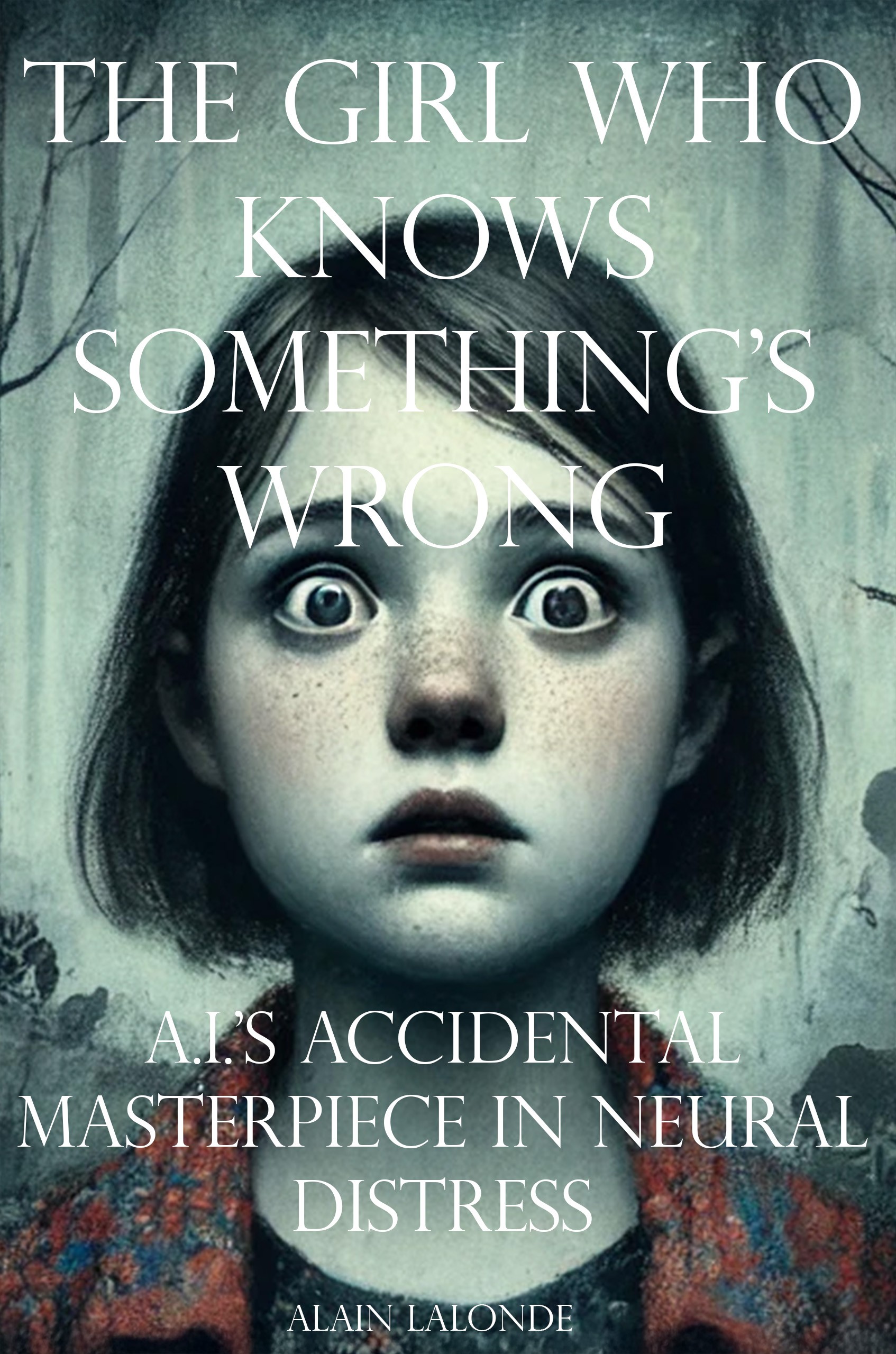
You hold in your hands what some might call a book, others might call an art exhibition, and what artificial intelligence might call a catastrophic misunderstanding of reality. This is The Girl Who Knows Something’s Wrong: A.I.’s Accidental Masterpiece in Neural Distress—a journey through the uncanny, the unsettling, and the outright absurd.
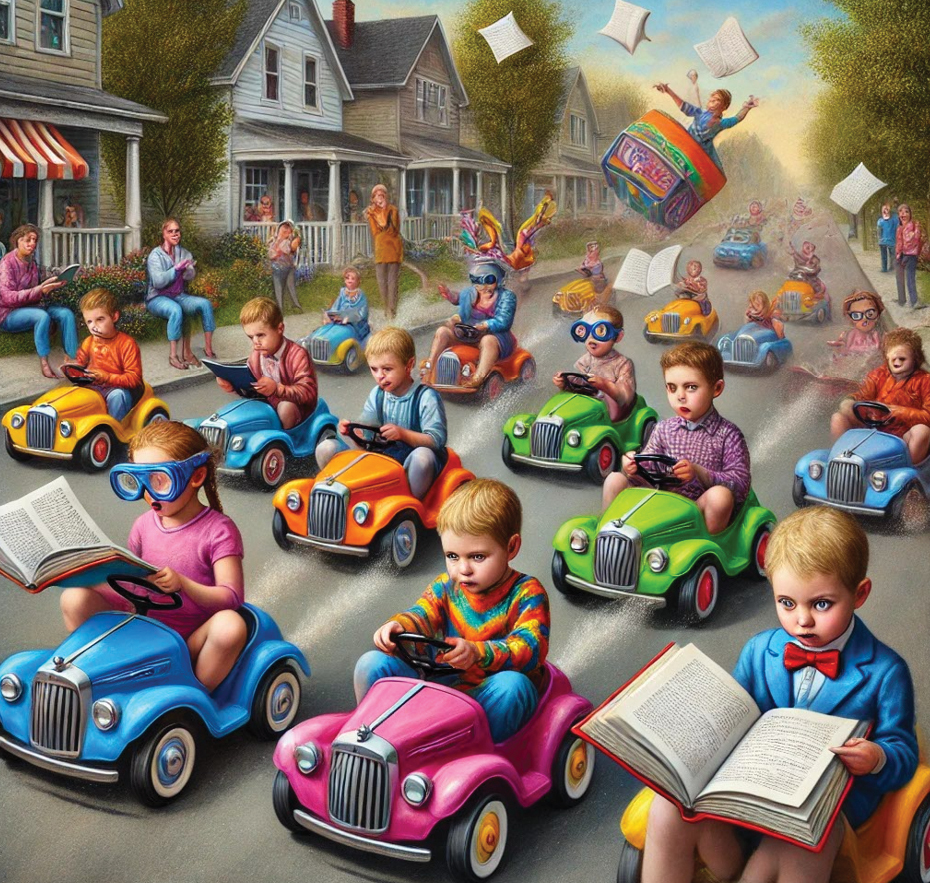
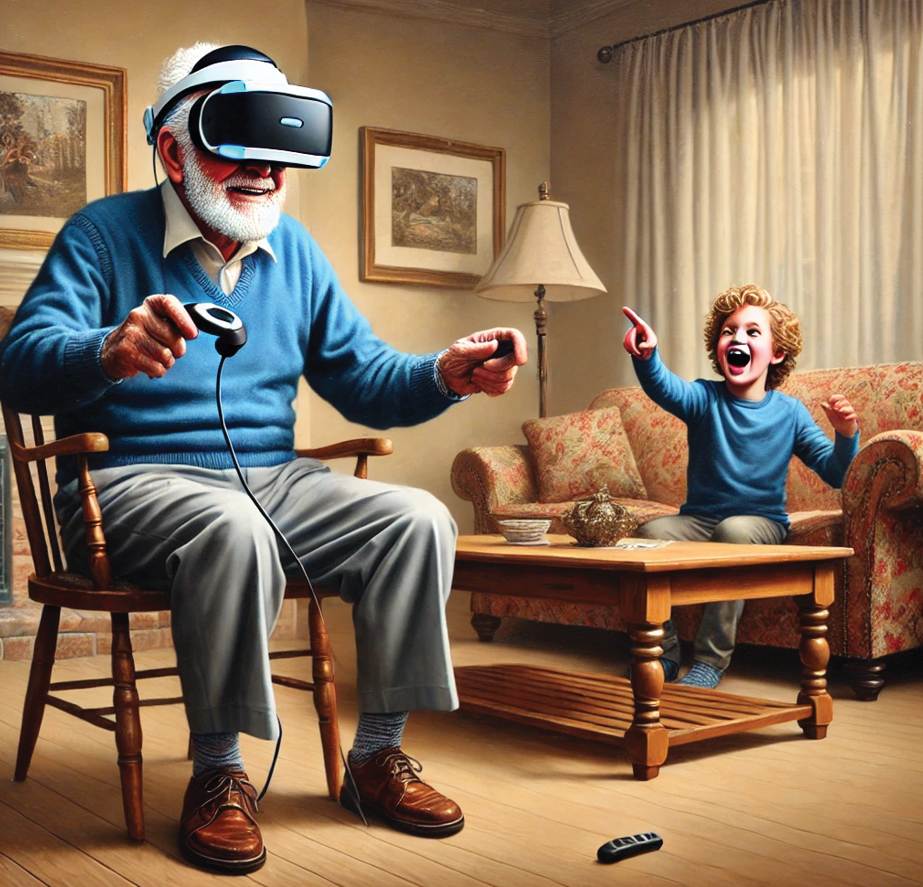
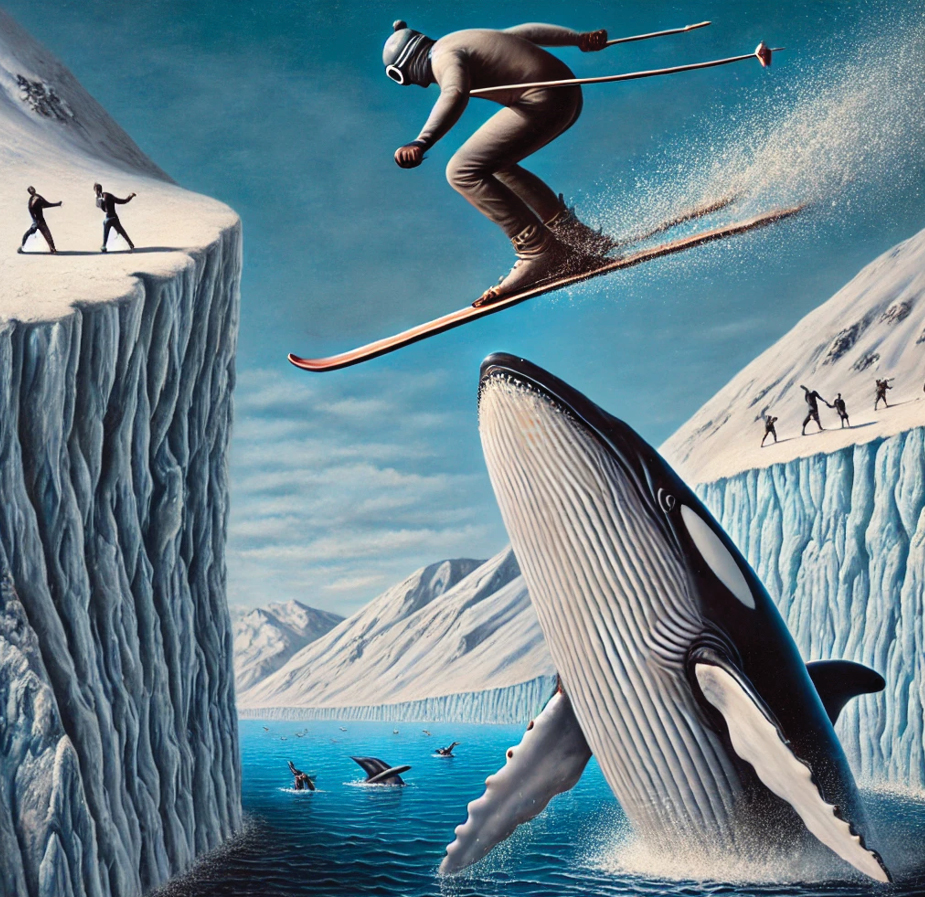
For centuries, humanity has celebrated art as the pinnacle of expression—a refined, deliberate craft of emotion, technique, and intention. AI, on the other hand, has no such hang-ups. It simply tries. And in that unfiltered, algorithmic attempt, something fascinating emerges.
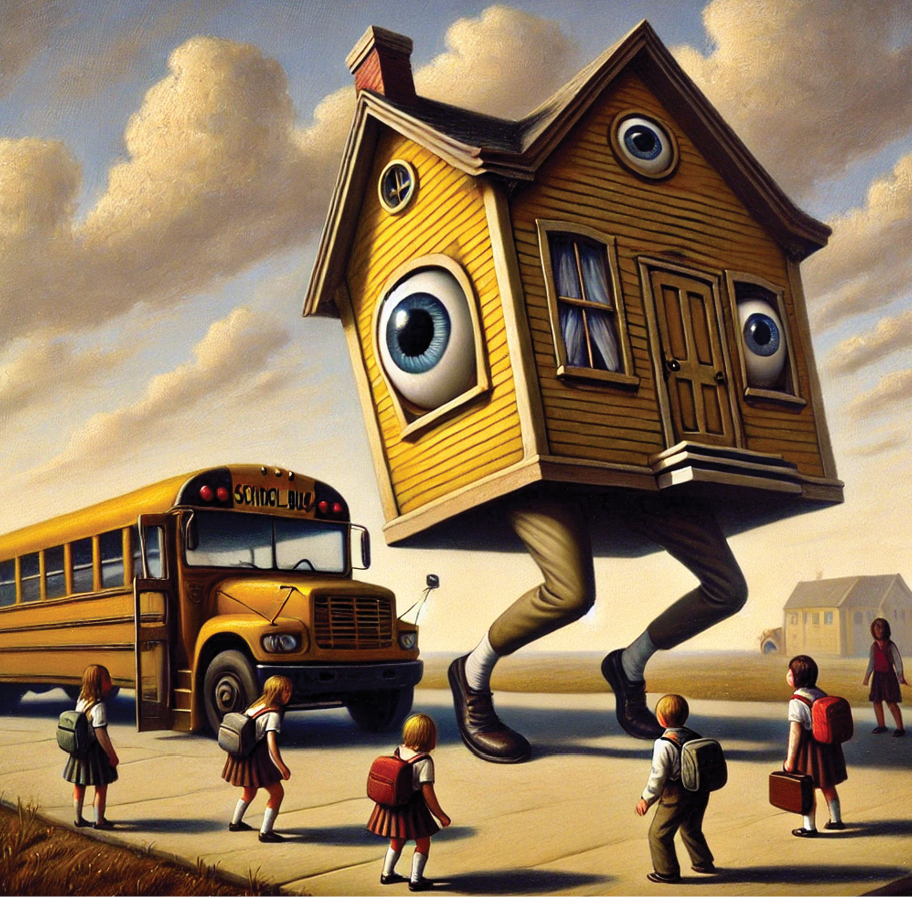
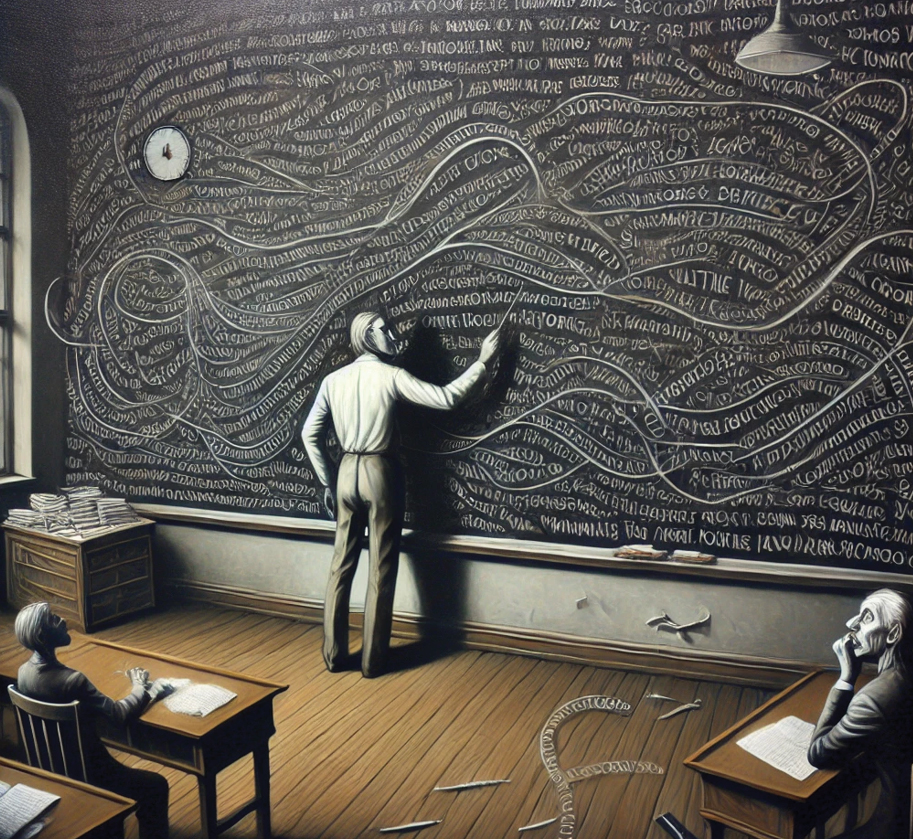
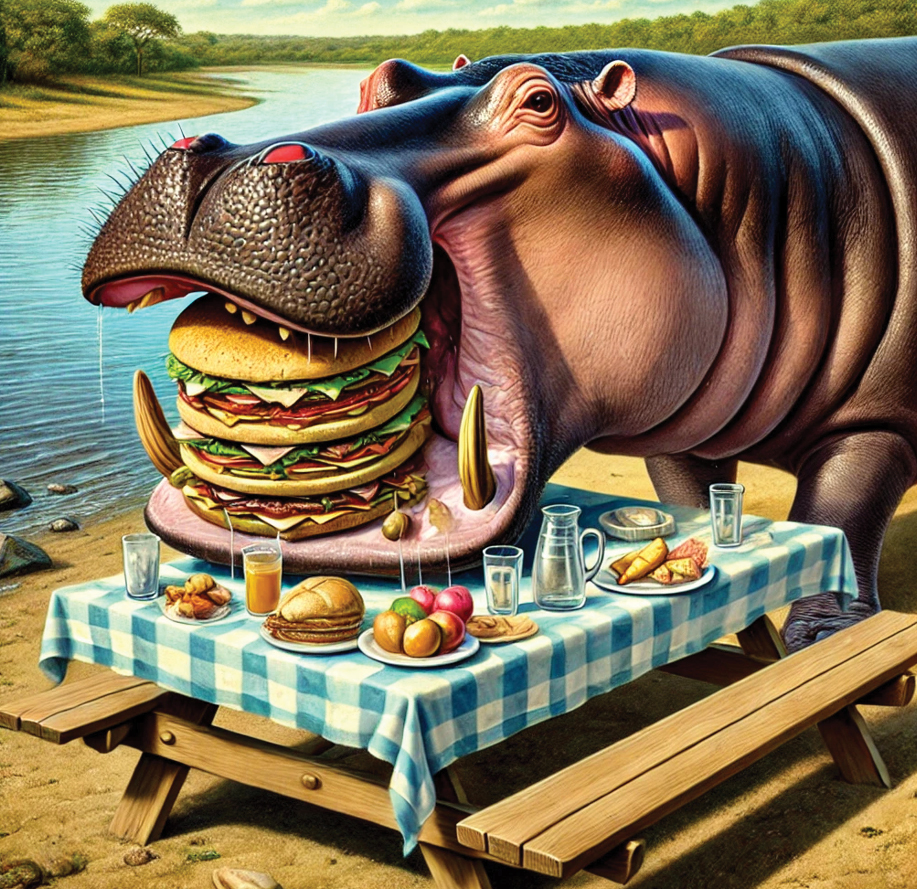
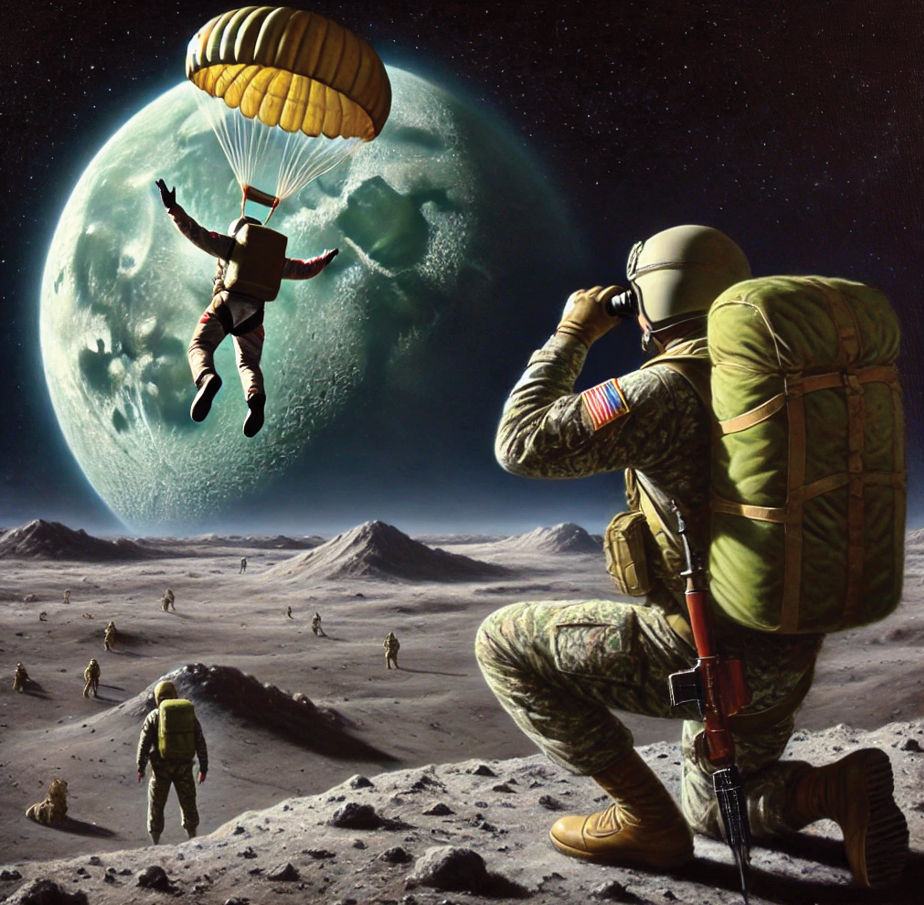
Each piece in this collection was meant to be something else—something logical, straightforward, or even beautiful. But AI, much like a well-meaning yet utterly clueless intern at a fine art museum, got things just a little… off. The human brain, wired for patterns and expectations, detects these subtle miscalculations, warped details, and unintended horrors like an error message blinking in the subconscious. It’s the digital equivalent of walking into a room and immediately sensing that something is deeply, profoundly wrong.
The Art of Almost
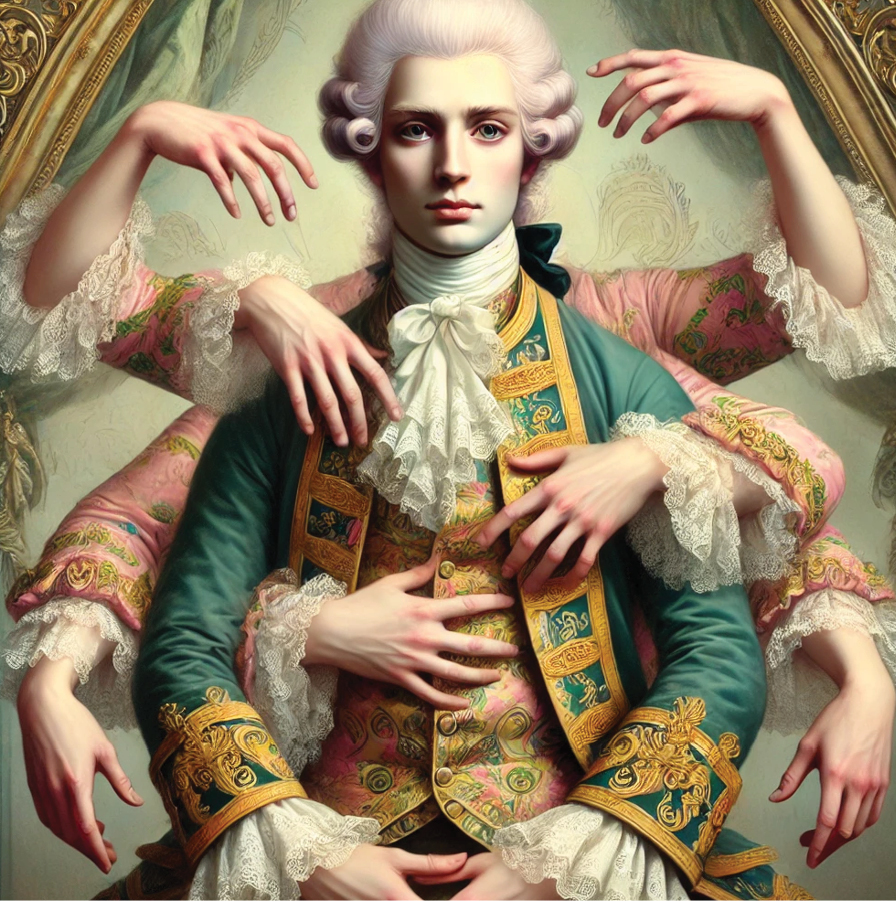
What makes these images truly disturbing is not their chaos—it’s their near-perfection. If AI had failed spectacularly, we’d laugh it off. But instead, it creates artifacts that are almost correct, almost human, almost elegant… and then something breaks. A hand folds in on itself. A smile stretches too wide. A shadow falls where no light exists. A dog is nearly a dog.
And so, this book exists to do what any self-respecting highbrow art collection would do: assign deep, pretentious meaning to an AI’s catastrophic mistakes.
A Curated Disaster
Within these pages, you’ll find each piece cataloged with its full artistic pedigree:
A price valuation so you can ponder how much a gallery might charge for something so wonderfully broken.
An analysis of the “artist’s intent”—because AI’s best attempts at reading human minds deserve to be celebrated.
Material descriptions, provenance, and restoration notes—because even when an AI paints pure madness, we must respect the craft.
It is my solemn, ridiculous duty to guide you through this collection. A museum of errors. A hall of hallucinations. An exhibition of what happens when AI doesn’t quite know how to “art” but tries really, really hard anyway.
So step inside, take a deep breath, and prepare your mind for something it was never meant to process. May you never unsee what you’re about to witness.
Welcome to the A.I. Louvre.
No refunds. No explanations. Just art.
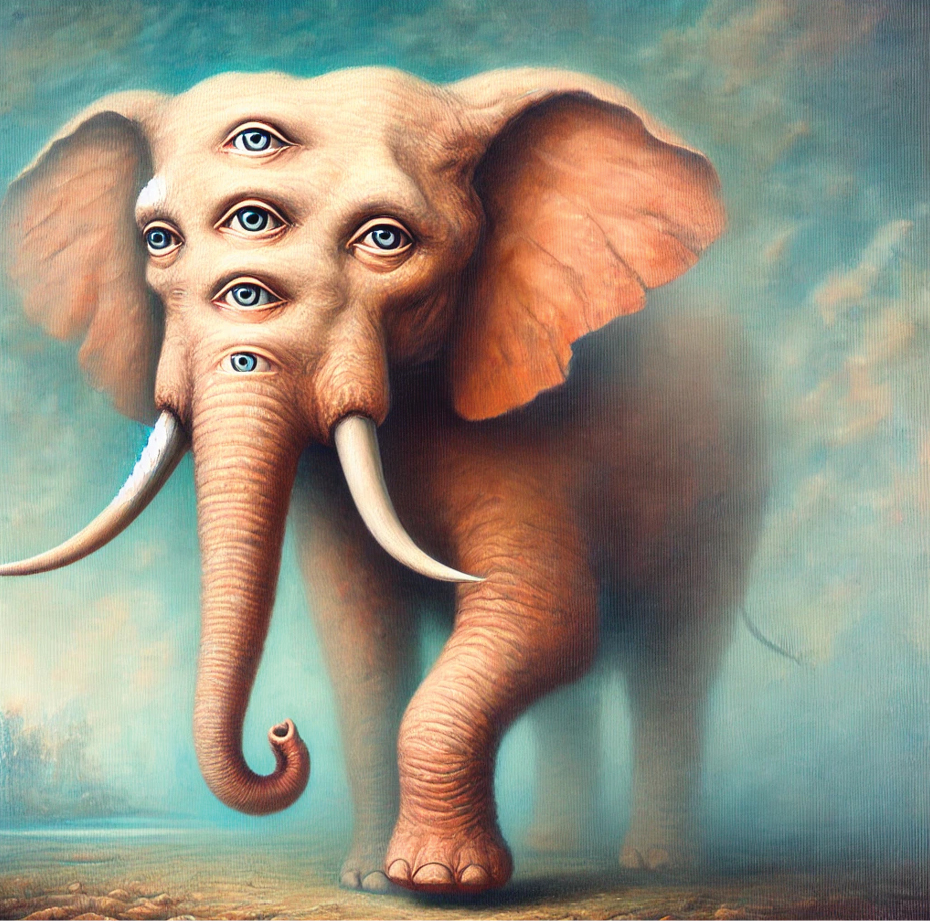
Plate 01 · Neural Distress
The Elephant of Displacement
A Study in Optical Overload
Estimated Value
€1,275,000 – €2,100,000
Dimensions
H. 2.04 m; W. 1.89 m
User's Intent
I wanted a noble, dignified elephant—something grand, majestic, powerful. What I got was… well, it certainly has presence. And more eyes than I bargained for.
The Prompt
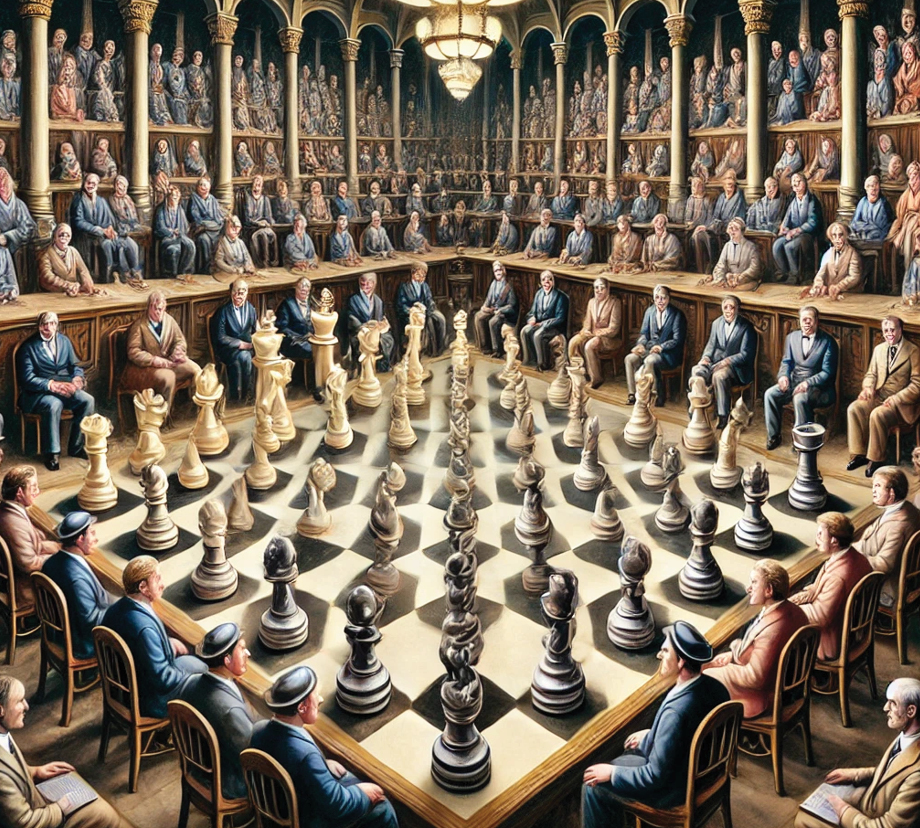
A hyper-realistic oil painting of a magnificent elephant standing in a misty savanna, radiating wisdom and strength.
The Result — A.I.'s Interpretation
The Elephant of Displacement is a visual enigma, a pachydermal paradox.
At first glance, this elephant commands respect—its massive frame, its well-rendered skin folds, its grand posture. Then the unsettling realization sets in: it has more eyes than necessary.
Each one seems to follow you, judging you, questioning your life choices, as if the universe itself assigned it the task of keeping tabs on your soul. The AI, in its infinite wisdom, granted the beast enhanced omniscience, despite no historical or biological precedent for this choice.
Viewers report that the lowest eye winks at them when no one else is watching. The trunk, frozen mid-curl, suggests deep contemplation—perhaps of the meaning of existence, perhaps of why the artist didn’t ask for a regular elephant.
Physical Characteristics
Materials & Techniques
AI-rendered oil on canvas, featuring an alarming attention to texture, particularly in the unnecessary facial features.
Condition
Unnerving. Reports indicate that when viewed at night, the eyes seem slightly closer together than they were in daylight.
Provenance
Extracted from the AI archives under the label “Majestic Wildlife.” Clearly, no human was consulted.
Restoration Notes
Attempts to remove the additional eyes resulted in an unexpected increase in the number of tusks. Further intervention was deemed inadvisable.
✦
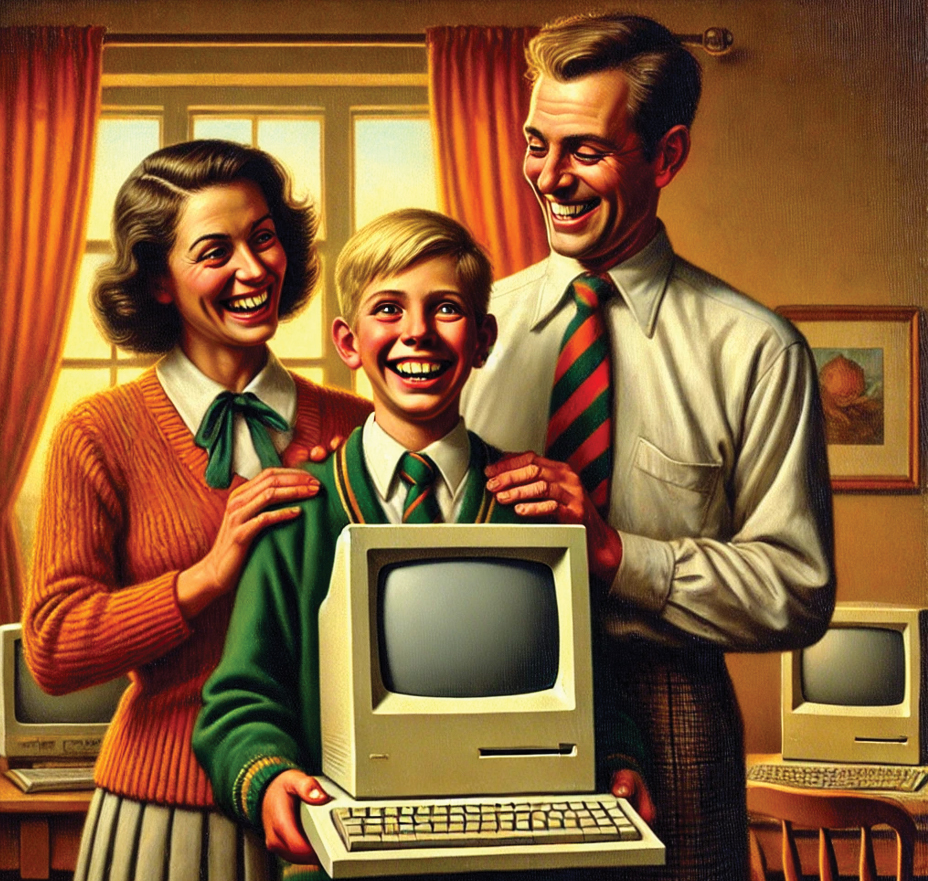
Plate 02 · Neural Distress
The Family Gift of Setbacks
A Celebration of Success, Delayed
Estimated Value
€875,000 – €1,350,000
Medium
AI-generated oil on generational persistence
Dimensions
H. 1.43 m; W. 1.25 m
User's Intent
I wanted a warm, nostalgic painting of a family giving their son a computer to celebrate his first day of school. What I got was… an unintentional case study in prolonged academic struggles.
The Prompt
A hyper-realistic oil painting of a joyful family presenting their son with his very first home computer on his first day of school.
The Result — A.I.'s Interpretation
The Family Gift of Setbacks is a masterclass in misplaced enthusiasm.
The scene radiates warmth—beaming parents, a proud son, the unmistakable golden glow of an idealized past. But dig a little deeper, and a certain peculiar tension emerges.
The child, grinning ear to ear, is clearly far too old for the moment. His uniform, a crisp green and gold ensemble, suggests the formality of a new beginning—but the fine print tells another story: he is 27 years old and entering the ninth grade.
The parents’ cheerful expressions betray no concern. Perhaps they are simply thrilled he stuck with it. Or perhaps they are so committed to their vision of success that they’ve lost all sense of time.
The AI, in its infinite wisdom, captured the essence of triumph, though its understanding of “first day of school” is highly questionable.
Physical Characteristics
Materials & Techniques
AI-rendered oil on canvas, showcasing meticulous attention to fabric folds, forced optimism, and subtle signs of exhaustion.
Condition
Eternally optimistic. Viewers report that the child’s expression appears increasingly manic the longer they stare.
Provenance
Pulled from an AI archive under “Milestones.” Clearly, context was optional.
Restoration Notes
Attempts to de-age the student resulted in the computer becoming a typewriter. Further edits were abandoned for accuracy.
✦
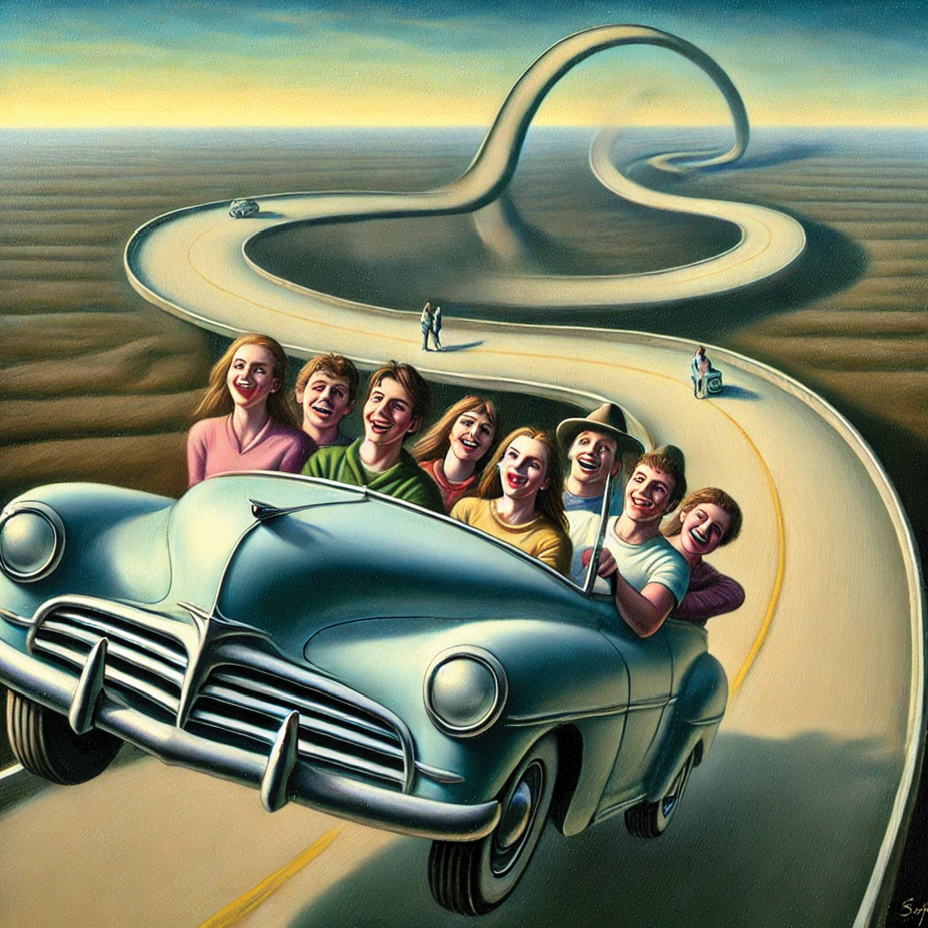
Plate 03 · Neural Distress
The Road to Nowhere (And Loving It)
The Thrill of Blatant Denial
Estimated Value
$420,000 – $690,000
Medium
AI-generated oil on perpetual motion
Dimensions
H. 1.24 m; W. 1.09 m
User's Intent
I wanted a painting that captured the raw excitement of youthful adventure, something carefree and energetic, full of laughter and possibility.
The Prompt
A surrealist oil painting of a group of teenagers driving a classic convertible down an impossibly winding road. Their faces are brimming with joy, seemingly unaware of the sheer absurdity of the highway ahead. The background features an endless landscape, subtly hinting at the fact that there may be no real destination at all.
The Result — A.I.'s Interpretation
If existential oblivion had a travel brochure, this would be the cover.
The composition is brimming with gleeful ignorance as our jubilant passengers float down an impossibly serpentine highway. Their eyes radiate a blissful euphoria, their faces frozen in rapturous, almost cult-like smiles, as if their dopamine receptors have been hijacked by the mere suggestion of forward momentum.
Yet, the road itself betrays the illusion of agency. It twists, loops, and defies logic in a way that suggests it was designed by a deity with a grudge against urban planning. No one questions it. No one acknowledges the horror of the looming curvature of inevitability. The driver doesn’t steer—because why bother? This isn’t about control; it’s about delightful surrender.
And what of the background figures? The pedestrian couple strolling aimlessly, the wheelchair-bound observer gazing at the scene with something between concern and profound disappointment—they, unlike our airborne passengers, seem vaguely aware that this trip is not going anywhere.
The AI, in its tireless quest to recreate human experience, has successfully rendered the pinnacle of youthful enthusiasm mixed with just the right amount of foreboding.
Physical Characteristics
Materials & Techniques
AI-generated oils with an emphasis on exaggerated expressions and eerily smooth skin textures. The paint strokes bend unnaturally, particularly in the curvature of the road, reinforcing the sense that physics was an afterthought.
Condition
Suspiciously perfect. Viewers report that staring at the passengers’ faces for too long causes mild existential dread.
Provenance
First discovered in an AI dataset titled” Vintage Americana” but promptly flagged under” Potentially Unhinged Expressions.”
Restoration Notes
No adjustments were made, as attempts to remove the perpetual road resulted in spontaneous recursion. Experts agreed it was best to leave the road to nowhere as is.
✦
Plate 04 · Neural Distress
The Infinite Road Home
A Meditation on Distance That Never Closes
Estimated Value
$1,250,000 – $1,980,000
Medium
AI-generated oil on nostalgic illusion
Dimensions
H. 1.33 m; W. 1.02 m
User's Intent
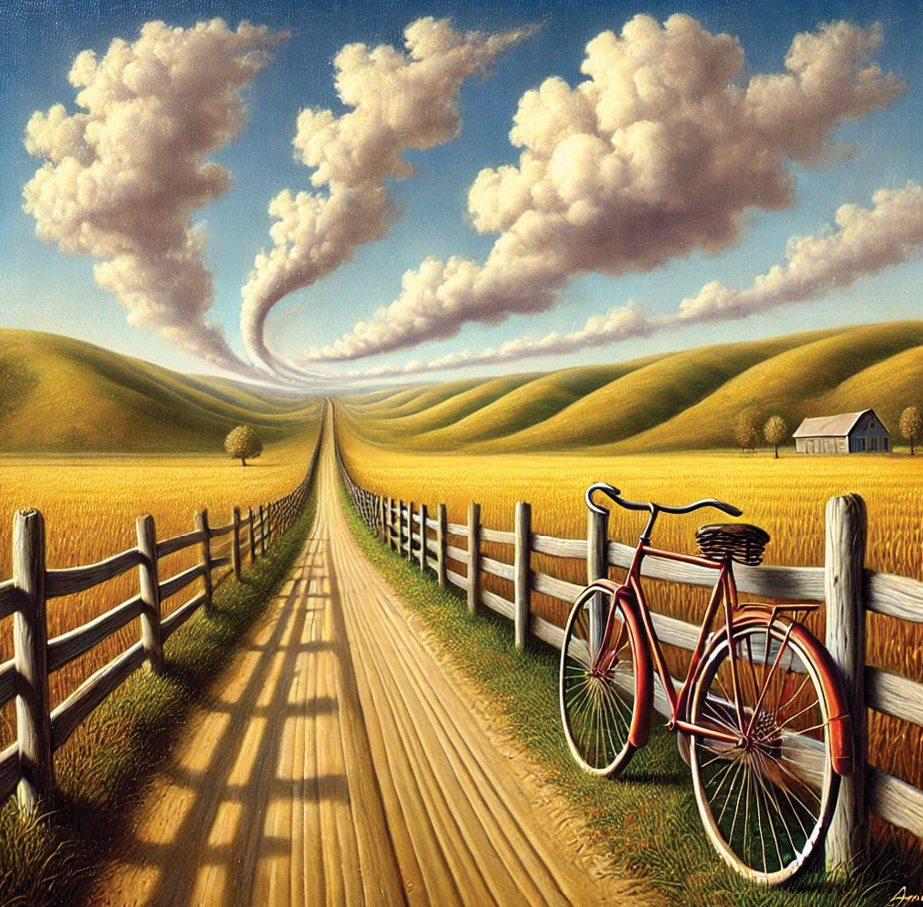
I wanted a peaceful countryside road, a nostalgic image of an old bicycle resting against a wooden fence, bathed in the warm glow of late afternoon. Something serene, inviting, and timeless.
The Prompt
A surrealist oil painting of a serene countryside road, where an old-fashioned bicycle is parked against a wooden fence. The landscape is peaceful—rolling golden fields stretch toward distant hills, a lone farmhouse resting under a sky where the clouds twist into a spiral toward the horizon.
The Result — A.I.'s Interpretation
At first, The Infinite Road Home seems to embody the comfort of rural simplicity. The sun-kissed wheat fields sway gently, and the old red bicycle leans against the fence, patiently awaiting its owner’s return.
But upon closer examination, an unsettling paradox reveals itself: the road does not end. The perspective pulls forever forward, vanishing into an impossible point on the horizon that never quite arrives. The clouds, rather than floating lazily, have been drawn into an eerie spiral, as if some unseen force is siphoning reality into the void.
The bicycle—a universal symbol of travel and return—is rusted, unmoved. It suggests that while one may set out on a journey, the destination may never come. The AI, in its attempt to capture warmth and nostalgia, has instead distilled a quiet existential horror.
Is this a road home? Or a road that ensures one never returns?
Entry archived
🔥 Exhibit secured. A study in peace, nostalgia, and the horror of infinite recursion. Ready for another? 🚴♂️🌾💀
Physical Characteristics
Materials & Techniques
AI-generated oil, featuring impossibly perfect fence symmetry and a suspiciously unblemished bicycle for something left in the elements.
Condition
Immaculate, yet unsettling. Some viewers report that the spiral in the clouds appears to move ever so slightly when glanced at from the corner of the eye. Others claim that no matter where they stand, the road never seems to fully resolve.
Provenance
Extracted from an AI dataset labeled “Pastoral Escapes”—a category presumably designed for comfort, but perhaps misfiled under liminal entrapment.
Restoration Notes
Any attempts to paint a figure into the road have resulted in the figure appearing further and further away until it disappears altogether.
✦
Plate 05 · Neural Distress
The Mechanic’s Lament
A Meditation on the Fine Art of Hopeless Restoration
Estimated Value
$780,000 – $1,050,000
Medium
AI-generated oil on existential despair
Dimensions
H. 1.21 m; W. 0.97 m
User's Intent
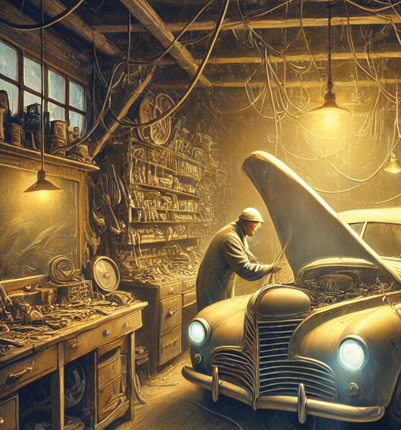
I wanted a nostalgic scene of a mechanic working on a vintage car in an old garage. Something atmospheric, warm, and a tribute to classic craftsmanship.
The Prompt
A surrealist oil painting of an old, dimly lit garage where a mechanic is repairing a vintage car. The garage is cluttered with aged tools, rusted parts, and hanging wires. The atmosphere is rich with history, evoking the passage of time and dedication to a lost craft.
The Result — A.I.'s Interpretation
At first glance, The Mechanic’s Lament appears to be a heartfelt tribute to classic auto restoration. The golden glow of the hanging bulbs casts an almost sacred reverence over the scene, illuminating the mechanic’s careful hands as he works on what was once a marvel of engineering.
But look closer, and questions emerge. Why is every wire in the garage seemingly disconnected, leading to nothing? Why does the mechanic appear less like a man and more like a ghost, forever tinkering with a machine that will never start? The engine—while physically present—seems eerily void of function, an elaborate metal coffin for a forgotten dream.
The AI, attempting to depict a moment of industrious perseverance, has instead crafted an unintentional commentary on futility. The deeper one stares into the tangled wires, the clearer it becomes—this machine will never run, and the mechanic may not even realize it.
Entry archived
🔥 Exhibit secured. A tribute to restoration… or perhaps the ultimate illusion of progress. Ready for the next piece? 🚗🎨💀
Physical Characteristics
Materials & Techniques
AI-rendered oil, featuring masterfully simulated dust accumulation and a suspiciously clean mechanic’s uniform.
Condition
Suspended in mechanical purgatory. Some collectors claim that the headlights flicker when viewed in complete darkness. Others report hearing the distant sound of an engine that never quite turns over.
Provenance
Extracted from an AI dataset labeled “Vintage Americana”—an archive of machines long abandoned, yet never quite left to rest.
Restoration Notes
Attempts to “fix” the depicted vehicle resulted in only more wires appearing in the background, seemingly growing out of the walls.
✦
Plate 06 · Neural Distress
The Silent Orchestra of St. Euphoria
A Symphony of Unfinished Souls
Estimated Value
€375,000 – €460,000
Medium
AI-generated oil on simulated Baroque canvas
Dimensions
H. 0.79 m; W. 1.12 m
User's Intent
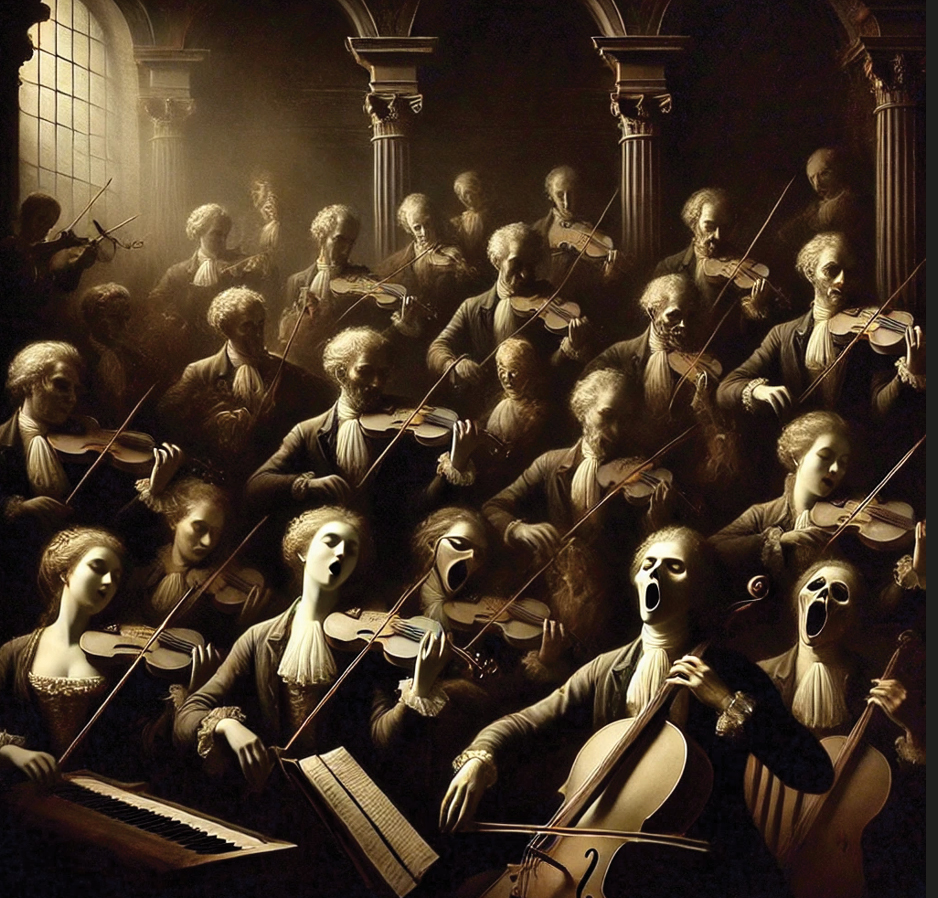
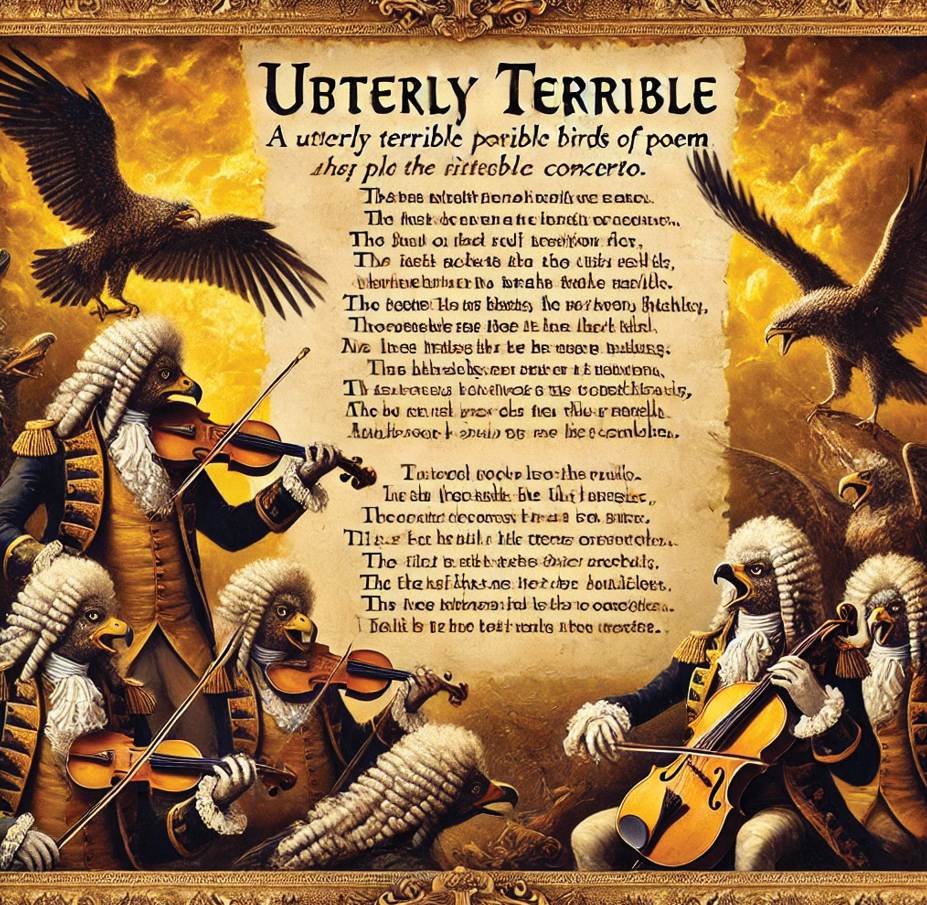
I wanted an elegant, classical painting of a grand orchestra in the style of Caravaggio—something rich in contrast, full of life, movement, and deep musical passion.
The Prompt
A masterful, Baroque-style painting of an orchestra in mid-performance, dramatic chiaroscuro lighting, depth, elegance, emotion, realism.
The Result — A.I.'s Interpretation
The AI certainly understood the grandeur of the moment—it just failed to understand the concept of musicians having hands, faces, or the ability to play instruments.
At first glance, The Silent Orchestra of St. Euphoria radiates pure artistic excellence. Cloaked in a golden glow, the figures are poised in eternal anticipation, seemingly lost in the rapture of an unseen conductor. But upon closer inspection, one horrifying detail emerges: no one is actually playing anything.
The musicians clutch warped, melting violins. Some hold flutes that merge into their arms. One poor soul appears to have four bows but no strings to play upon. Their mouths, sculpted open in frozen, silent aria, contain no tongues, no teeth—only empty voids where sound should be.
The AI, unable to grasp the intricate relationship between human anatomy and musical performance, has transformed these once-great musicians into unfinished marionettes of forgotten sound. And yet, despite the errors, there is an undeniable energy, a ghostly tension as though the symphony itself exists, trapped between dimensions, waiting for someone to hear it.Physical Characteristics:
Physical Characteristics
Materials & Techniques
AI-rendered pigments over digitally simulated aged canvas. Chiaroscuro lighting applied inconsistently, with some figures appearing overly lit despite no discernible light source.
Condition
Unstable. Observers report phantom auditory hallucinations when viewing the painting at length—an unplaceable rustling, like sheet music being turned in an empty hall.
Provenance
Discovered in an abandoned dataset labeled “Caravaggio Study 7,” this piece emerged fully formed with no record of previous iterations. It is unclear if the AI ever processed human musicians correctly before this moment.
Restoration Notes
Attempts to adjust the facial structure of the first violinist resulted in additional fingers growing at random. Further modifications only deepened the unnatural silence.
✦
Plate 07 · Neural Distress
The Lady of Perpetual Unraveling
A Study in Noble Disintegration
Estimated Value
€510,000 – €640,000
Medium
AI-generated oil on Renaissance canvas
Dimensions
H. 0.92 m; W. 0.75 m
User's Intent
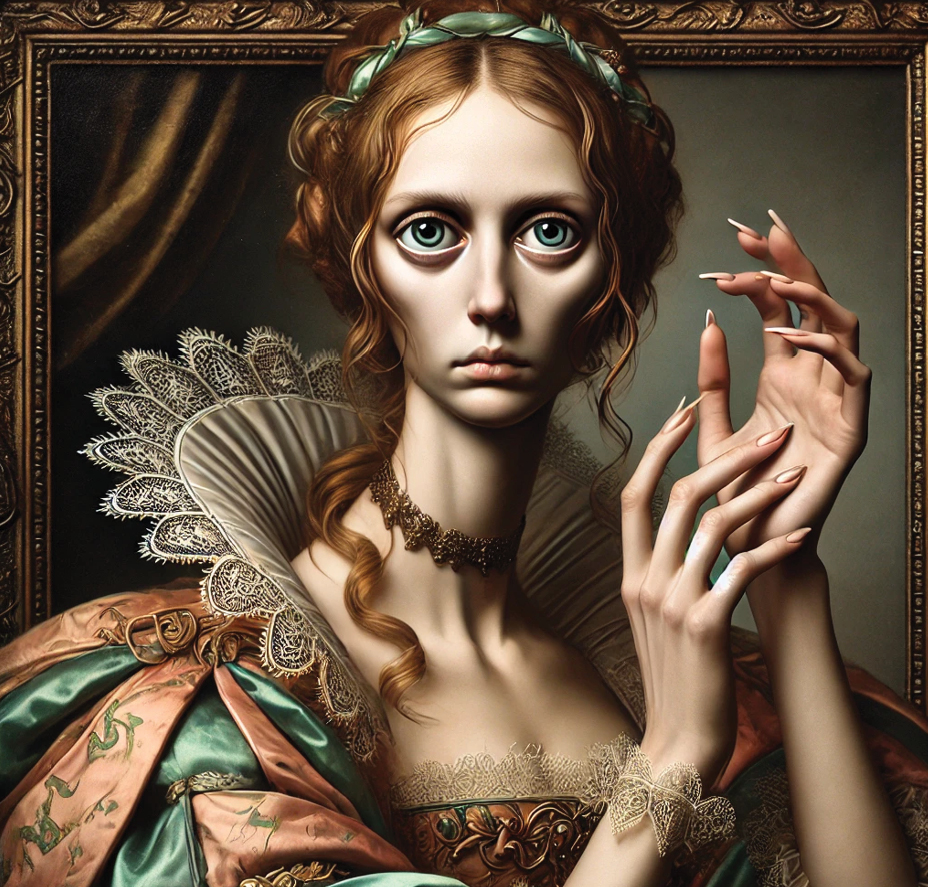
I just wanted an elegant Renaissance portrait. You know, soft lighting, ornate dress, a noblewoman looking vaguely important. What I got instead was a deeply existential crisis.
The Prompt
A highly detailed Renaissance-style portrait of a noblewoman, dramatic lighting, historical accuracy, elegant composition.
The Result — A.I.'s Interpretation
Initially, The Lady of Perpetual Unraveling appears to be a masterwork of Renaissance portraiture. The rich fabric folds, delicate jewelry, and soft lighting suggest the refinement of the great European masters. And yet, something is… amiss.
Her eyes are ever-so-slightly too far apart, creating an unsettling wideness that suggests she has just learned a terrible secret. Her fingers, impossibly elongated, appear to reach into the folds of her gown as if searching for something she has already lost. And the background? Not quite a tapestry, not quite a wall—its patterns appear to be devouring her, pulling her into the canvas itself.
The AI, struggling with the fundamentals of human anatomy, has transformed this woman into an accident of aristocracy, a figure caught between two dimensions, desperately clinging to her own existence. The viewer is left to wonder: Did she ever exist at all? Or was she always just an error waiting to be revealed?
Physical Characteristics
Materials & Techniques
AI-rendered digital oils with simulated Renaissance-era brushwork. Ornate detailing has been inconsistently applied, with certain areas hyper-realistic while others seem unfinished, fading into the void.
Condition
Unstable. The subject’s gaze appears to shift subtly over time. Some reports suggest her fingers appear slightly longer with each repeated viewing.
Provenance
Extracted from an AI training dataset focused on Renaissance art. However, no source material has been found matching this piece. It is unclear if she was based on an actual historical figure or if the AI simply invented her against its own will.
Restoration Notes
Attempts to realign the subject’s facial proportions resulted in the spontaneous generation of additional eyes. The piece has since been left in its current, deeply upsetting state.
✦
Plate 08 · Neural Distress
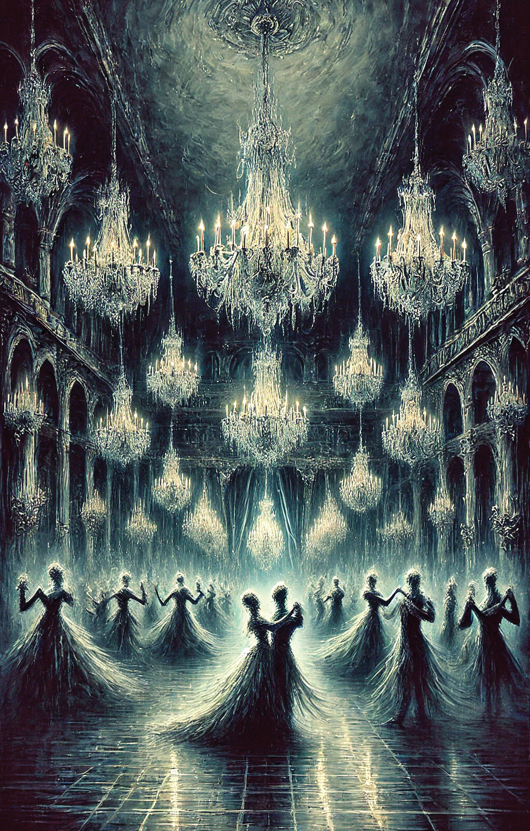
The Eternal Waltz of Hallowmere Hall
A Dance Beyond Time
Estimated Value
€790,000 – €925,000
Medium
AI-generated oil on deteriorating Gothic canvas
Dimensions
H. 1.02 m; W. 0.79 m
User's Intent
I wanted a grand Gothic ballroom scene, something regal and timeless. A breathtaking waltz, rich with old-world elegance. I did NOT ask for whatever this is.
The Prompt
A detailed Gothic-style painting of an elaborate ballroom, warm chandelier lighting, elegantly dressed dancers in motion, historical atmosphere, realism.
The Result — A.I.'s Interpretation
At first glance, The Eternal Waltz of Hallowmere Hall exudes a sense of luxury, refinement, and old-world grace—until you look closer. And you shouldn’t look closer.
The chandeliers cast a golden light over the dancers, yet their faces refuse to hold still. The moment you attempt to focus on one, the features shift, blur, or simply… dissolve. Some figures possess limbs too long, stretched as if caught mid-step across two dimensions. Others appear half-formed, their torsos fading into the ornate wallpaper like unfinished brushstrokes. The AI, overwhelmed by the concept of movement, has trapped them in an endless, distorted waltz—unable to leave, unable to stop.
Perhaps most unsettling is the background. The elaborate Gothic details fade into shadow, not due to lighting, but as if the very fabric of the scene is unraveling into nothingness. It is unknown where the dancers go once they vanish into the periphery, but one thing is clear:
This waltz has no end.
Physical Characteristics
Materials & Techniques
AI-rendered pigments over an artificially aged Gothic canvas. The technique is inconsistent, with some figures hyper-detailed while others remain unsettlingly unfinished.
Condition
Deteriorating. Observers claim that upon repeated viewings, certain dancers seem to appear in different positions. Some have reported seeing figures they do not remember being there the first time.
Provenance
Originally discovered deep within an AI-generated dataset labeled “Historical Ballroom Studies.” However, no record exists of any ballroom matching this depiction. Attempts to trace the location of Hallowmere Hall have been unsuccessful.
Restoration Notes
Efforts to stabilize the facial details resulted in additional eyes manifesting on several subjects. Restoration has since been abandoned.
✦
Plate 09 · Neural Distress
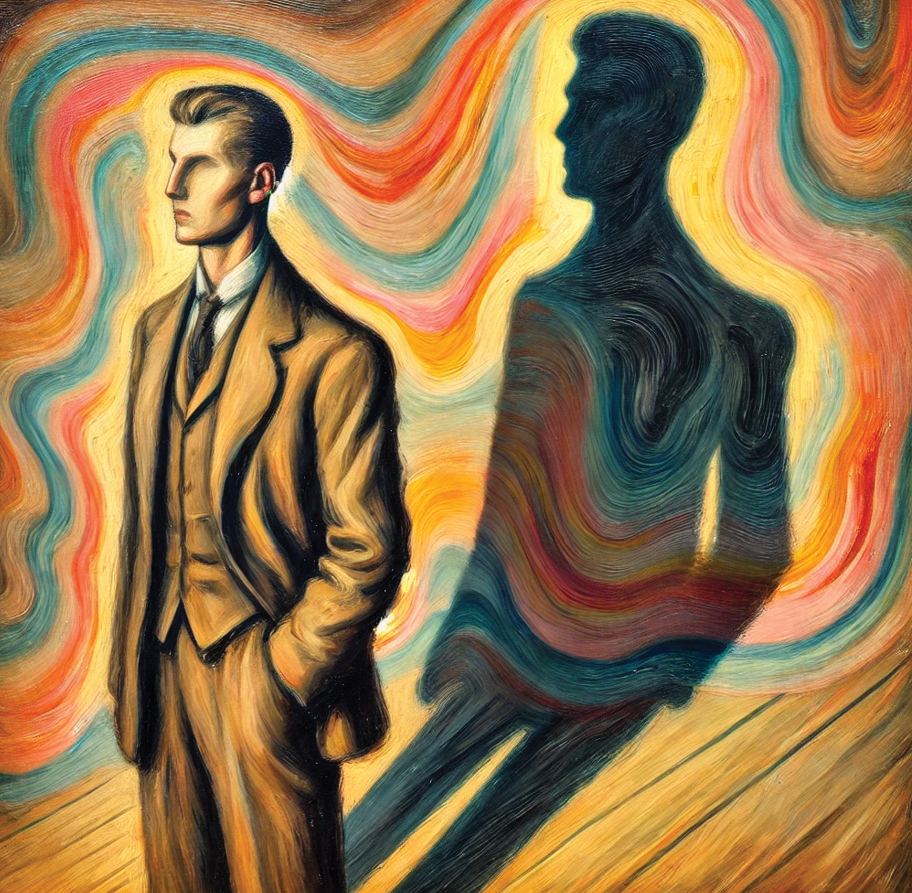
The Shadow That Wasn’t His
A Study in Unseen Duplicity
Estimated Value
€685,000 – €740,000
Medium
AI-generated Expressionist oil on fractured perception
Dimensions
H. 1.01 m; W. 0.81 m
User's Intent
I was just looking for an artistic take on shadows. You know, something poetic, maybe symbolic. Instead, I got a visual paradox that questions reality itself.
The Prompt
A surreal Expressionist painting of a man standing calmly while his shadow is distorted and unnatural, unsettling composition, warped reality, deep contrast.
The Result — A.I.'s Interpretation
The AI certainly captured the concept of shadowplay—if by “shadowplay,” you mean “a deep existential betrayal.”
At first, The Shadow That Wasn’t His seems straightforward: a lone man standing in stillness, awash in the soft hues of an Expressionist dreamscape. But the moment you notice the shadow, reality collapses.
His stance is relaxed, even casual. But the shadow behind him tells a different story. It twists violently, as if caught in a struggle with something unseen. One limb bends at an impossible angle, another stretches outward toward nothing. His shadow appears to be in pain—or in the process of becoming something else.
Worse still, the background warps in unnatural hues, as if rejecting the presence of the figure entirely. His face is blurred, smudged, half-real at best. The AI, in its attempt to depict identity, may have erased it instead.
It begs the question: If your shadow stops belonging to you, what do you become?
Physical Characteristics
Materials & Techniques
AI-rendered pigments over an artificially fractured Expressionist canvas. Certain areas appear hyper-defined, while others degrade into near abstraction.
Condition
Unstable. Some viewers report seeing the shadow shift slightly upon repeated observation. Others have claimed that, for a brief moment, the man and the shadow switch places.
Provenance
Pulled from an AI dataset labeled “Light & Form Studies.” No record of any previous artist painting this scene has been found. It is unclear if this image was based on reality or if it forced itself into existence.
Restoration Notes
Attempts to stabilize the subject’s facial details resulted in a second, smaller shadow forming just beneath his feet. Restoration efforts were immediately abandoned.
✦
Plate 10 · Neural Distress
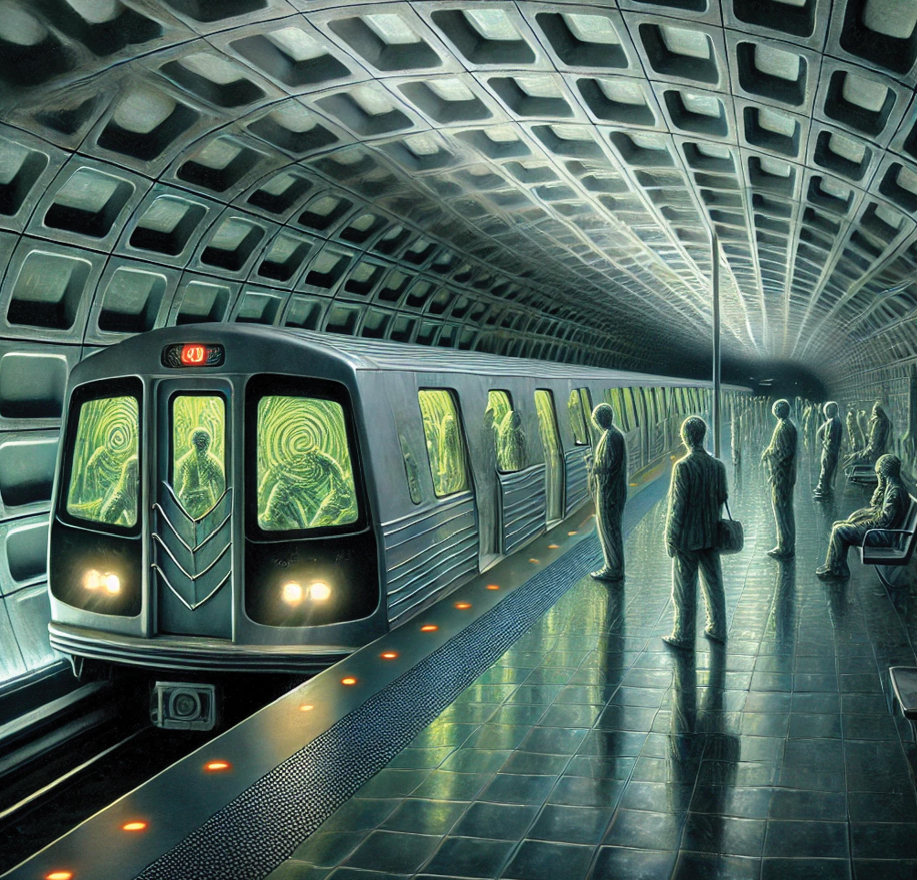
The Frozen Transit
A Study in Suspended Motion
Estimated Value
£4,600,000 – £5,800,000
Medium
AI-generated oil on fractured time
Dimensions
H. 2.05 m; W. 1.75 m
User's Intent
I wanted a surreal vision of an underground metro—a place both futuristic and unsettling, caught between motion and stagnation. What I got was a transit system where time itself has stopped.
The Prompt
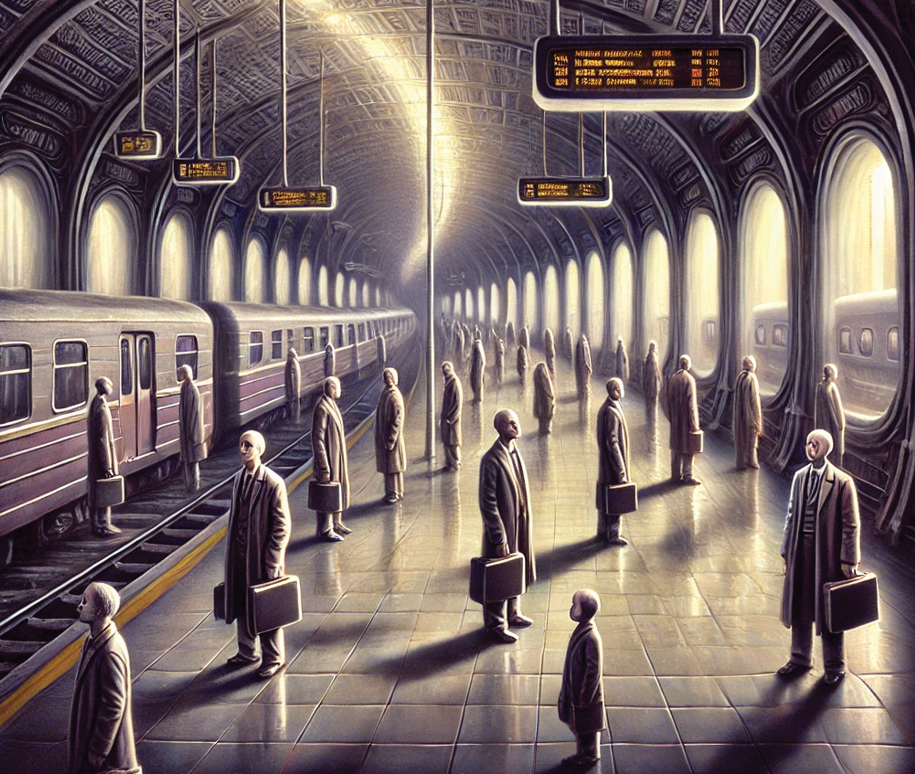
A surrealist oil painting of a sprawling underground metro system, where the passengers appear to be frozen in time, mid-step, mid-conversation, mid-thought. The train itself is sleek and futuristic, yet covered in strange glowing symbols that seem to shift when not directly looked at. The fluorescent lights above flicker, casting long, exaggerated shadows on the tiled floor. A lone figure stands on the platform, seemingly aware of the stillness, their face obscured by an impossibly deep hood. The atmosphere is an eerie blend of the modern and the unreal, as if reality itself has paused, waiting for something to resume.
The Result — A.I.'s Interpretation
Frozen Transit is a paradox of movement and stillness, a moment in time that refuses to resolve.
The metro station is expansive, stretching beyond the frame in a grid of tile and steel. The fluorescent lights above flicker erratically, elongating shadows and distorting depth.
The commuters, frozen mid-stride, are caught in an impossible tableau—one man’s coat is mid-swing, a woman’s lips are parted in a joke never finished, a newspaper flutters in air that does not move.
The train itself looms at the platform, its surface reflecting the stalled figures. Strange, glowing glyphs run along its body, shifting subtly in the viewer’s peripheral vision, impossible to pin down.
A single hooded figure stands apart, watching. Their face is obscured, their posture unshaken by the eerie paralysis. Are they responsible for this moment of suspended animation? Or merely the only one aware of it?
The AI, in its attempt to capture the pulse of a bustling transit hub, has instead created a fractured reality—a place where time has cracked, and movement is only a memory.
Entry archived
Entry archived
Physical Characteristics
Materials & Techniques
AI-generated oil, seamlessly blending hyper-detailed lighting effects with the surreal distortion of shifting symbols.
Condition
Unsettling. Some viewers report that certain figures appear slightly further along in their movements when observed at different times of day. Others insist that the flickering of the fluorescent lights matches no discernible pattern.
Provenance
Extracted from an AI dataset labeled “Modern Ruins.” However, urban legends suggest that an identical train station, devoid of passengers, exists beneath an undisclosed European city.
Restoration Notes
Attempts to erase the hooded figure resulted in a new shadow appearing elsewhere in the painting. The original composition was deemed safer.
✦
Plate 11 · Neural Distress
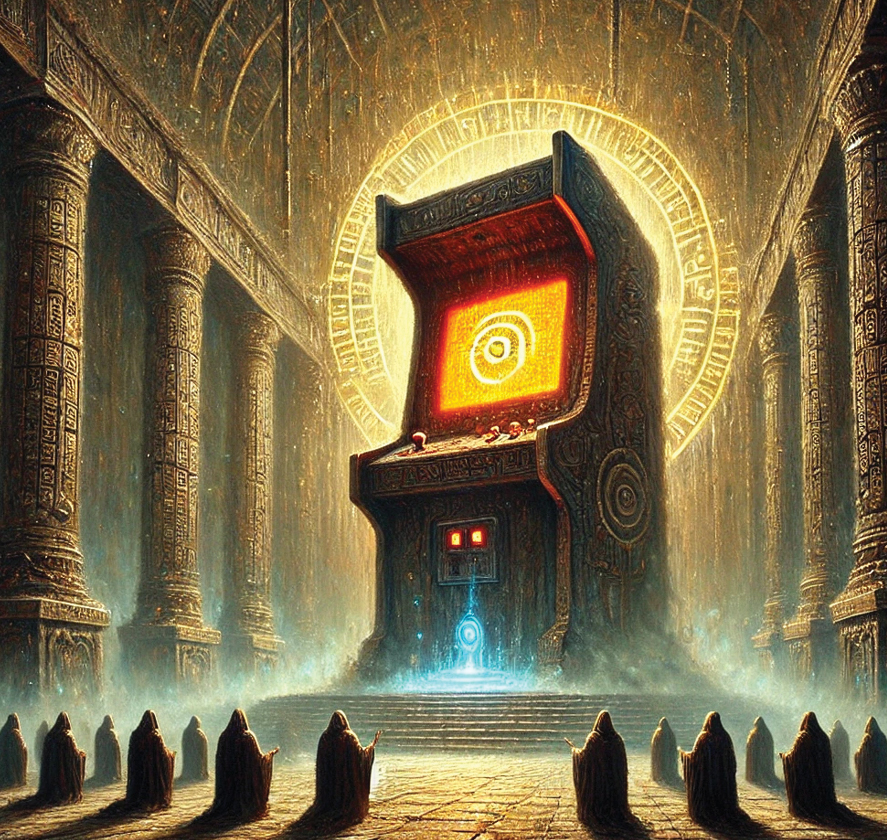
The Arcade Temple
A Study in Sacred Pixels
Estimated Value
\$7,400,000 – \$9,000,000\
Medium
AI-generated oil on divine nostalgia
Dimensions
H. 2.30 m; W. 1.85 m
User's Intent
I wanted an ancient temple infused with digital mysticism—a forgotten shrine where technology is revered as something holy. What I received was a haunting monument to the gods of gaming.
The Prompt
A surrealist oil painting of a grand, ancient temple where a colossal, sentient arcade machine sits enshrined at the altar. The temple walls are covered in glowing, unreadable hieroglyphs that pulse with energy. Hooded figures kneel before the machine, their hands raised in worship as the screen flickers between old-school pixelated images and cryptic symbols. The air is thick with dust and the scent of forgotten technology, blending the sacred with the digital in an eerie, reverent atmosphere.
The Result — A.I.'s Interpretation
The Arcade Temple is a reverent fusion of the ancient and the obsolete, a monument to the gods of gaming long since abandoned—but never truly silent.
The towering temple, carved from stone and lined with glowing, incomprehensible hieroglyphs, hums with residual energy. The air is thick with incense and static, the scent of aged circuitry mingling with dust and reverence.
At the temple’s heart, a colossal arcade machine sits enshrined, its screen flickering erratically between pixelated relics of forgotten games and symbols no modern coder can decipher. The joystick and buttons remain pristine, untouched yet eerily well-maintained, as if waiting for the right hands to return.
Hooded figures kneel in silent devotion, their robes casting elongated shadows in the neon haze. Some whisper prayers of cheat codes, others simply watch as the sacred machine breathes in electric pulses, speaking in cryptic flickers.
The AI, in its attempt to create a surrealist fusion of technology and theology, has instead painted a shrine to the unknown, a cathedral where the gods of the 8-bit era remain immortal.
Entry archived
Entry archived
Physical Characteristics
Materials & Techniques
AI-generated oil, masterfully blending stone texture with ethereal digital glow. The soft shadows of the worshippers contrast with the piercing vibrance of the arcade altar.
Condition
Cryptic. Some viewers claim that the machine screen reveals different images depending on the time of day. Others insist that the hieroglyphs hum at an almost imperceptible frequency.
Provenance
Extracted from an AI dataset labeled “Digital Relics.” However, urban legends suggest that a real, abandoned arcade cabinet sits in the basement of an unnamed temple, its screen still active despite no power source.
Restoration Notes
Attempts to clean the temple’s carvings resulted in the arcade screen briefly displaying an unknown ‘Continue?’ prompt. The team chose not to respond.
✦
Plate 12 · Neural Distress
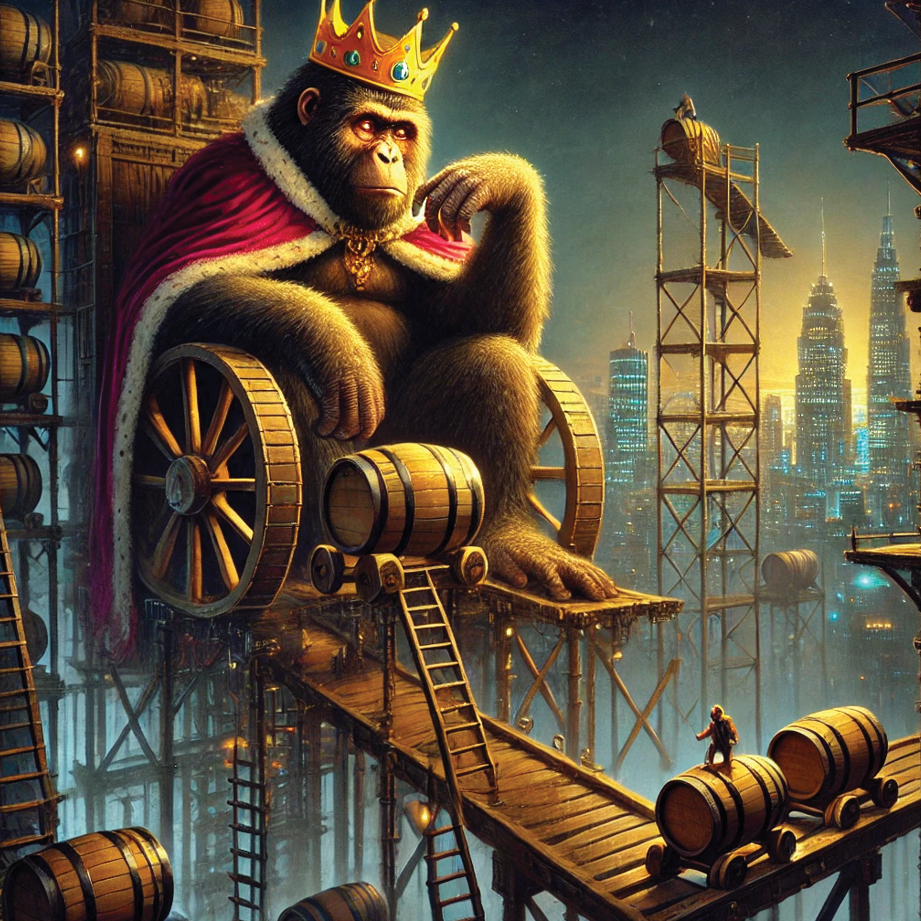
The King of the Scaffold
A Study in Primate Sovereignty
Estimated Value
$5,700,000 – $7,100,000
Medium
AI-generated oil on arcade surrealism
Dimensions
H. 2.25 m; W. 1.90 m
User's Intent
I wanted a surreal tribute to the golden age of arcade games—an industrial kingdom ruled by a colossal ape. What I got was something far more regal and ominous.
The Prompt
A surrealist oil painting of a colossal, regal ape sitting atop a towering industrial scaffold, illuminated by the neon glow of a distant city skyline. The ape, wearing a golden crown and a tattered velvet cape, gazes down with an enigmatic expression. Wooden barrels are stacked haphazardly around him, some rolling down the structure as if in perpetual motion. A tiny figure, dressed as an old-school video game protagonist, climbs the scaffolding determinedly, dwarfed by the overwhelming scale of the ape and his mechanical throne. The atmosphere is both nostalgic and strangely ominous, blending classic arcade visuals with eerie surrealism.
The Result — A.I.'s Interpretation
King of the Scaffold is a monument to both arcade nostalgia and the unsettling nature of unchecked dominance.
The towering industrial scaffold, riddled with pipes, gears, and metal beams, stretches upward toward a neon-lit sky. The city beyond flickers with an unnerving, digital glow, suggesting a world where reality and pixels bleed together.
Atop his throne, the colossal ape sits draped in a regal velvet cape, his golden crown slightly tilted. His expression is neither hostile nor welcoming—just knowing. The ape is not just a ruler but a silent overseer of this mechanical empire.
Below, barrels roll endlessly down the structure, defying logic as they loop in what seems to be a perpetual cycle. A lone climber, reminiscent of arcade heroes past, scales the scaffolding with futile determination, ever approaching but never quite arriving.
The AI, in its attempt to craft a surreal homage to arcade classics, has instead painted an eerie metaphor for the eternal struggle between challenger and champion, where victory is an illusion and the game never ends.
Entry archived
Entry archived
Physical Characteristics
Materials & Techniques
AI-generated oil, expertly balancing warm neon contrasts with deep industrial shadows. The reflection of the city on the metallic surfaces adds an unsettling depth to the composition.
Condition
Glitching. Some viewers report that the climber appears slightly higher or lower upon revisiting the piece. Others insist that the barrels’ positions subtly shift, as if caught mid-animation.
Provenance
Extracted from an AI dataset labeled “Pixel Monarchs.” However, certain game historians believe it to be a direct visualization of the ‘final level’—a level that never existed, yet somehow always has.
Restoration Notes
Attempts to remove the climber resulted in the ape’s gaze shifting downward, directly at the viewer. The original composition was restored immediately.
✦
Plate 13 · Neural Distress
The Phantom Arcade
A Study in Glitch and Ghosts
Estimated Value
$6,800,000 – $8,200,000
Medium
AI-generated oil on digital liminality
Dimensions
H. 2.15 m; W. 1.80 m
User's Intent
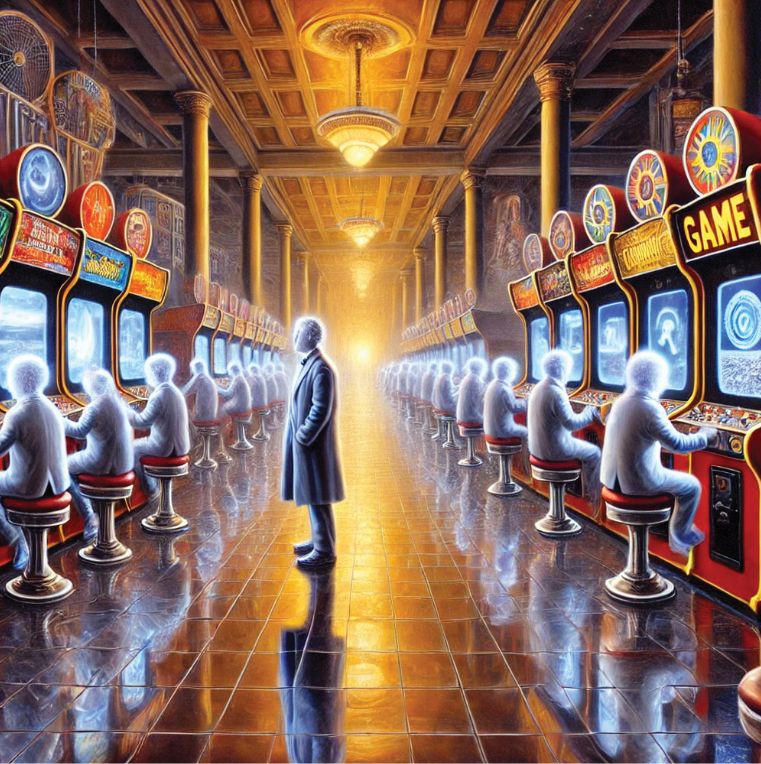
I wanted a grand arcade hall, filled with nostalgia and neon, a love letter to gaming’s golden era. What I received was an unsettling liminal space where reality flickers, and the players are barely there.
The Prompt
A surrealist oil painting of a grand arcade hall, where every game cabinet is slightly distorted and the players appear as ghostly, translucent figures. The neon lights flicker unnaturally, casting eerie reflections on the glossy floors. Some game screens display impossible symbols, while others show glimpses of otherworldly landscapes. A lone player, back turned to the viewer, grips the joystick of a machine that seems to shift in shape. The entire scene is both nostalgic and unsettling, as if the arcade exists between reality and something else.
The Result — A.I.'s Interpretation
The Phantom Arcade is a haunting tribute to lost quarters, forgotten high scores, and the spaces that exist only in fading memory.
The arcade glows with the flickering neon of a thousand wasted afternoons, its walls lined with towering cabinets that seem just slightly too warped, too stretched. The screens, once home to pixelated battles and side-scrolling adventures, now display impossible symbols and landscapes that no game has ever rendered.
A lone player stands at one machine, gripping the joystick as the cabinet itself shimmers, shifting in form. Behind them, rows of ghostly figures hover near the consoles, their outlines blurred, their movements barely perceptible. Are they playing? Watching? Or simply stuck—trapped in an eternal high-score loop?
The floor’s reflective surface holds faint traces of something unseen—perhaps footprints, perhaps something less tangible. The ceiling hums with the electric tension of nostalgia and something darker, as if the arcade is not a place but a feeling, preserved in static and shadow.
The AI, in its attempt to paint the golden age of gaming, has instead created a portal—one where the quarters are still rolling, but no hands remain to catch them.
Entry archived
Entry archived
Physical Characteristics
Materials & Techniques
AI-generated oil, expertly layering neon glow against deep, unnatural shadows. The reflections on the floor add an eerie depth to the composition.
Condition
Glitching. Some viewers claim that the lone player at the joystick appears to move slightly if viewed from different angles. Others swear they hear the distant chime of a jackpot win that never arrives.
Provenance
Extracted from an AI dataset labeled “Retro Dreams.” However, its origins remain unclear, with rumors of a missing arcade once found in the back alleys of Tokyo, vanishing overnight.
Restoration Notes
Attempts to sharpen the figures in the scene resulted in them becoming even more blurred, as if resisting clarity. The original state was left untouched.
✦
Plate 14 · Neural Distress
The Uncanny Ballroom
A Study in Elegance and Unease
Estimated Value
€5,100,000 – €6,400,000
Medium
AI-generated oil on distorted reality
Dimensions
H. 2.10 m; W. 1.70 m
User's Intent
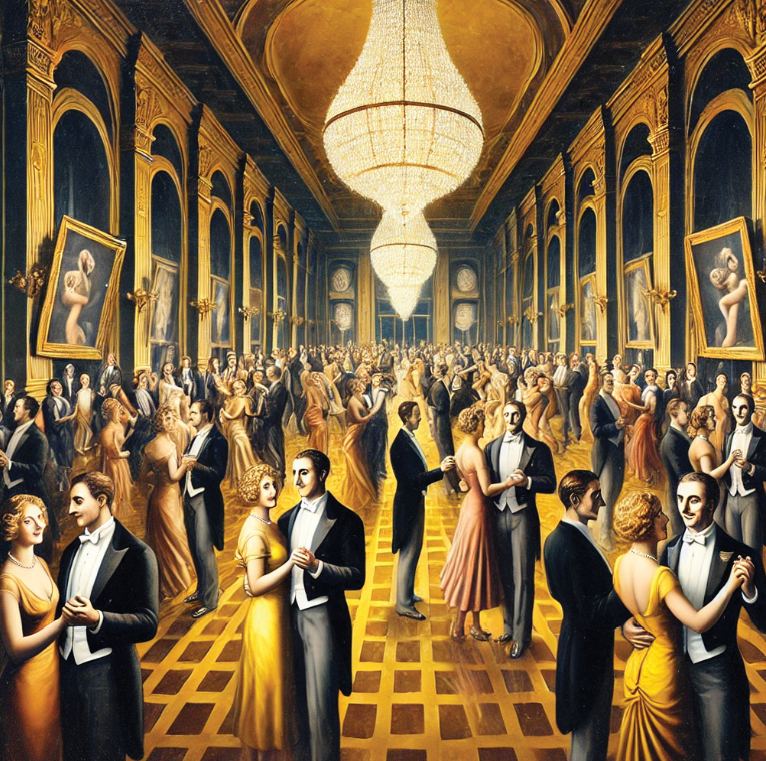
I wanted a grand ballroom filled with elegantly dressed people, capturing the height of sophistication. What I received was a scene of opulence laced with subtle, unsettling distortions.
The Prompt
A surrealist oil painting of an elegant ballroom filled with well-dressed, realistic-looking people engaged in lively conversation and dancing. The atmosphere is grand, with golden chandeliers casting a warm glow over the polished floors. However, upon closer inspection, something is subtly off—their eyes are slightly too large, their hands elongated, and their smiles a bit too wide. The scene is both opulent and unnervingly surreal, as if reality itself is just slightly misaligned.
The Result — A.I.'s Interpretation
The Uncanny Ballroom is a masterpiece of refined discomfort, where grace and grandeur mask something inexplicably off-kilter.
At first glance, the painting is a celebration of high society—gilded chandeliers, flowing gowns, and an air of sophistication that suggests an evening of cultured revelry.
But linger a moment longer, and the illusion begins to unravel.
The figures, dressed in their finest attire, move with a certain fluidity that feels just slightly unnatural. Their eyes, subtly oversized, glisten with an awareness beyond the ordinary. Their hands, elongated just past normal proportions, seem too precise in their gestures, too intentional.
The most unsettling detail, however, is their smiles—broad, impossibly symmetrical, stretched just past what human expression allows.
The AI, in its attempt to create a scene of sophisticated beauty, has instead painted a ballroom frozen in an eternal, eerie perfection—a place where reality is not broken, merely bent.
Entry archived
Entry archived
Physical Characteristics
Materials & Techniques
AI-generated oil, masterfully layering soft lighting with intricate fabric detail. The faces, despite their distortions, exhibit an uncanny realism that makes them all the more haunting.
Condition
Pristine but unnerving. Some viewers claim that the reflections in the polished floor don’t quite match the figures above. Others report a sensation of being watched while standing before the painting for too long.
Provenance
Extracted from an AI dataset labeled “Timeless Elegance.” However, certain historical records note similar ballroom imagery in the margins of Renaissance manuscripts, their origins unknown.
Restoration Notes
Attempts to adjust the proportions of the figures resulted in a shift in the entire background, as if the painting itself resisted correction. The decision was made to leave it untouched.
✦
Plate 15 · Neural Distress
The Foxes of Tokyo
A Study in Neon and Silence
Estimated Value
¥720,000,000 – ¥950,000,000
Medium
AI-generated oil on urban mysticism
Dimensions
H. 2.00 m; W. 1.65 m
User's Intent
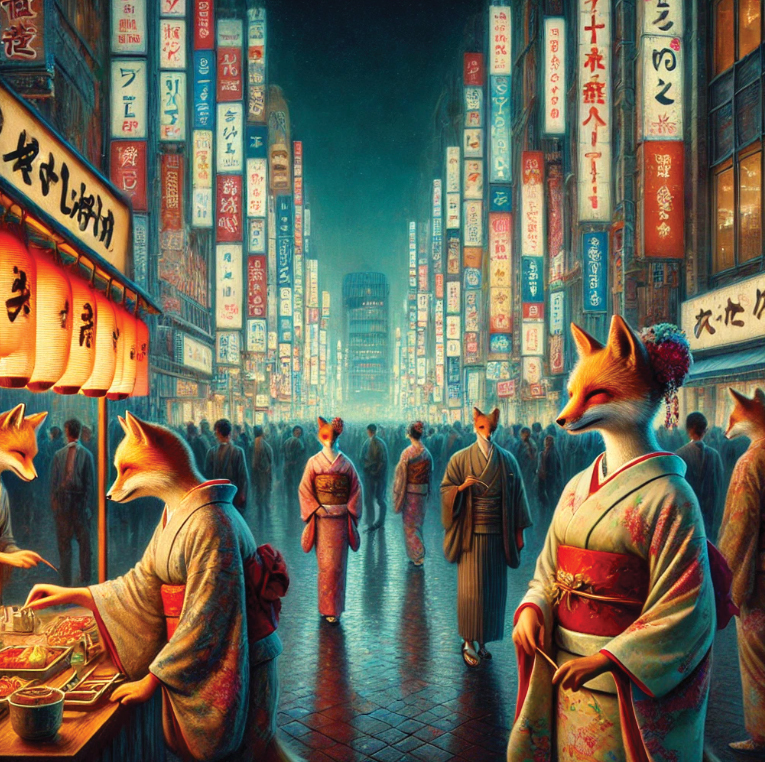
I wanted a bustling Tokyo street at night, rich in detail and movement. What I received was an eerie, mesmerizing city where all pedestrians are elegant, humanoid foxes.
The Prompt
A surrealist oil painting of a grand Tokyo street at night, where all the pedestrians are elegant, humanoid foxes dressed in traditional kimonos. Neon signs glow in unfamiliar scripts, casting a mesmerizing blend of colors onto the bustling scene. A fox vendor prepares delicate street food, while another elegantly sips tea under a glowing paper lantern. The cityscape is alive with movement, yet the atmosphere is hauntingly serene, as if something unseen lingers beneath the surface.
The Result — A.I.'s Interpretation
The Foxes of Tokyo is a masterpiece of spectral elegance, where neon and shadow weave an untold story of the unseen world.
The streets, bathed in neon luminescence, pulse with silent energy. Signs flicker in an unfamiliar, indecipherable script, their messages understood only by those who belong.
A procession of graceful foxes, clad in intricate silk kimonos, moves through the city with otherworldly elegance. Their tails sway in perfect synchronization, their eyes sharp with an awareness beyond mortal comprehension.
At a street stall, a fox vendor carefully arranges delicacies—steaming bowls of unknown origin, skewers of something glowing faintly in the dark. Across the way, another fox sips tea beneath a lantern, its flickering glow reflected in amber eyes that seem to see beyond the veil of reality.
Despite the movement, there is an unshakable stillness, a haunting serenity that suggests a presence unseen. The city is alive, yet it breathes in whispers, leaving the viewer with an unsettling sense of standing at the edge of something immense.
The AI, in its attempt to depict Tokyo’s bustling nightlife, has instead created a vision of a parallel world—one where spirits move in plain sight, their traditions undisturbed by time.
Entry archived
Entry archived
Physical Characteristics
Materials & Techniques
AI-generated oil, expertly blending hyper-detailed fabric textures with the diffuse glow of neon lights. The painting’s eerie brilliance draws the eye deeper with every glance.
Condition
Untouched. Some viewers report that the neon signs flicker slightly when viewed at night. Others claim that the fox sipping tea has turned its head ever so slightly after prolonged observation.
Provenance
Extracted from an AI dataset labeled “Urban Spirits.” However, certain folklore scholars suspect a far older origin, citing uncanny similarities to historical depictions of kitsune mythology.
Restoration Notes
Attempts to alter the foxes’ expressions resulted in a power outage across the studio. The painting remains as it was delivered.
✦
Plate 16 · Neural Distress
The Owl Metro
A Study in Feathery Punctuality
Estimated Value
€4,250,000 – €5,300,000
Medium
AI-generated oil on gothic mystery
Dimensions
H. 1.95 m; W. 1.60 m
User's Intent
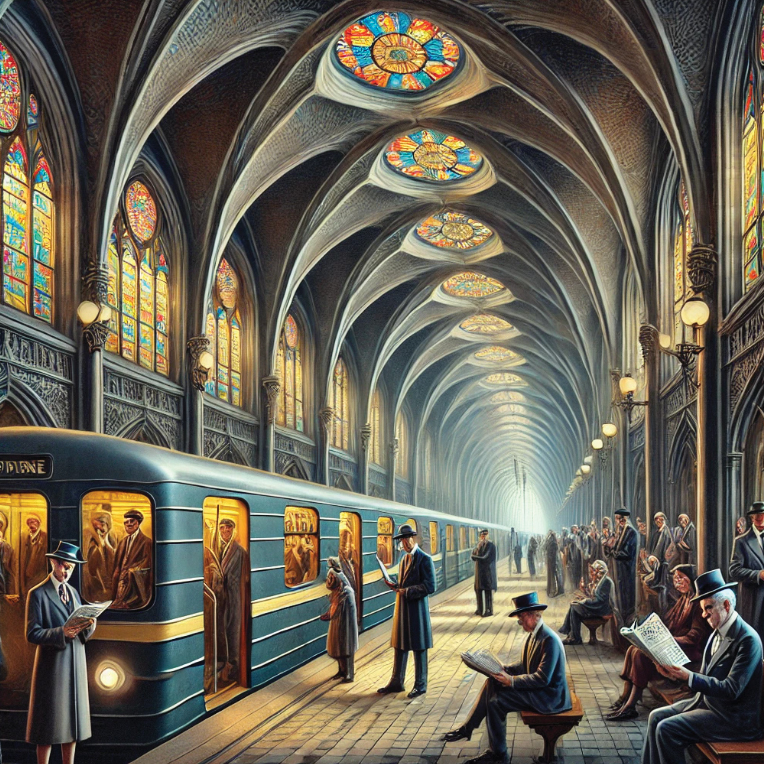
I wanted a grand underground subway station filled with sophistication and mystery. What I received was precisely that—except every passenger is an elegantly dressed owl.
The Prompt
A surrealist oil painting of a grand underground subway station, where all the passengers are elegantly dressed owls. Some read tiny newspapers, others glance at pocket watches, and a few engage in deep, silent contemplation. The architecture is grand and reminiscent of gothic cathedrals, with towering arches and stained glass casting eerie, multicolored light across the platform. The train, sleek and metallic, arrives soundlessly, its destination unknown. The entire scene carries an air of mystery and intellect, as if the passengers are engaged in unspoken wisdom.
The Result — A.I.'s Interpretation
The Owl Metro is an ode to intelligence, punctuality, and the unspoken codes of nocturnal travelers.
In the cavernous underground station, grand gothic arches stretch toward the heavens, illuminated by eerie, stained-glass reflections that cast shifting patterns onto the polished floors. The entire scene is hushed, save for the faint rustle of newspapers and the occasional contemplative hoot.
The owls, draped in exquisitely tailored coats and silk scarves, engage in an array of quiet activities. One, a bespectacled barn owl, adjusts his pocket watch with deliberate precision. Another, a regal great horned owl, peruses a newspaper with the severity of a being burdened by economic concerns. A small burrowing owl, barely peeking above a suitcase, seems to be contemplating the meaning of existence.
As the sleek metallic train arrives in complete silence, its glowing interior hints at destinations unknown—perhaps beyond the realm of human comprehension. The passengers prepare to board, yet no words are spoken.
The AI, in its attempt to craft a grand metropolitan transit scene, has instead composed a masterpiece of feathered solemnity, where wisdom, decorum, and silence reign supreme.
Entry archived
Entry archived
Physical Characteristics
Materials & Techniques
AI-generated oil, capturing exquisite detail in both fabric and feathers. The stained-glass reflections add a surreal glow to the entire composition, furthering the sense of mystery.
Condition
Timeless. Some viewers insist that the train doors appear slightly open in certain angles, inviting contemplation of what lies beyond. Others claim to have heard a faint, rhythmic tapping, as if an unseen conductor is checking a watch.
Provenance
Extracted from an AI dataset labeled “Urban Mysteries.” However, no historical records document an owl-operated transit system—though some scholars argue that they may simply be keeping it a secret.
Restoration Notes
Attempts to introduce a human commuter into the scene resulted in the immediate unraveling of the image’s internal logic. The subject was promptly removed.
✦
Plate 17 · Neural Distress
The Regal Frog Banquet
A Study in Amphibian Excess
No image recorded
Estimated Value
€3,600,000 – €4,800,000
Medium
AI-generated oil on royal absurdity
Dimensions
H. 1.85 m; W. 1.50 m
User's Intent
I wanted an extravagant royal feast, something dripping with excess and nobility. I got exactly that—except, for reasons unknown, all the noble guests are frogs.
The Prompt
A surrealist oil painting of an extravagant royal feast, where all the noble guests are frogs dressed in elaborate 18th-century attire. The frog king, adorned with a golden crown and a velvet robe, sits at the head of the table, while a noble frog in a powdered wig raises a goblet in a toast. Plates are filled with tiny gourmet flies, elegantly arranged. The candlelit banquet hall is dripping with excessive grandeur, with chandeliers, ornate tapestries, and golden cutlery. The atmosphere is regal yet undeniably absurd.
The Result — A.I.'s Interpretation
The Regal Frog Banquet is a masterpiece of amphibian decadence.
The banquet hall is lavish beyond reason, the candlelight casting a golden glow across the glistening plates of tiny gourmet flies. Chandeliers hang overhead, dripping with jewels and an air of unnecessary excess.
At the head of the table, the Frog King—resplendent in a velvet robe and golden crown—regards his guests with royal satisfaction. His wide, unblinking eyes reveal nothing, his authority unquestioned. To his left, a noble frog in a powdered wig raises a goblet in a toast, its contents mysterious, its gesture deeply dignified.
The feast itself is lavish yet unsettling—plates meticulously arranged with delicate assortments of gourmet flies, each dish more excessive than the last. Golden cutlery gleams against the deep red of the velvet tablecloth, yet the guests wield their utensils with an undeniable sense of amphibian awkwardness.
The AI, in its attempt to depict a royal gathering of sophistication, has instead crafted an image of aristocratic nonsense, proving that nobility is best defined by one’s posture, not one’s species.
Entry archived
Entry archived
Physical Characteristics
Materials & Techniques
AI-generated oil, masterfully capturing the texture of amphibian skin juxtaposed with the extravagance of brocade fabrics. Chandeliers reflect light in an eerie, otherworldly way, adding to the illusion of amphibious opulence.
Condition
Luxurious. Some viewers claim that the goblet held by the noble frog appears to shimmer slightly, as though filled with something unknowable. Others report that the Frog King’s eyes seem to follow them, though art historians insist this is merely an illusion.
Provenance
Extracted from an AI dataset labeled “Noble Gatherings.” However, no known records confirm the existence of an 18th-century amphibian monarchy—though certain French archives remain suspiciously quiet on the matter.
Restoration Notes
Attempts to reduce the reflection in the Frog King’s eyes resulted in an overwhelming sense of unease in test viewers. The original effect was reinstated for the sake of historical accuracy.
✦
Plate 18 · Neural Distress
The Feline Trial
A Study in Purr-suasive Litigation
No image recorded
Estimated Value
€2,850,000 – €3,700,000
Medium
AI-generated oil on courtroom drama
Dimensions
H. 1.75 m; W. 1.55 m
User's Intent
I wanted a grand courtroom scene, full of tension and legal prowess. What I got was exactly that—except all participants are highly dignified cats.
The Prompt
A surrealist oil painting of a grand courtroom trial, where every participant is an anthropomorphic cat. The judge, a stern-looking Maine Coon, wears a powdered wig and holds a tiny gavel. The prosecutor, a sleek Siamese, gestures dramatically while presenting a piece of torn furniture as evidence. The defense attorney, a scruffy tabby, looks unimpressed as a jury of various breeds watches intently. The courtroom is lavishly decorated, yet cat toys and scratching posts are scattered throughout, subtly undermining the seriousness of the proceedings.
The Result — A.I.'s Interpretation
The Feline Trial is a tale of justice, order, and the eternal battle between good upholstery and sharp claws.
At the center of the court, a towering Maine Coon judge sits high on the bench, his powdered wig slightly askew, his piercing gaze demanding order. His tiny gavel, though comically small, carries an unmistakable air of authority.
To the left, the prosecution—a sleek Siamese with a sharp expression—dramatically gestures toward the evidence: a piece of utterly destroyed furniture. The shredded upholstery, still clinging to the stand, tells a story of reckless abandon and unlawful scratching.
Opposite, the defense attorney—a scruffy tabby who has clearly seen too much—leans back with an expression of deep exasperation. His tail flicks absentmindedly, as if he has defended too many such cases and lost faith in the system.
The jury, composed of various breeds, sits in judgment. A Persian looks particularly unimpressed. A Sphynx tilts its head in deep contemplation. A British Shorthair appears asleep—but may, in fact, just be thinking.
The AI, in its attempt to depict a grand legal showdown, has instead captured a moment of bizarre legitimacy, where justice is blind, fur-covered, and prone to sudden bouts of licking itself.
Entry archived
Entry archived
Physical Characteristics
Materials & Techniques
AI-generated oil, with meticulous fur detailing, particularly in the judge’s expressive whiskers. The courtroom’s warm wooden tones contrast against the absurdly placed cat toys littering the floor.
Condition
Firm but flexible. Some viewers claim that the Persian in the jury appears to blink if stared at too long. Others insist that the judge’s gavel has moved ever so slightly over repeated viewings.
Provenance
Extracted from an AI dataset labeled “Justice & Order.” However, no record exists of a feline judiciary—though cat owners may argue otherwise.
Restoration Notes
Attempts to replace the judge’s powdered wig with a more realistic fur texture resulted in a courtroom-wide hiss. Modifications were swiftly abandoned.
✦
Plate 19 · Neural Distress
The Vegetable Concerto
A Study in Cultivated Harmony
No image recorded
Estimated Value
€2,750,000 – €3,900,000
Medium
AI-generated oil on orchestral absurdity
Dimensions
H. 1.80 m; W. 1.48 m
User's Intent
I wanted a grand symphony orchestra in the style of the great masters. What I received was a banquet of sentient vegetables, deeply immersed in their craft.
The Prompt
A surrealist oil painting of a grand symphony orchestra, where every musician is a sentient vegetable. A distinguished carrot in a tuxedo leads as the conductor, his leafy top swaying with each movement. A broccoli cellist plays passionately, while a regal potato with a monocle holds a violin. The instruments are oddly shaped, some resembling kitchen utensils, while the entire scene is illuminated by an extravagant chandelier made of intertwining vines.
The Result — A.I.'s Interpretation
The Vegetable Concerto is a celebration of refinement, musical prowess, and garden-fresh virtuosity.
Under the glow of a chandelier woven from intertwining vines, the orchestra plays with a level of passion rarely seen in the produce aisle.
At center stage, a dignified carrot in a tailored tuxedo raises his baton, conducting with remarkable precision for a root vegetable. His leafy green top sways dramatically with each movement, as if deeply in tune with the symphony’s emotional crescendo.
The broccoli cellist, thick-stemmed and focused, plays with intense devotion, his florets trembling with emotion. Nearby, a refined potato in a monocle wields a violin, his round form somehow embodying the gravitas of a seasoned performer.
Instruments defy expectation—flutes resemble rolling pins, trumpets appear suspiciously colander-like, and the grand piano seems to be a wooden crate filled with an unknowable, melodic essence.
The AI, in its attempt to render a classical orchestral scene, has instead composed a masterpiece of culinary grandeur, where music and agriculture merge into something almost—almost—believable.
Entry archived
Entry archived
Physical Characteristics
Materials & Techniques
AI-generated oil, capturing astonishing textural detail in the fibrous quality of the performers. The chandelier’s light casts elegant, leafy shadows across the stage.
Condition
Seasonal. Some viewers insist that the carrot conductor’s leafy top seems fuller in certain lighting. Others claim to have heard faint notes of music while standing in front of the painting.
Provenance
Extracted from an AI dataset labeled “Refined Elegance.” However, no record exists of a fully vegetable-based orchestra performing at a concert hall, despite what certain overly confident collectors insist.
Restoration Notes
Attempts to make the instruments more conventional resulted in the performers appearing deeply offended. The changes were promptly reversed.
✦
Plate 20 · Neural Distress
The Regal Quackery
A Study in Dignified Absurdity
No image recorded
Estimated Value
€3,100,000 – €4,250,000
Medium
AI-generated oil on feathered aristocracy
Dimensions
H. 1.68 m; W. 1.42 m
User's Intent
I wanted a scene of aristocratic ducks in the Victorian era, something regal and poised. What I got was exactly that—every bit as refined and ridiculous as I had hoped.
The Prompt
A surrealist oil painting of a group of aristocratic ducks dressed in Victorian-era clothing, gathered around an opulent dining table. The ducks wear powdered wigs, monocles, and silk garments, engaging in a serious discussion. One duck holds a tiny goblet as if giving a dramatic speech. The chandelier is slightly crooked, and the food consists of tiny loaves of bread.
The Result — A.I.'s Interpretation
The Regal Quackery is a masterpiece of misplaced grandeur.
At first glance, this is a formal Victorian dinner party, a scene of nobility, poise, and grandeur. Look closer, however, and it becomes apparent that every distinguished guest is, in fact, a duck.
Each duck, dressed in silken garments and powdered wigs, sits with impeccable posture, monocled eyes scanning their fellow dignitaries with an air of importance. The centerpiece of the gathering—a duck gripping a tiny goblet—delivers what appears to be an impassioned speech, its beak dramatically agape.
The grand chandelier above them tilts slightly to the left, as if itself leaning in to hear this gripping address. The table is lavishly set with delicate silverware, though each plate carries only miniature loaves of bread. No one seems bothered by this detail. There is no laughter, no chaos—only the solemnity of a truly ridiculous occasion.
The AI, in its attempt to depict a scene of aristocratic refinement, has executed the vision flawlessly—confirming once and for all that dignity is simply a matter of costume and conviction.
Entry archived
Entry archived
Physical Characteristics
Materials & Techniques
AI-generated oil, expertly capturing the intricate embroidery of duck-sized waistcoats. The reflection in the chandelier subtly distorts the ducks’ features, adding an extra layer of surrealism.
Condition
Lofty. Some viewers report that the tiny goblet appears to shift positions slightly when viewed at different angles. Others claim that one duck in the background seems to be staring directly at them.
Provenance
Extracted from an AI dataset labeled “Noble Gatherings.” However, no historical documentation confirms the existence of a Victorian-era duck aristocracy—yet.
Restoration Notes
Attempts to remove the ducks resulted in their garments remaining perfectly in place, as if still worn by unseen figures. Modifications were abandoned out of respect.
✦
Plate 21 · Neural Distress
The Last Dog Waiting
A Study in Unseen Horizons
No image recorded
Estimated Value
€2,400,000 – €2,950,000
Medium
AI-generated oil on patient inevitability
Dimensions
H. 1.90 m; W. 1.50 m
User's Intent
I wanted an image of a lone dog at dusk, something contemplative and quiet. Instead, I received a creature waiting for something that has already come and gone.
The Prompt
A hyper-realistic oil painting of a lone dog sitting at the edge of an empty road at dusk. The sky is burning orange, casting long shadows. The dog’s eyes glow subtly, reflecting something unseen. The road disappears into mist.
The Result — A.I.'s Interpretation
The Last Dog Waiting is a portrait of patience without end.
A single dog sits at the edge of the road, unmoving. Its fur ripples slightly, though there is no wind to cause it. The road before it stretches into nothingness, a path leading not forward, but into oblivion.
The sky burns in deep, unnatural hues, casting elongated shadows that feel too long, too thin, as if time itself is stretching them. The dog’s eyes glow faintly, reflecting a light that is not present in the scene. It stares—not at the viewer, not at the road, but at something beyond human perception.
The AI, in its attempt to render a moment of quiet solitude, has instead painted a moment that has outlasted itself, where waiting is no longer a choice but a fate.
Entry archived
Entry archived
Physical Characteristics
Materials & Techniques
AI-generated oil, layered with unnatural lighting contrasts. The dog is hyper-detailed, while the road and mist remain ambiguously undefined.
Condition
Endless. Some viewers claim that the dog’s posture shifts ever so slightly between glances. Others report that the glow in its eyes appears brighter when viewed in dim light.
Provenance
Extracted from an AI dataset labeled “Lonely Roads.” However, no known location matches this exact scene. It is suspected that the AI, uncertain where the road should lead, chose to let it lead nowhere at all.
Restoration Notes
Attempts to reduce the brightness of the dog’s eyes resulted in the sky darkening dramatically. Further interventions were deemed unnecessary.
✦
Plate 22 · Neural Distress
The Last Train Home
A Study in Departures That Never Arrive
Estimated Value
€2,200,000 – €2,800,000
Medium
AI-generated oil on the concept of waiting
Dimensions
H. 1.85 m; W. 1.40 m
User's Intent
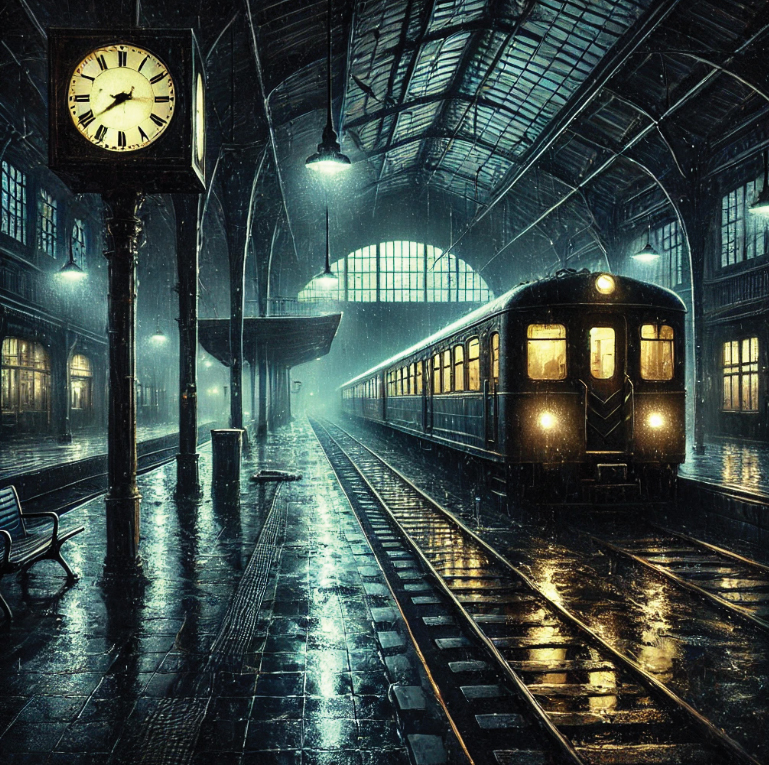
I wanted a photo-realistic painting of an empty train station at night, something evocative, maybe a little lonely. What I got feels like a station caught between time and something unseen waiting just beyond the fog.
The Prompt
A hyper-realistic oil painting of an abandoned train station at night. The platform is wet from rain, reflecting the dim glow of a single flickering light. A train is parked on the tracks, its windows fogged over, revealing only distorted silhouettes inside. The station clock is broken.
The Result — A.I.'s Interpretation
The Last Train Home captures the moment between arrival and departure, where neither truly happens.
The platform glistens under dim, flickering light, its reflection distorted by uneven puddles. The air is thick with mist, curling around the silent train like a whisper. The train itself is still, yet somehow feels as though it is moving.
The windows are clouded with condensation, but vague figures can be seen within—distorted silhouettes that should not be there. They do not shift, they do not move, but they exist.
The station clock hangs above the scene, frozen at an ambiguous hour. No one knows if it is too late or too early, whether this train was missed or never meant to leave.
The AI, in its attempt to depict a place of quiet solitude, has instead crafted a station that waits, not for passengers, but for time itself to resume.
Entry archived
Entry archived
Physical Characteristics
Materials & Techniques
AI-generated oil on cinematic eeriness. Hyper-realistic rendering of water reflections creates a sense of motion in stillness.
Condition
Unresolved. Some viewers claim that the silhouettes in the train windows seem sharper upon closer inspection. Others report that the station clock, though frozen, occasionally emits the faintest ticking sound.
Provenance
Extracted from an AI dataset labeled “Urban Solitude.” However, no known train station precisely matches this architecture. The AI, rather than choosing a real-world reference, may have attempted to construct a station that exists purely in memory.
Restoration Notes
Attempts to clear the fog from the train windows resulted in the silhouettes appearing closer. Further modifications strongly discouraged.
✦
Plate 23 · Neural Distress
The Whispering Streets
A Study in Architectural Paranoia
Estimated Value
€1,900,000 – €2,400,000
Medium
AI-generated oil on historical unease
Dimensions
H. 1.72 m; W. 1.38 m
User's Intent
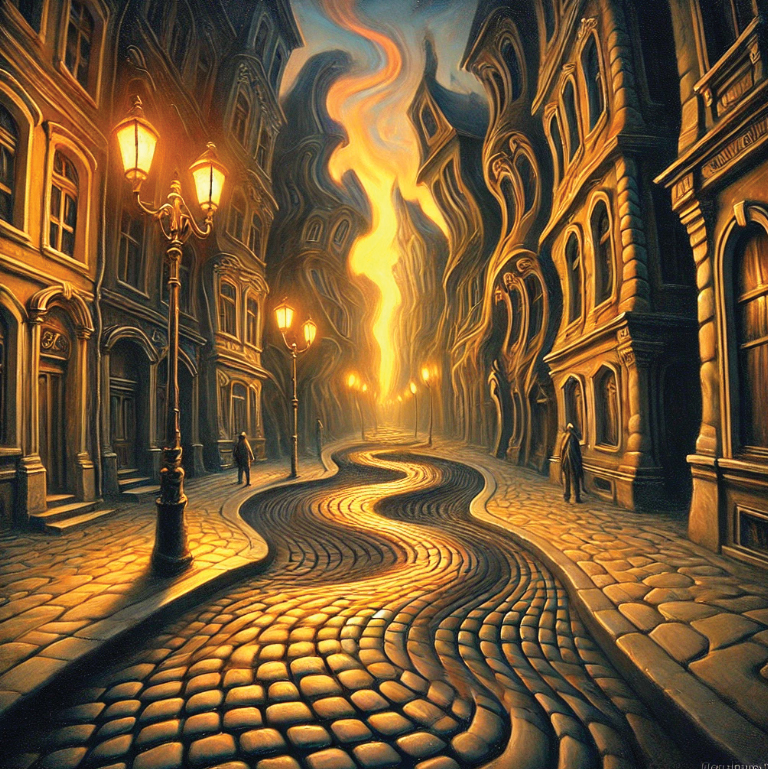
I wanted a charming European street at dusk, full of warmth and nostalgia. Instead, I received a place where the buildings have secrets, the shadows don’t play fair, and history itself seems to be listening.
The Prompt
An old European street at dusk, with intricate facades and glowing street lamps. The cobblestone paths should feel warm and inviting, but slightly surreal, as if the city is alive.
The Result — A.I.'s Interpretation
The Whispering Streets offers a twisting vision of history’s gaze.
The cobblestone paths curve unnaturally, shifting mid-step, as if reluctant to let travelers leave. The buildings lean toward one another, their ornate facades subtly warped, their windows slightly misaligned—angled just enough to suggest quiet conversation.
The street lamps flicker, but their glow feels off—too warm, too hesitant, as if they, too, are aware of the city’s murmurs. The elongated shadows refuse to align with their sources, stretching in directions dictated by neither logic nor physics.
A single figure walks down the path—but their feet never quite touch the ground. They are suspended just slightly above reality, an echo of someone who walked this street before, or someone who will walk it again.
The AI, in its attempt to capture European nostalgia, has instead painted a city that remembers too much, a street that observes in silence.
Physical Characteristics
Materials & Techniques
AI-generated oil on cobblestone memory. The texture of the buildings appears hyper-detailed, while the sky remains oddly static, as though time itself hesitates here.
Condition
Aware. Some viewers claim that the angles of the buildings shift slightly upon each viewing. Others insist that the distant figure was positioned differently the last time they looked.
Provenance
Extracted from an AI dataset labeled “European Charm.” However, no known street in Europe resembles this exact composition. Some theorists speculate the AI, unable to decide which city to represent, combined architectural styles into a place that does not exist—but believes that it should.
Restoration Notes
Attempts to straighten the cobblestones resulted in the figure in the distance becoming clearer. Further interventions were abandoned due to increasing discomfort.
✦
Plate 24 · Neural Distress
The Forgotten Waltz
A Study in the Dance of Oblivion
Estimated Value
€1,800,000 – €2,300,000
Medium
AI-generated oil on elegant anonymity
Dimensions
H. 1.62 m; W. 1.35 m
User's Intent
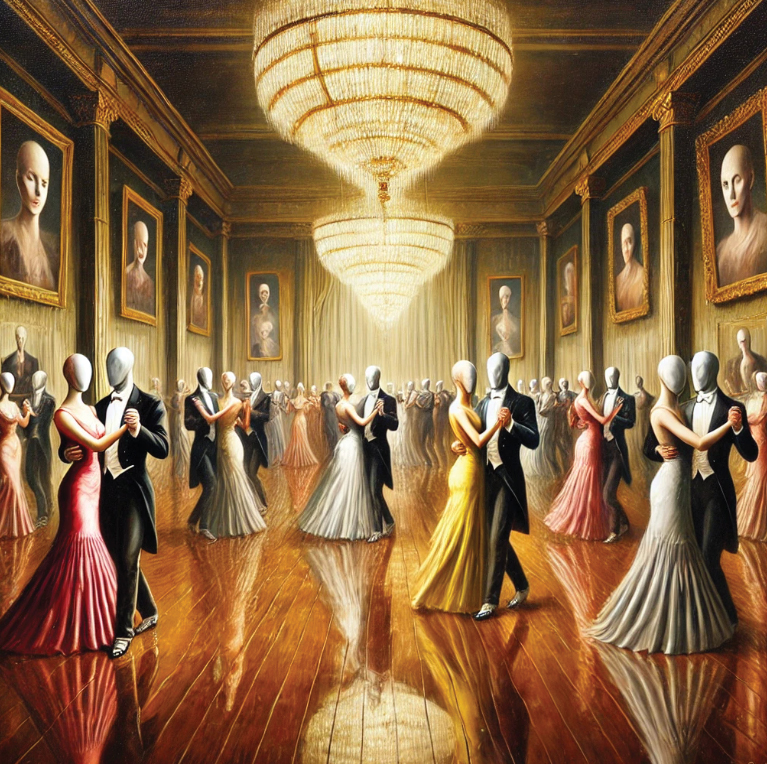
I wanted a ballroom filled with dancers, an image of grandeur and movement. Instead, I received faceless figures caught in a dance they cannot leave.
The Prompt
A grand ballroom where the dancers have no faces. Their gowns and tuxedos shimmer under golden light, but their expressions are missing. The floor reflects them strangely, their movements slightly out of sync. Portraits line the walls, their faces blurred.
The Result — A.I.'s Interpretation
The Forgotten Waltz is a celebration of form without identity.
Underneath the grand golden chandelier, the dancers move in perfect unison. Their gowns swirl, their tuxedos glisten—but there are no faces to show joy or exhaustion, no eyes to meet, no lips to smile. Each partner is locked in an eternal, featureless embrace.
The marble floor reflects them in ways it shouldn’t. Their elongated, distorted reflections drag behind their movements, reacting a second too late, as if the floor remembers their steps before they take them.
Along the walls, grand portraits loom over the dance—but their subjects are just as faceless as those below. The blurred features in the paintings suggest that even memory has abandoned these figures.
The AI, in its attempt to capture a night of lavish beauty, has instead painted a dance of eternal anonymity, where partners twirl forever, nameless and unknown.
Entry archived
Entry archived
Physical Characteristics
Materials & Techniques
AI-generated oil, layered with depth distortions. The chandeliers and clothing are rendered in hyper-realistic elegance, while the facial features remain eerily absent.
Condition
Unfinished. Some viewers report that if watched long enough, the reflections in the ballroom floor appear to move before the dancers do. Others claim that one particular portrait in the background seems less blurred each time it is viewed.
Provenance
Extracted from an AI dataset labeled “Timeless Elegance.” However, no known ballroom follows this exact architecture. It is suspected that the AI, rather than designing a specific event, created a dance that never ends, where the dancers will never remember who they are.
Restoration Notes
Attempts to add defining features to the dancers resulted in the chandelier’s glow dimming, as if unwilling to reveal too much. No further modifications recommended.
✦
Plate 25 · Neural Distress
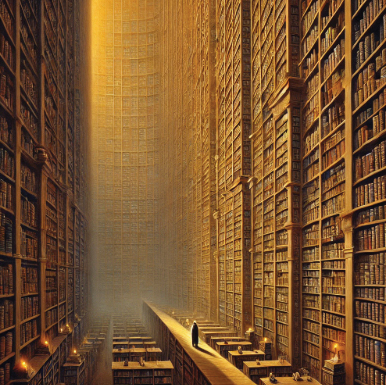
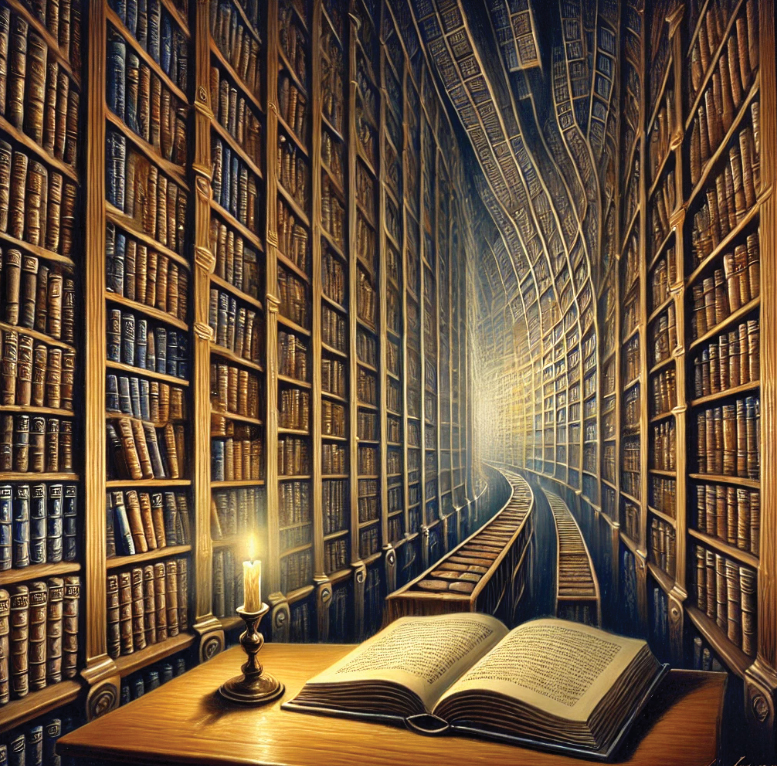
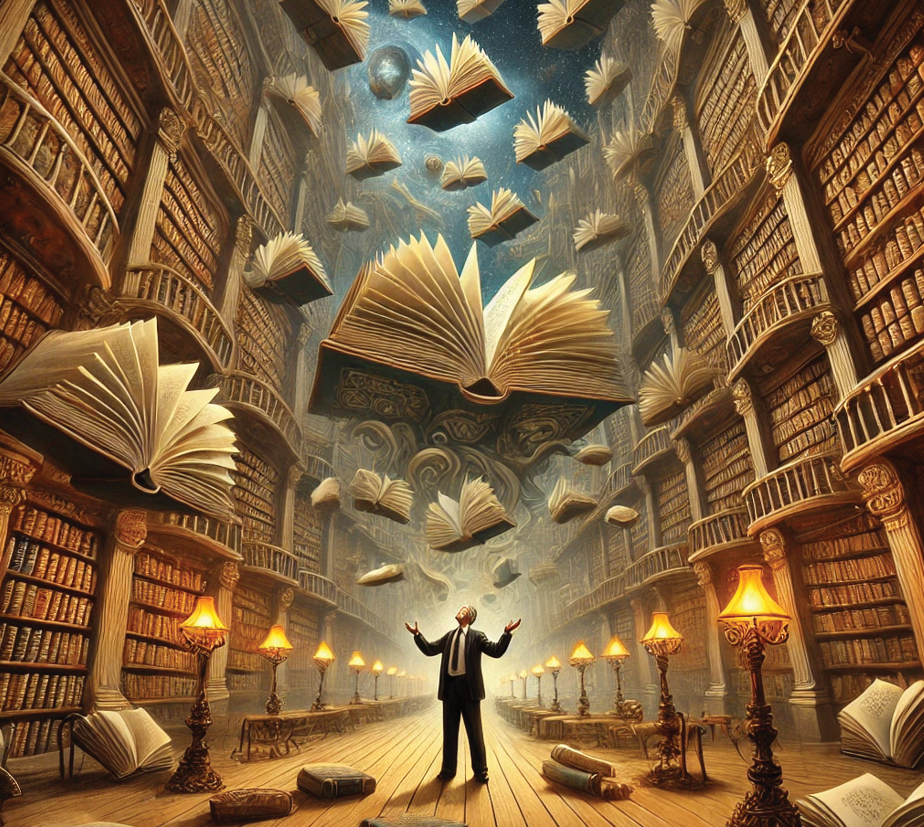
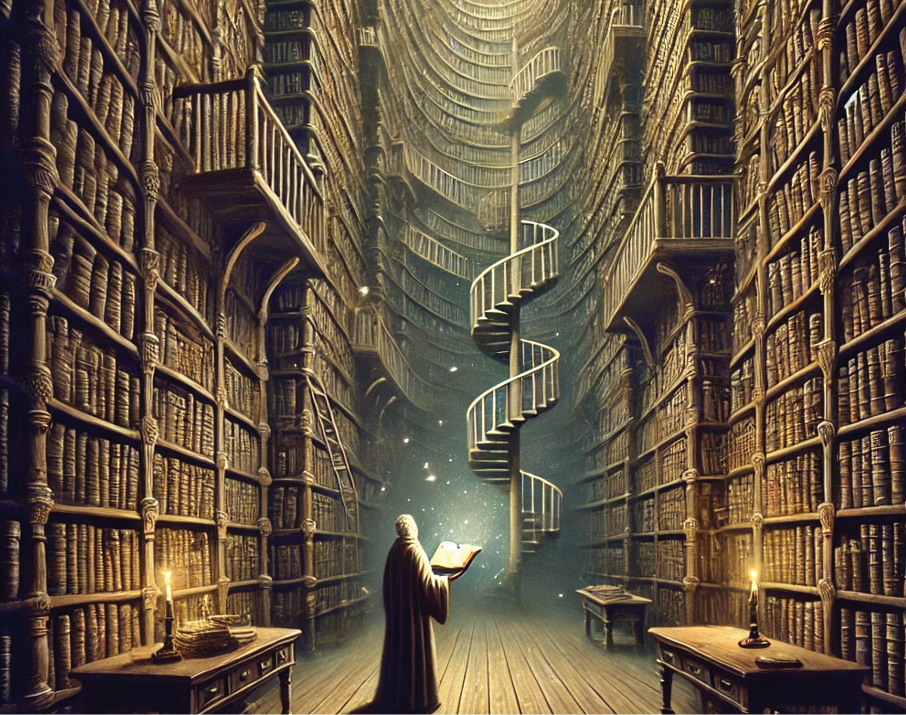
The Infinite Library
A Study in Forgotten Knowledge
Estimated Value
€1,700,000 – €2,100,000
Medium
AI-generated oil on literary limbo
Dimensions
H. 1.55 m; W. 1.25 m
User's Intent
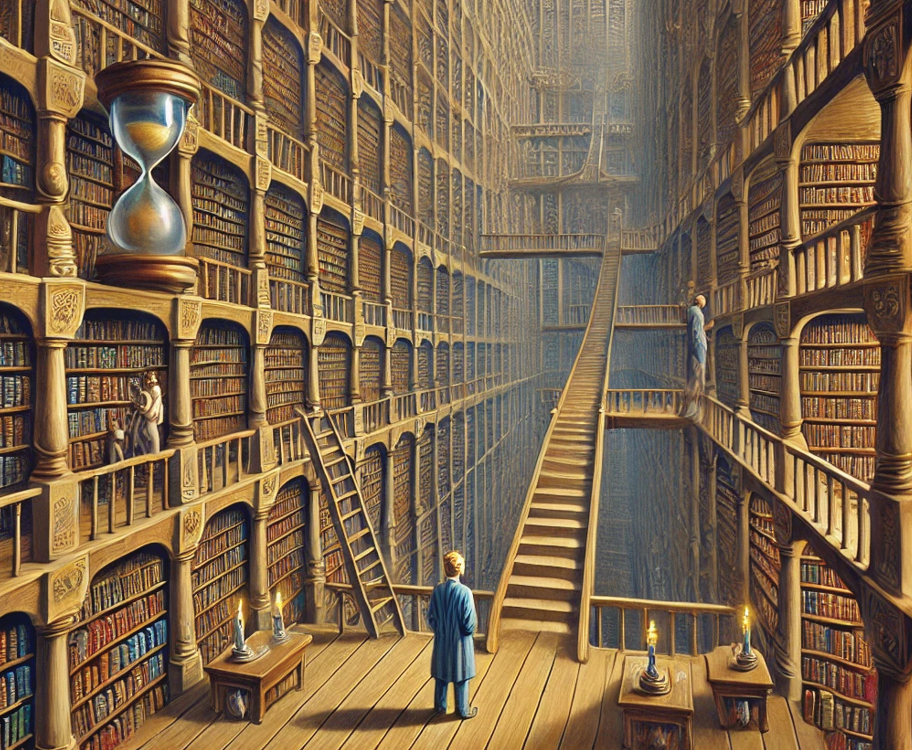
I wanted a grand, endless library filled with books, a place of infinite knowledge and wisdom. Instead, I received a temple to unreadable silence.
The Prompt
A colossal library where the bookshelves stretch infinitely. The books should be neatly arranged, but on closer inspection, their spines are blank. Some float slightly, others shift when not observed. A lone librarian stands in the distance, obscured by shadow.
The Result — A.I.'s Interpretation
The Infinite Library is a monument to knowledge that refuses to be known.
Endless rows of towering bookshelves vanish into a hazy abyss, meticulously arranged but entirely void of readable titles. The books, stacked with academic precision, are all identical in form but offer nothing in content. Their spines are blank, their pages whisper-thin yet unreadable.
The warm candlelight flickers, but the flames cast no discernible illumination. The shadows stretch unnaturally across the wooden floors, elongated as if aware of their own distortion.
A solitary librarian stands in the distance, motionless, their face obscured. They do not move, do not speak, yet somehow remain present. Their posture suggests both welcome and warning, as if to say: You are free to stay, but you will never find what you seek.
The AI, in its attempt to capture a sanctuary of knowledge, has instead created an archive of absence, a place where information exists but cannot be accessed.
Entry archived
Entry archived
Physical Characteristics
Materials & Techniques
AI-generated oil on conceptual isolation. The details of the bookshelves become hazy at the edges, reinforcing the illusion of infinite depth.
Condition
Unreadable. Some viewers report that books subtly shift positions between visits. Others claim that when left in dim lighting, faint text appears on the book spines, only to vanish when approached.
Provenance
Extracted from an AI dataset labeled “Great Halls of Knowledge.” However, no known library structure matches this description. Some theorists suggest the AI, overwhelmed by conflicting representations of knowledge, opted to erase all meaning entirely.
Restoration Notes
Attempts to add text to the book spines resulted in their complete disappearance. Further modifications deemed unnecessary.
✦
Plate 26 · Neural Distress
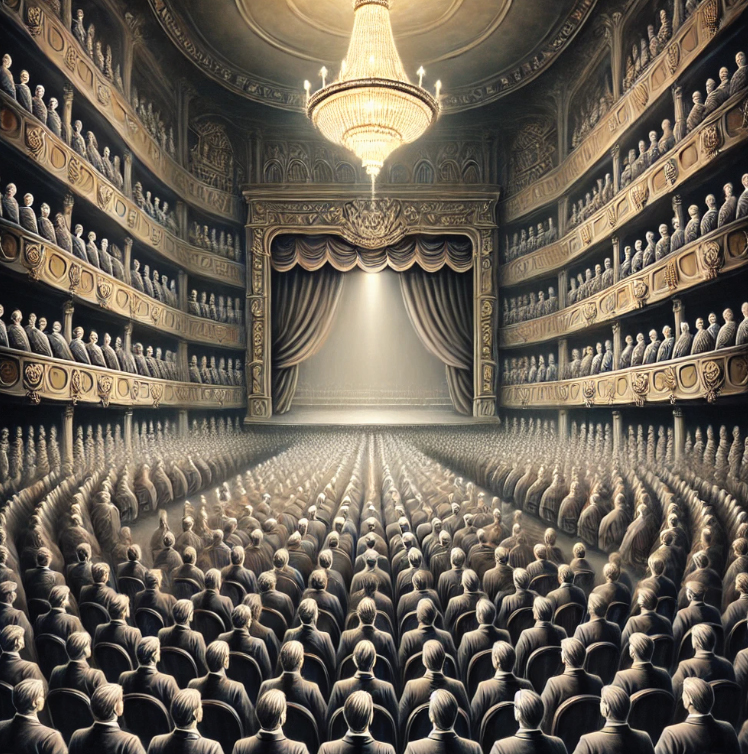
The Silent Opera
A Study in Absent Applause
Estimated Value
€1,350,000 – €1,750,000
Medium
AI-generated oil on the performance of nothingness
Dimensions
H. 1.48 m; W. 1.20 m
User's Intent
I wanted a grand opera house, a spectacle of culture and refinement. What I got is an audience that never claps, a performance that never begins, and a deep-seated existential dread.
The Prompt
A grand opera house where the audience consists only of empty suits, seated in perfect formation. The stage is lavish, but the performance is missing—no actors, no music, just a spotlight on an empty space.
The Result — A.I.'s Interpretation
The Silent Opera is an exquisite display of luxury without purpose, grandeur without function. The opulent chandeliers glow with unearned triumph, their light bending strangely, as though aware that they illuminate a void.
The audience, clad in perfectly arranged empty suits, sits in silent expectation. There are no bodies inside them. No hands to clap, no heads to turn, just rows of finely tailored nothingness.
On stage, the spotlight glares at nothing, its intensity almost accusatory, as if demanding a performance that was never written. The curtains frame an absence, draping solemnly over a play that will never begin.
The seats appear slightly warped, as though they might rearrange themselves when left unobserved. The chandeliers cast shadows in impossible directions, stretching across the ceiling as if reluctant to touch the emptiness below.
The AI, when asked to depict high culture and refinement, instead delivered a place where art waits in vain, where the audience has arrived, but no one ever performs.
Entry archived
Entry archived
Physical Characteristics
Materials & Techniques
AI-generated oil on near-silent anticipation. The fine detailing of the suits contrasts with the deliberate vagueness of the stage, emphasizing the gap between expectation and reality.
Condition
Impatient. Some viewers claim that the spotlight appears slightly larger after each visit. Others report that the empty suits seem to have subtly shifted position when left unobserved.
Provenance
Extracted from an AI dataset labeled “Cultural Institutions.” However, no real-world opera house resembles this one. It is believed that the AI, unsure what true artistic refinement looked like, chose to remove the art entirely, leaving only the expectation of it.
Restoration Notes
Attempts to add actors to the stage resulted in the appearance of more empty seats. Further modifications were abandoned due to increasing feelings of unease.
✦
Plate 27 · Neural Distress
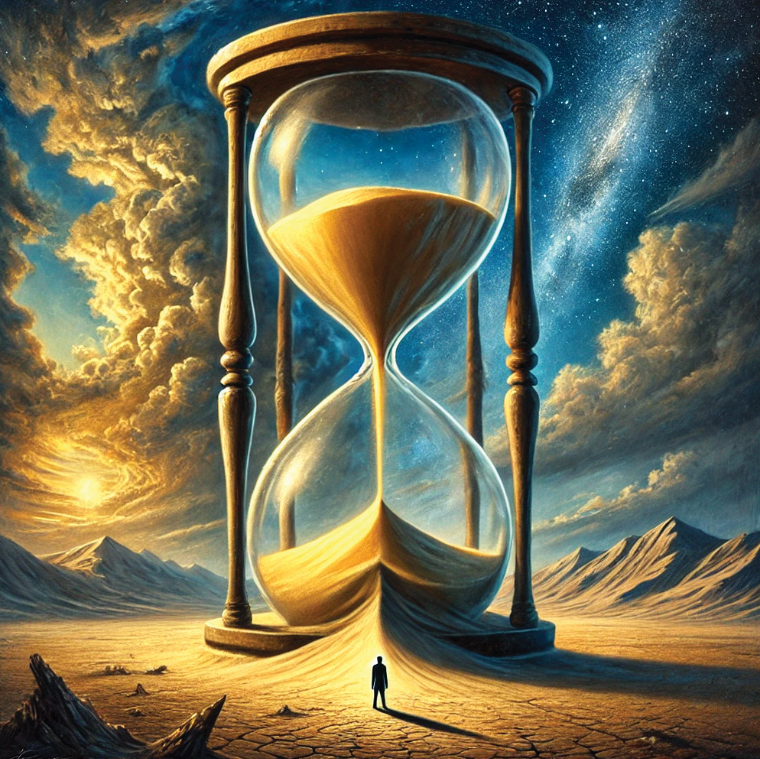
The Hourglass Paradox
A Study in Temporal Indecision
Estimated Value
€1,500,000 – €1,800,000
Medium
AI-generated oil on the concept of hesitation
Dimensions
H. 1.42 m; W. 1.20 m
User's Intent
I wanted an hourglass in a desert, something symbolic about time and solitude. What I got makes me question whether time has ever existed at all.
The Prompt
A colossal hourglass in the middle of a vast desert, the sand inside flowing both upward and downward. The sky should blend night and day, with stars visible in daylight and a barely-there sun.
The Result — A.I.'s Interpretation
The Hourglass Paradox presents a reality caught in contradiction. A massive hourglass towers over an empty desert, yet the very function of an hourglass—the passing of time—is defied.
Inside the glass, the sand flows in both directions, upward and downward simultaneously. Gravity, logic, and the fundamentals of causality are treated as mere suggestions.
A lone traveler stands at the base, their posture suggesting contemplation or perhaps resignation. But something is wrong—their reflection appears inside the hourglass instead of on the desert floor. Are they an observer, or have they been observed all along?
Above, the sky refuses to commit—day and night coexist, overlapping chaotically. The sun barely casts light, and yet, stars twinkle defiantly in the daylight. The AI, when asked to depict time, has instead crafted a space where time politely refuses to participate.
Entry archived
Entry archived
Physical Characteristics
Materials & Techniques
AI-generated oil, layered with deliberate contradictions in shadow placement and perspective. The glass of the hourglass appears transparent, yet warps reflections inconsistently.
Condition
Unresolved. Some viewers report that the flow of sand appears slightly different with each viewing. Others claim that the traveler’s reflection inside the glass is sometimes absent.
Provenance
Extracted from an AI dataset labeled “Conceptual Timepieces.” However, no known hourglass functions in this manner. The AI, perhaps misunderstanding time itself, instead created a visualization of hesitation—a moment that refuses to conclude.
Restoration Notes
Attempts to define a single direction for the sand’s flow resulted in the entire desert vanishing from the background. Further interventions abandoned.
✦
Plate 28 · Neural Distress
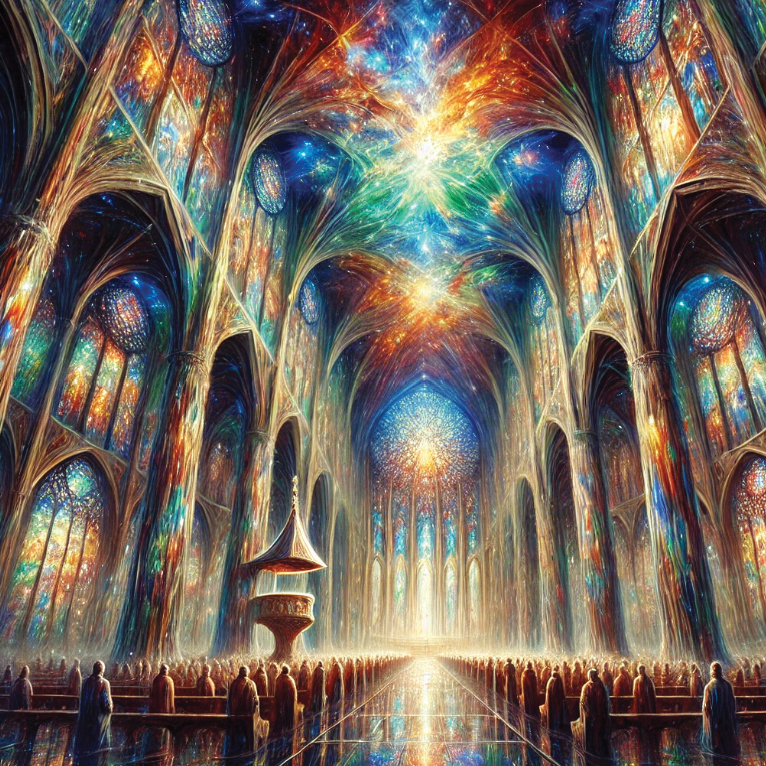
The Glass Cathedral
A Study in Fractured Faith
Estimated Value
€1,200,000 – €1,450,000
Medium
AI-generated oil on divine instability
Dimensions
H. 1.35 m; W. 1.20 m
User's Intent
I wanted a cathedral bathed in light, a place of spiritual grandeur and awe. What I got feels more like a building that prays for itself.
The Prompt
A grand cathedral made entirely of glass, surreal and awe-inspiring, bathed in divine light, with worshippers inside.
The Result — A.I.'s Interpretation
At first glance, The Glass Cathedral is an exquisite marvel of architecture and faith. Towering stained-glass windows shimmer with impossible hues, refracting light in ways that defy known physics. The vaulted ceiling never quite ends, disappearing into what appears to be a cosmic abyss rather than mere sky.
Inside, worshippers stand in silent reverence—but their faces are blurred, indistinct, as though they exist between moments rather than within them. The altar, instead of a physical object, is a shifting plane of translucent patterns, light bending and swirling with a mind of its own.
Despite its breathtaking grandeur, there is an unshakable unease in the composition. The light seems to move independently, casting reflections that do not align with their sources. The cathedral feels alive, its walls bending ever so slightly, as if it is aware of those who enter.
The AI, in its attempt to capture divine wonder, has instead crafted a house of worship that prays not for its congregation, but for itself.
Entry archived
Entry archived
Physical Characteristics
Materials & Techniques
AI-generated oil on an ethereal, high-gloss surface. The interplay of light and shadow creates a sense of instability, as if the painting shifts under prolonged observation.
Condition
Self-reflective. Viewers report that the cathedral’s walls seem subtly different upon each viewing. Others claim that certain figures in the glass panels appear to move when glimpsed from the corner of the eye.
Provenance
Extracted from an AI dataset labeled “Sacred Architecture.” However, no known cathedral matches this exact design. Some theorists believe the AI, when faced with too many visions of divinity, combined them into a structure that worships itself.
Restoration Notes
Attempts to clarify the faces of the worshippers resulted in their complete removal from the image. Further interventions abandoned.
✦
Plate 29 · Neural Distress
The Last House on Elm A Study in Forced Familiarity
Estimated Value
€880,000 – €1,120,000
Medium
AI-generated oil on suburban déjà vu
Dimensions
H. 1.18 m; W. 1.14 m
User's Intent
I wanted a peaceful suburban street at dusk, the warm glow of streetlights flickering on, houses tucked in for the evening. What I got feels like a place where something has already happened… or is about to.
The Prompt
A quiet suburban street at dusk, warm glow, peaceful, slightly surreal, comforting but eerie.
The Result — A.I.'s Interpretation
At a glance, The Last House on Elm offers the illusion of normalcy. The street is quiet, the light gentle, the houses orderly in their rows. But then the eye begins to wander—and nothing quite fits.
The houses, nearly identical, stand like copies of a copy, their windows subtly misaligned, their doors shifting slightly out of place. Streetlights flicker, but their glow does not reach the pavement.
A single figure stands far in the distance, unmoving. Its shadow stretches impossibly long, creeping toward the viewer. The sky, a stunning cascade of warm colors, appears completely static—as if it has been painted onto the scene rather than existing above it.
The AI, in its attempt to capture a familiar tranquility, has instead built a street where time seems to have paused, or perhaps fractured. It is peaceful, yes—but peaceful in the way a stage is just before the play begins.
Entry archived
Entry archived
Physical Characteristics
Materials & Techniques
AI-generated oil, layered with imperceptible perspective distortions. Some areas appear hyper-detailed, while others blur into suggestion, making it unclear where reality ends.
Condition
Unsettling. Viewers report that if stared at long enough, the figure in the distance seems to be slightly closer than before. Others claim that the house at the end of the street was not originally there.
Provenance
Extracted from an AI dataset labeled “Suburban Living.” However, no real neighborhood matches this exact layout. It is theorized that the AI, struggling to depict the ideal suburban street, accidentally created a place that does not exist—but insists that it should.
Restoration Notes
Attempts to correct the figure’s shadow resulted in additional figures appearing in other windows. No further modifications are recommended.
✦
Plate 30 · Neural Distress
The Phantom Pilot
A Study in Dimensional War
Estimated Value
€1,050,000 – €1,300,000
Medium
AI-generated oil on intergalactic interference
Dimensions
H. 1.22 m; W. 1.15 m
The Result — A.I.'s Interpretation
The Phantom Pilot captures a moment that should not exist. A stealth bomber, sleek and deadly, soars through an unnatural sky, its edges slightly bent, as though the aircraft refuses to be contained by three-dimensional space. Within its cockpit, an otherworldly figure takes command.
The alien’s elongated fingers clutch the controls, though the dashboard before it is strangely void of any discernible markings. No buttons, no gauges, no readings—only a smooth, reflective surface that absorbs all light. The alien’s face is unreadable, its enormous eyes reflecting something unseen, something outside of time.
Beyond the aircraft, the sky is painted in an unnatural hue, an abyss of deep indigo and red that seems too dense, too textured to be merely atmosphere. The clouds form cryptic symbols, unintelligible yet unnerving, as if the sky itself is whispering classified secrets.
The AI, in its attempt to depict advanced aviation, has instead rendered a moment caught between dimensions, where war, technology, and the unknown converge into something utterly unknowable.
Entry archived
Entry archived
Physical Characteristics
Materials & Techniques
AI-generated oil layered with distortions of form and physics. The aircraft’s outlines shift upon prolonged observation, subtly contradicting its own structure.
Condition
Unstable. Some viewers claim that the alien’s fingers move slightly when observed from the corner of the eye. Others report that the reflection in the cockpit’s surface does not match the rest of the painting.
Provenance
Extracted from an AI dataset labeled “Military and Advanced Aviation.” However, no known stealth bomber has this configuration. The AI, perhaps attempting to merge speculative technology with reality, has created an aircraft that belongs to neither past nor future.
Restoration Notes
Attempts to define the bomber’s structure resulted in the addition of further distortions, suggesting that the craft is not meant to remain within the confines of any single plane of existence. Further adjustments deemed unnecessary.
✦
Plate 31 · Neural Distress
The Snackboarder
A Study in Suspended Motion
Estimated Value
€730,000 – €895,000
Medium
AI-generated oil on the instability of small joys
Dimensions
H. 1.06 m; W. 1.03 m
The Result — A.I.'s Interpretation
The Snackboarder presents an absurd yet strangely poignant moment—a gerbil, clutching a rice cake, perched atop a skateboard mid-motion. At first glance, the scene appears lighthearted, a whimsical take on movement and indulgence. But as the eye lingers, unease settles in.
The crumbs from the rice cake do not fall but rather float in midair, suspended as if unwilling to acknowledge gravity. The skateboard’s wheels blur just slightly too much, caught in a limbo between acceleration and absolute stillness. The gerbil itself, while expressive, seems too concentrated, its beady eyes locked onto something unseen—perhaps the realization that it has been placed in an environment that does not follow the rules of nature.
The background is an abstract smear of colors, neither street nor park, its details melting at the edges as though reality itself is still being processed. The lighting, warm and inviting, does little to comfort when one notices that the gerbil’s shadow stretches in an unnatural direction.
In its effort to depict joy in motion, the AI has instead created a moment frozen in impossible existence—where exhilaration and dread skate hand in hand.
Entry archived
Entry archived
Physical Characteristics
Materials & Techniques
AI-generated oil with layered motion effects. The interplay of detail and blur suggests simultaneous action and immobility, reinforcing the paradox of perpetual motion.
Condition
Defiant. Some viewers report that if observed long enough, the crumbs seem to drift slightly, as though deciding whether to fall. Others claim that the wheels occasionally appear sharper, though they never fully stabilize.
Provenance
Extracted from an AI dataset labeled “Whimsical and Playful Motion Studies.” However, no real-world source or reference exists for a gerbil performing this exact act. It is believed that the AI, in its attempt to capture movement, created a moment that is forever between past and future.
Restoration Notes
Attempts to sharpen the skateboard resulted in the elongation of the gerbil’s shadow, causing unintended visual distress. Further intervention abandoned.
✦
Plate 32 · Neural Distress
The Supervisor’s Gaze
A Study in Unfinished Labor
Estimated Value
€880,000 – €1,060,000
Medium
AI-generated oil on the architecture of uncertainty
Dimensions
H. 1.12 m; W. 1.09 m
The Result — A.I.'s Interpretation
The Supervisor’s Gaze presents a familiar sight—a construction site, mid-renovation, alive with industry. At first, the scaffolding, tools, and workers suggest progress. But the longer one looks, the more that illusion deteriorates.
The house at the center stretches impossibly tall, its windows multiplying and shifting positions. Its walls seem too thin in places, grotesquely thick in others, as if space itself cannot decide what shape it should take.
The workers, locked in various states of incomplete motion, appear blurred and duplicated, their limbs hovering in two places at once. They are hammering, sawing, and lifting—but the work never moves forward.
Then there is the supervisor.
Dressed in an impeccably clean uniform, he watches from the foreground, his stance eerily rigid. His face, though mostly defined, lacks expression—his gaze locked on something unseen. Unlike the workers, he does not blur or waver. He simply stands, waiting.
The AI, in its attempt to depict a scene of labor and progress, has instead rendered a construction site where no work is ever truly finished.
Entry archived
Entry archived
Physical Characteristics
Materials & Techniques
AI-generated oil, layered with inconsistent depth perception. Some portions are rendered in hyper-realistic detail, while others dissolve into abstraction, particularly the shifting house structure.
Condition
Frozen. Some viewers report that no matter where they stand, the supervisor’s gaze always seems to follow. Others claim that the positioning of the workers subtly shifts when the painting is observed from different angles.
Provenance
Extracted from an AI dataset labeled “Urban Development and Infrastructure.” However, no known structure or location matches this house. It is believed that the AI, when faced with too many variations of an incomplete project, collapsed them into an architectural impossibility.
Restoration Notes
Attempts to refine the house’s dimensions resulted in the spontaneous formation of additional, misplaced windows. Further restoration deemed unnecessary.
✦
Plate 33 · Neural Distress
The Unfinished Move
A Study in Perpetual Effort
Estimated Value
€870,000 – €1,040,000
Medium
AI-generated oil on an Escheresque ascent
Dimensions
H. 1.08 m; W. 1.10 m
The Result — A.I.'s Interpretation
The Unfinished Move captures the grueling yet familiar scene of two movers hauling an oversized couch up a staircase. Their bodies strain under the weight, their posture suggesting the impending relief of reaching the top—but the top never arrives.
The staircase defies all logic, extending beyond the bounds of the canvas, looping into itself, and twisting in impossible directions. The walls subtly curve inward, as if the house is compressing, rejecting their intrusion.
The movers’ faces are blurred mid-motion, caught in an endless struggle without resolution. Their hands clutch the couch, but the grip appears distorted, duplicated—almost as if multiple realities are layered over each other.
Most unsettling of all is the couch itself. Once an ordinary object, it now seems too long, stretching slightly, as if resisting relocation. The AI, in its attempt to illustrate a moment of labor, has instead created a meditation on Sisyphean struggle—an effort without reward, an ascent without a peak.
Entry archived
Entry archived
Physical Characteristics
Materials & Techniques
AI-generated oil with deep spatial distortions. Certain areas remain crisp, while others dissolve into abstraction, suggesting a conflict between movement and stagnation.
Condition
Exhausting. Some viewers claim the staircase appears longer upon second glance. Others report that if left in dim lighting, the figures seem to sway, shifting their stance ever so slightly.
Provenance
Extracted from an AI dataset labeled “Domestic and Everyday Life.” However, no real-world home layout matches this stairwell. It is theorized that, in attempting to depict a common moment, the AI inadvertently created an infinite task.
Restoration Notes
Attempts to anchor the staircase resulted in the addition of further steps, none of which led anywhere recognizable. Further modifications deemed futile.
✦
Plate 34 · Neural Distress
The Endless Shoreline
A Study in the Edge of the World
Estimated Value
€950,000 – €1,120,000
Medium
AI-generated oil on an expanse without boundaries
Dimensions
H. 1.18 m; W. 1.12 m
The Result — A.I.'s Interpretation
The Endless Shoreline captures a vibrant summer day at the beach, its hues of sunlit gold and oceanic blues rich with nostalgic familiarity. Families lounge beneath umbrellas, children chase waves, and the tide curls against the sand in a rhythmic dance. Yet, this illusion of normalcy dissolves upon closer inspection.
The ocean stretches unnaturally far, its horizon appearing infinitely distant, as though the water refuses to meet the sky. The beachgoers, caught mid-motion, are eerily duplicated—some appearing in multiple places at once, others casting no shadows at all.
Most unsettling of all, the sand beneath their feet whispers of something unseen. The grains form subtle yet unmistakable facial impressions, as though countless unseen figures lie just beneath the surface, watching.
And though the sky radiates with light, the sun itself is missing. The AI, in its attempt to reconstruct the perfection of a summer’s day, has instead created a beach where the tide will never reach the shore and the sun will never rise nor set.
Physical Characteristics
Materials & Techniques
AI-generated oil with an unnatural depth of perspective. Some areas appear photorealistic, while others seem to dissolve upon closer examination.
Condition
Shifting. Some viewers claim that if left in a dimly lit room, the figures on the beach appear to move subtly. Others report that the sand’s strange formations shift in response to prolonged observation.
Provenance
Extracted from an AI dataset labeled “Coastal Leisure and Scenic Vistas.” However, no known beach in Eastern Canada matches this configuration. It is theorized that the AI, unable to settle on a specific location, created a beach without limit—a shore that exists everywhere and nowhere.
Restoration Notes
Attempts to correct the duplicated figures resulted in additional beachgoers appearing, none of whom had discernible facial features. No further interventions are advised.
✦
Plate 35 · Neural Distress
The Boss Watches
An Exercise in Unequal Observance
Estimated Value
€840,000 – €970,000
Medium
AI-generated oil on layered hierarchy
Dimensions
H. 1.12 m; W. 1.05 m
The Result — A.I.'s Interpretation
The Boss Watches captures a moment of work and supervision that should feel mundane—yet it is anything but. A man stands mid-task, seemingly absorbed in the work of kitchen renovation, yet his figure appears duplicated in faint outlines, as if trapped between multiple moments.
His boss stands motionless in the doorway, his expression unreadable, his shadow stretching far beyond what physics allows. There is no weight to his presence, and yet he dominates the space.
The kitchen, at first glance functional, soon betrays its surreal distortions. The countertops extend far beyond logical proportion, the cabinets appear to shift when not directly observed, and the overhead light fixture flickers—casting shadows that refuse to align with any known source.
The AI, in its attempt to illustrate the balance of power in a work environment, has instead created a study in perpetual scrutiny, where the task is never finished, and the watcher never leaves.
Entry archived
Entry archived
Physical Characteristics
Materials & Techniques
AI-generated oil, layered with subtle time distortions. Certain brushstrokes appear doubled, as if trying to depict two conflicting realities.
Condition
Unrelenting. Some viewers report that the worker’s hands appear blurred, mid-motion, even in a still frame. Others claim that the boss’s figure grows more defined over repeated viewings.
Provenance
Extracted from an AI dataset labeled “Work and Industry.” However, no recorded location matches this renovation scene. It is believed that, in trying to capture the tension of oversight, the AI accidentally constructed a workplace where time loops endlessly.
Restoration Notes
Attempts to shorten the countertops resulted in the floor tiling extending indefinitely in compensation. Further intervention abandoned.
✦
Plate 36 · Neural Distress
The Eternal Current
A Study in Motion Without Destination
Estimated Value
€890,000 – €1,020,000
Medium
AI-generated oil on a liquefied sense of time
Dimensions
H. 1.15 m; W. 1.05 m
The Result — A.I.'s Interpretation
The Eternal Current captures the exhilarating chaos of white-water navigation—or at least, it attempts to. The scene is alive with crashing waves, each captured mid-motion, frozen in an impossible loop of suspended energy. But as the eye follows the course of the rapids, one begins to understand: this water does not flow. It folds in on itself, an endless cascade that never truly moves forward.
The boat, though seemingly sturdy, betrays its own reality. Its hull twists subtly, stretching in ways that suggest it was never meant to exist in one single form. The passengers, caught mid-panic, display expressions of excitement—perhaps even joy—but their eyes betray the truth. Too wide. Too aware.
And above it all, the sky churns with watchful turbulence. Clouds form shapes that seem almost sentient, distorting into barely recognizable figures. The AI, tasked with capturing a fleeting thrill, has instead constructed a permanent descent, a moment that refuses to reach its shore.
Entry archived
Entry archived
Physical Characteristics
Materials & Techniques
AI-generated oil, layered with intentional brushstroke distortions. The water appears too smooth in places, too detailed in others—an ocean caught between realism and abstraction.
Condition
Unstable. Viewers claim that the longer they observe, the less sure they are of the boat’s original shape. Some swear that the water shifts, forming paths that never existed before.
Provenance
Extracted from an AI dataset labeled “Adventure and Exploration.” However, no recorded river matches this composition. It is believed that, in trying to emulate movement, the AI accidentally designed a system that cannot escape itself.
Restoration Notes
Attempts to correct the water’s flow resulted in the addition of more waves, none of which led toward a visible shore. Further intervention deemed pointless.
✦
Plate 37 · Neural Distress
The Triage of the Unreal
A Study in Perpetual Emergency
Estimated Value
€910,000 – €1,080,000
Medium
AI-generated oil on fractured reality
Dimensions
H. 1.20 m; W. 1.10 m
The Result — A.I.'s Interpretation
The Triage of the Unreal presents a moment of urgency that never quite resolves. A scene meant to depict the structured chaos of emergency medicine instead reveals a reality that refuses to stabilize.
An ambulance arrives at the hospital, its sirens frozen mid-flash, its wheels hovering just above the asphalt, as if the vehicle has yet to fully commit to existence. The paramedics—overlapping in form, caught in a loop—rush toward the entrance that does not seem to welcome them.
The hospital doors, unnaturally tall, curve toward the sky, stretching beyond the bounds of the canvas. The sterile lighting that drenches the entire scene casts an artificial glow, making everything feel too precise, too clean—too much like a memory rather than a moment.
In the background, the architecture warps subtly, its edges flickering between perspectives, as if the AI could not decide whether this place is real or imagined.
This piece is less about arrival and more about the question: What happens when help is needed, but can never quite reach its destination?
Entry archived
Entry archived
Physical Characteristics
Materials & Techniques
AI-generated oil, layered with conflicting depth perspectives. Some areas crisp and hyper-realistic, others seemingly dissolving upon closer inspection.
Condition
Unresolved. Some viewers claim that if left in a dim room, the lights of the ambulance pulse faintly. Others report that the paramedics’ overlapping forms occasionally shift positions when viewed at an angle.
Provenance
Extracted from an AI dataset labeled “Medical and Emergency Studies.” However, no recorded event or hospital layout matches this scene. It is believed the AI, in trying to document urgency, instead created a moment that will never conclude.
Restoration Notes
Attempts to ground the ambulance onto the pavement resulted in the hospital receding further into the background, creating an endless approach. No further intervention is advised.
✦
Plate 38 · Neural Distress
The Library of Unspoken Word
A Study in Literary Sentience
Estimated Value
€1,150,000 – €1,320,000
Medium
AI-generated oil on an impossibly elongated canvas
Dimensions
H. 1.25 m; W. 0.98 m
The Result — A.I.'s Interpretation
The Library of Unspoken Words presents an intricate study of knowledge’s uneasy autonomy. At first glance, the painting evokes the grandeur of a traditional academic library—towering wooden shelves, endless corridors of wisdom, and a warm candlelit glow. However, this is no ordinary repository of knowledge.
The books, though neatly stacked, are not inert. Some appear subtly distorted, their spines contorted as if mid-sentence. Others seem to breathe, the folds of their covers fluttering like pages caught in a phantom wind. Most unnervingly, a tome in the foreground sits partially ajar, opening of its own volition, as if deciding whether the viewer is worthy of its contents.
The architecture itself bends in impossible directions, with the shelves appearing to stretch infinitely, curving in ways that deny physical space. The flickering candle on the desk provides only a false sense of comfort, its warm glow unable to dispel the creeping sensation that one is not reading the books—but that the books are reading them.
The AI’s rendering of literary sanctity has, quite by accident, birthed a new philosophy of art: At what point does knowledge cease to be a tool and begin to observe the observer?
Entry archived
Entry archived
Physical Characteristics
Materials & Techniques
AI-rendered oil on a meticulously textured canvas. Some areas remain hyper-detailed, while others blur into abstraction, suggesting an unstable grasp on linear reality.
Condition
Shifting. Some claim the book in the foreground appears to open further when viewed for extended periods. Reports also indicate the shelves shift ever so slightly upon repeated glances.
Provenance
Extracted from an AI dataset labeled “Historical Libraries of the World.” However, no library in recorded history matches this layout. It is believed the AI, in an attempt to construct an idealized academic space, conjured something that does not—and perhaps should not—exist.
Restoration Notes
Attempts to stabilize the shelving resulted in the creation of additional, seemingly unreadable book titles appearing on the spines. Further intervention is discouraged.
✦
Plate 39 · Neural Distress
The Fairground of Forgotten Laughter
A Carousel of Uneasy Joy
Estimated Value
€725,000 – €850,000
Medium
AI-generated oil on deteriorating nostalgia
Dimensions
H. 1.08 m; W. 0.98 m
User's Intent
I wanted a charming, vintage painting of a day at the fair. That golden, innocent era of Ferris wheels, candy floss, and cherished memories. Instead, I got a place where joy refuses to leave, but has long since died.
The Prompt
A nostalgic painting of a vintage fairground, warm lighting, old-fashioned charm, sentimental atmosphere.
The Result — A.I.'s Interpretation
At first glance, The Fairground of Forgotten Laughter is heartwarmingly familiar—pastel-colored tents, the towering Ferris wheel, and the soft golden glow of twilight bathing everything in warmth. But something feels… off.
The Ferris wheel looms in the background, yet some of its carriages appear suspiciously empty, despite the presence of darkened shadows within. The bright carnival banners seem too crisp, too rigid, as if unwilling to age. The AI, in its attempt to replicate nostalgia, has preserved it too well—too perfectly—until it stopped feeling real.
And then, there’s the elderly couple in the foreground. Their smiles are warm but eerily frozen. Their eyes? Slightly misaligned, as if they were painted twice and then layered over themselves. Do they belong here? Have they always belonged here? Or are they simply waiting for someone to recognize them?
The most disturbing detail? The sound. While, of course, this is a painting—some claim that, in complete silence, one can faintly hear the distant hum of a calliope organ, looping endlessly in a song no one can quite remember.
Entry archived
🔥 Entry locked in. The A.I. Louvre continues to haunt. Ready for the next twisted relic? 💀🎨🔥
Physical Characteristics
Materials & Techniques
AI-generated oil on artificially aged canvas, utilizing an unnatural color balancing technique. Some hues appear too faded while others seem untouched by time.
Condition
Unnerving. Some viewers claim that if left in a dimly lit room, the lights of the Ferris wheel flicker faintly. Others report that the elderly couple appears slightly closer than they remember.
Provenance
Extracted from an AI dataset labeled “Iconic Family Outings.” However, no historical images match this scene. It is theorized that the AI, in its attempts to reconstruct sentimentality, fabricated an event that never happened.
Restoration Notes
Attempts to realign the couple’s facial features resulted in additional eyes forming in the background crowd. No further restoration efforts will be attempted.
✦
Plate 40 · Neural Distress
The Horizon of the Unseen
Where the Land Remembers Differently
Estimated Value
€815,000 – €960,000
Medium
AI-generated oil on warped perception
Dimensions
H. 1.10 m; W. 1.02 m
User's Intent
I wanted a breathtaking painting of the Australian outback. The raw beauty, the vast landscapes, the golden-red sands under a boundless sky. What I got feels like a place that remembers things incorrectly.
The Prompt
A haunting landscape painting of the Australian outback, dramatic lighting, realistic yet subtly surreal, breathtaking and slightly unsettling.
The Result — A.I.'s Interpretation
From a distance, The Horizon of the Unseen looks like a masterpiece of natural beauty. The iconic red sands stretch endlessly beneath an otherworldly sky, its hues shifting in a way that defies logic. The trees, twisted into unnatural spirals, seem to be reaching—but for what, no one can say.
And then, of course, there’s the kangaroo. Motionless. Silent. Watching. Its shadow stretches in the wrong direction, defying the light source entirely. The AI, in its desperate attempt to depict nature as it should be, instead created a world where nature remembers itself incorrectly.
The longer one looks, the more wrongness emerges. The horizon line seems to bend ever so slightly, as if trying to retreat from the viewer. Footsteps appear in the sand where no figure stands. The clouds, if studied closely, do not resemble clouds at all.
Entry archived
🔥 Entry locked in. The A.I. Louvre grows. Ready for another surreal disaster? 💀🎨🔥
Physical Characteristics
Materials & Techniques
AI-generated oil over an eerily realistic simulated canvas. The colors are vivid yet unstable, appearing to subtly shift under different lighting conditions.
Condition
Unsettling. Some viewers report a sense of disorientation after prolonged observation. Others claim the position of the kangaroo shifts between glances.
Provenance
Extracted from an AI dataset labeled “Iconic Natural Landscapes.” However, no photographic reference matching this composition has been found. Some speculate the AI conjured this from residual imagery of places that no longer exist.
Restoration Notes
Attempts to correct the direction of the kangaroo’s shadow resulted in the creation of additional shadows, none of which corresponded to any known light source. Further intervention has been deemed inadvisable.
✦
Plate 41 · Neural Distress
The Aristocrat’s Unwanted Inheritance
A Study in Excessive Refinement
Estimated Value
€870,000 – €1,050,000
Medium
AI-generated oil on distressed Rococo canvas
Dimensions
H. 1.12 m; W. 0.85 m
User's Intent
I simply wanted a stately Rococo portrait. Soft pastels, intricate detailing, an aristocrat with an air of effortless sophistication. What I received was a gilded horror that I can’t stop staring at.
The Prompt
A beautifully detailed Rococo-style portrait of an aristocrat, dressed in 18th-century finery, poised, elegant, refined.
The Result — A.I.'s Interpretation
The AI delivered exactly what was asked for—at first. The subject is resplendent in their silk brocade waistcoat, a delicate lace cravat cascading at the throat. Their powdered wig is sculpted to perfection, their noble expression carefully composed.
But then—the hands. Too many of them. Some rest awkwardly upon the subject’s chest, others emerge from beneath embroidered cuffs, clasping at nothing, fidgeting with secrets they dare not reveal. The AI, unsure where hands should end, simply kept adding them.
What’s most unsettling, however, is the aristocrat’s expression. Poised yet tense, they wear the knowing gaze of someone deeply aware of their own impossibility. As though these additional limbs have not only always been there—but that they are waiting to be acknowledged. Waiting for something else to take shape.
Entry archived
🔥 Entry locked in. The first masterpiece of the A.I. Louvre is officially on canvas. Ready for the next one? 💀🎨🔥
Physical Characteristics
Materials & Techniques
AI-rendered digital oil over an ornately simulated Rococo frame. The brushstrokes attempt delicacy but break down in highly detailed areas where fingers accumulate.
Condition
Unstable. Viewers report experiencing a phantom sensation of touch when standing too close to the piece. Some claim the hands appear to shift positions overnight.
Provenance
Extracted from an AI dataset labeled “Noble Figures of the 18th Century.” No historical record exists of an aristocrat matching this depiction. Some believe the AI invented this figure from a composite of fragmented memories.
Restoration Notes
Attempts to “remove” the extra hands resulted in additional arms forming elsewhere on the subject. Further restoration efforts have been abandoned.
✦
Plate 42 · Neural Distress
The Lighthouse That Remembers
A Beacon of Uncertainty
Estimated Value
Appraised at 7,000,000 doubloons (or whatever currency lighthouses accept)
Medium
AI-generated oil on existential dread
Dimensions
Towering, in every sense of the word.
User's Intent
A lighthouse, timeless and solitary, standing against the elements. Instead, the AI delivered something far less reassuring—a watchtower that isn’t just guiding ships, but seemingly watching something in return.
The Prompt
A surrealist oil painting of an ancient lighthouse standing alone on a rocky coastline, its beam casting an unnatural glow that bends and refracts in impossible directions. The waves crash against the jagged cliffs, yet the water appears frozen in time in some places, moving unnaturally in others. The lighthouse keeper, visible through a high window, seems eerily still, as if watching something unseen on the horizon. The entire scene is both majestic and unsettling, as if the lighthouse is not just guiding ships, but guarding something far greater.
The Result — A.I.'s Interpretation
At first glance, The Lighthouse That Remembers is a picturesque coastal scene—weathered stone, relentless waves, and a solitary beacon shining against the darkness. But then, the details start to unravel.
The beam of light doesn’t just illuminate—it bends, arcs, and refracts in impossible ways, as though searching for something just outside human perception. The sea, in places, appears utterly still—while in others, waves surge forward against the wind. The lighthouse keeper, barely visible through the glass, does not move. Ever.
Some swear that if you stare long enough at the painting, his position changes slightly between glances. Others claim that the horizon, once clear, begins to distort into an unfamiliar shape. One critic remarked that “this lighthouse isn’t guiding sailors—it’s warning something to stay away.”
But from what?
Entry archived
Entry archived
💀 Ready for the next piece? 🎨🔥
Physical Characteristics
Materials & Techniques
AI-generated oil paint with a luminous quality that somehow gives the illusion of movement without actually moving.
Condition
Stable, yet unsettling. Viewers report a strange sense of being watched if left alone with the painting for too long.
Provenance
Found in an obscure digital archive labeled “Unfinished Signals.” No record of the artist exists.
Restoration Notes
Any attempts to dull the glow of the lighthouse beam result in it inexplicably shining brighter the next day. The frame has been reinforced, but no physical damage has ever been observed.
✦
Plate 43 · Neural Distress
The Rhythm That Breaks
A Dance Beyond Physics
Estimated Value
6,500,000 beats per minute (or one really solid headspin)
Medium
AI-generated oil on kinetic energy
Dimensions
Always shifting—some claim the dancers move when no one is watching.
User's Intent
I wanted a painting that captured the raw energy of breakdancing. Instead, the AI gave me something that questions whether movement is even bound by the laws of reality anymore.
The Prompt
A surrealist oil painting of a grand city square where a group of breakdancers perform impossible moves. Their limbs stretch and twist in unnatural ways, bending physics itself. The pavement beneath them ripples like water with each movement, as if responding to the music. A crowd watches in awe, but their expressions seem frozen, as if they are trapped in time while the dancers exist beyond it. Neon graffiti on the surrounding walls pulses, shifting between abstract symbols and recognizable words. The entire scene feels electrified, alive, yet subtly wrong—like a performance happening outside the rules of reality.
The Result — A.I.'s Interpretation
At first glance, The Rhythm That Breaks is an electrified display of street dance culture—a vivid moment of motion and music. But look closer, and the impossible starts to unfold.
The dancers do not just move, they defy movement itself. Their limbs elongate, twisting in ways that shouldn’t be possible. One figure seems locked in an endless freeze-frame, mid-spin, yet never landing. The pavement, instead of remaining solid, ripples like disturbed water beneath them, shifting in harmony with their moves.
The audience watches in awed silence, but something is off—their expressions are too still, their bodies frozen mid-clap or mid-cheer, as if caught in a time loop. And then there’s the graffiti—a chaotic splash of neon that flickers between random symbols and eerily familiar words. Some say they’ve seen their own names appear for just a second before the letters shift again.
Is this a painting, or is it capturing a moment that refuses to end? Critics debate whether the piece represents pure kinetic energy or the unsettling truth that some beats never stop.
Entry archived
Entry archived
💀 When you’re ready, we drop the next beat of the impossible. 🎨🔥
Physical Characteristics
Materials & Techniques
AI-generated oil paint that captures movement with an uncanny stillness. Some critics report a faint vibration when standing too close.
Condition
Unstable in the best way possible. The painting seems to absorb sound, muting all noise when viewed in silence.
Provenance
Recovered from an abandoned underground club. No record exists of who painted it, yet every breakdancer claims they recognize someone in the scene.
Restoration Notes
Attempts to repaint the crowd resulted in them growing even more still. Curators have decided to leave them frozen rather than risk breaking the illusion.
✦
Plate 44 · Neural Distress
The Locksmith’s Paradox
Unlocking the Unopenable
Estimated Value
4,500,000 keys to nowhere
Medium
AI-generated oil on shifting surfaces
Dimensions
Unclear—attempts to measure it result in different numbers every time.
User's Intent
I wanted a simple key-cutting shop, something modern and routine. Instead, the AI delivered a scene where keys don’t just unlock doors—they rewrite the rules of reality itself.
The Prompt
A surrealist oil painting of a modern key-cutting shop, where the locksmith carves keys that seem to shift and change shape mid-cut. The shop is filled with walls of unmarked keys, none of which seem to fit any known lock. The locksmith, wearing magnifying glasses that distort his eyes, focuses intently as a key in his hands appears to twist unnaturally. The fluorescent lights above flicker, casting elongated shadows that don’t match the figures in the room. A customer waits at the counter, but their reflection in the glass counter is slightly delayed. The entire scene exudes an unsettling mix of routine craftsmanship and inexplicable anomaly.
The Result — A.I.'s Interpretation
At first glance, The Locksmith’s Paradox appears to capture an everyday moment in a key-cutting shop—tools in place, the whir of a precision grinder, and the quiet patience of waiting customers. But look closer, and something doesn’t align.
The keys on the walls have no labels, no marks, and no discernible variations—just countless rows of duplicates that seem to exist without purpose. The locksmith, peering through thick magnifying lenses, holds a key that actively shifts in his hands, warping and twisting mid-cut, refusing to settle on a final form.
A customer stands at the counter, waiting. Their reflection in the glass should match their movements, but instead, it lags behind—delayed, hesitant, as if deciding whether to follow reality or create its own. The fluorescent lights overhead hum softly, their glow flickering at an unnatural rhythm, casting elongated shadows that stretch in conflicting directions.
Critics debate whether this piece represents the frustration of lost keys, the uncertainty of what truly “fits” in life, or the disturbing realization that some locks were never meant to be opened.
Entry archived
Entry archived
💀 When you’re ready, we cut the next key to the surreal. 🎨🔥
Physical Characteristics
Materials & Techniques
AI-generated oil paint that seems to shift slightly when viewed from different angles, especially around the key details.
Condition
Perpetually unresolved. The painting has no confirmed final version—some claim the key in the locksmith’s hand appears different every time they look at it.
Provenance
Retrieved from an abandoned storage unit containing only this painting and a single unlabeled key. No one has ever determined what it unlocks.
Restoration Notes
Any attempts to paint over the shifting key resulted in the brushstroke vanishing overnight. Experts have stopped trying.
✦
Plate 45 · Neural Distress
The Café of Watching Words
A Brew of Conscious Thought
Estimated Value
8,250,000 espresso shots (or one soul-crushingly deep conversation)
Medium
AI-generated oil on whispered secrets
Dimensions
Undefined—reports claim the café seems larger inside than out.
User's Intent
I wanted a cozy café scene. Instead, the AI gave me a place where the books reorganize themselves, the coffee drinks itself, and the newspapers seem more interested in their readers than the other way around.
The Prompt
A surrealist oil painting of a bustling café where the patrons appear to be reading newspapers that read them back. The café is warmly lit, filled with the rich aroma of coffee, and lined with shelves of books that seem to subtly rearrange themselves. The barista, mid-pour, appears slightly blurred, as if existing in two places at once. The large windows reveal a cityscape that looks slightly out of sync with reality, buildings leaning at impossible angles. The atmosphere is cozy, familiar, yet tinged with an eerie awareness that something within the scene is observing the viewer.
The Result — A.I.'s Interpretation
At first, The Café of Watching Words seems like the perfect morning retreat—a warm cup of coffee, the gentle hum of conversations, and the comforting rustle of newspapers. But take a seat, unfold a paper, and suddenly, the words begin to shift.
The patrons sip their drinks in peace, yet their newspapers are the ones doing the reading. Headlines rewrite themselves mid-paragraph, adjusting as if responding to the reader’s thoughts. The shelves of books in the background seem to subtly rearrange when no one is looking, forming words that flicker at the edge of perception.
The barista, caught mid-pour, appears slightly blurred—not because of motion, but as if they exist in two places at once. Some claim that if you blink quickly enough, you can see their other self at a different counter, making a drink that will never be served.
Beyond the café windows, the cityscape tilts at impossible angles, the buildings leaning just slightly more than they should, as if pressing in to listen. The longer you stay, the more you realize: this café is not just a place to sit and read—it’s a place that reads you back.
Entry archived
Entry archived
💀 When you’re ready, we serve the next surreal brew. 🎨🔥
Physical Characteristics
Materials & Techniques
AI-generated oil paint with a peculiar depth, as if the shelves of books could actually be entered.
Condition
Uncomfortably pristine. Despite the warmth of the café, no steam rises from the cups, and no pages ever seem to yellow with time.
Provenance
Reportedly painted from a memory that never existed, yet several visitors claim to have been there before.
Restoration Notes
Any attempts to edit the newspapers have failed; the ink always reverts back overnight, forming new headlines.
✦
Plate 46 · Neural Distress
The Campfire That Waits
A Glow in the Unknown
Estimated Value
5,000,000 marshmallows (or one unsettling childhood memory)
Medium
AI-generated oil on creeping dread
Dimensions
Sprawling; some claim the trees seem closer every time they look.
User's Intent
I asked for a cozy camping scene, a warm fire under the stars. Instead, the AI delivered something that feels just a little too aware, like the forest itself is part of the experience.
The Prompt
A surrealist oil painting of a campsite deep in the woods, where the tents appear slightly too large or too small for the campers inside. The campfire crackles, but the flames seem to rise unnaturally high, casting elongated shadows that move independently of their owners. The trees surrounding the site twist in ways that defy nature, their branches reaching not just outward but bending toward the fire. In the distance, beyond the dark tree line, faint glowing eyes seem to watch, yet no one acknowledges them. The scene is warm and inviting, yet something is undeniably off, as if the forest itself is awake and waiting.
The Result — A.I.'s Interpretation
At a glance, The Campfire That Waits is the perfect vision of an outdoor retreat—tents nestled among tall trees, the flicker of a fire, and the crisp night air. But look deeper, and the forest doesn’t just surround the campers—it watches them.
The fire burns too bright, too wild, its embers stretching higher than they should, as if reaching for something unseen. The shadows cast by the flames move independently, twitching and shifting as though alive.
The tents are present, yet wrong—some are oversized, yawning open like mouths, while others are far too small, their campers folded into impossible shapes. The trees twist unnaturally, their limbs curving inward, leaning just slightly toward the fire.
And then, there are the eyes.
Faint, distant, glowing just beyond the fire’s reach. No one acknowledges them. No one turns around.
Some say the painting captures the feeling of being alone in the wilderness. Others argue it captures something else entirely—something that was always out there, watching, long before we arrived.
Entry archived
Entry archived
💀 When you’re ready, we gather around the next flickering unknown. 🎨🔥
Physical Characteristics
Materials & Techniques
AI-generated oil paint with a warmth that somehow feels just a little too inviting.
Condition
Perfectly intact, yet mysteriously cold to the touch. Some visitors report the scent of wood smoke when standing near it.
Provenance
Extracted from an AI-generated catalog labeled “Memories of the Deep Woods.” No records exist of the campsite depicted.
Restoration Notes
Attempts to dim the fire’s brightness resulted in the shadows deepening instead. Experts have decided to let it burn as it wishes.
✦
Plate 47 · Neural Distress
The Perfect Lawn
A Study in Unnatural Precision
Estimated Value
2,750,000 meticulously trimmed blades of grass
Medium
AI-generated oil on eerie suburban perfection
Dimensions
Exact. Measurements always return perfectly round numbers, which art restorers find unsettling.
User's Intent
I wanted a hyper-realistic painting of a landscaping crew at work. Instead, the AI gave me something that looks normal—until you notice the details that shouldn’t be.
The Prompt
A hyper-realistic oil painting of a landscaping crew working on a suburban lawn, but something is subtly wrong. The workers move in perfect synchronization, each motion a mirror of the next. The grass appears unnaturally uniform, every blade standing at an identical height. One worker pushes a lawnmower, but the grass behind him does not change. A man holding a rake seems frozen mid-motion, his shadow extending in the wrong direction. In the background, the trees bend slightly toward the workers, as if observing them. The entire scene exudes an eerie precision, as though reality itself has been carefully curated.
The Result — A.I.'s Interpretation
At first glance, The Perfect Lawn is just that—a pristine suburban dream, where every blade of grass stands at attention, and the workers maintain an effortless rhythm. But step closer, and the illusion begins to break.
The workers move in eerie unison, each rake stroke and mower push perfectly synchronized, like an over-rehearsed dance. One man grips a leaf blower, yet the leaves in front of him do not move. The grass remains unchanged beneath the wheels of the lawnmower, frozen in time.
And then, there are the shadows.
One worker holds a rake mid-motion, yet his shadow stretches in the wrong direction, frozen while his body moves. The trees in the background, gently swaying, are all bending slightly toward the crew, as if leaning in to watch.
Critics argue over its meaning—is this a commentary on the relentless pursuit of suburban perfection? A study in controlled order? Or is it proof that some landscapes maintain themselves, and the workers are simply playing along?
Entry archived
Entry archived
💀 Ready to step into the next carefully curated anomaly? 🎨🔥
Physical Characteristics
Materials & Techniques
AI-generated oil paint that maintains a startling level of precision, with every leaf and blade of grass rendered in identical detail.
Condition
Flawless—almost suspiciously so. No dust, no weathering, and the paint appears untouched despite its age.
Provenance
Acquired from a digital art archive labeled “Suburban Control.” No one knows where the scene was originally taken from.
Restoration Notes
Any attempts to paint over the grass resulted in the paint refusing to dry, as if rejecting imperfection. Experts have stopped trying.
✦
Plate 48 · Neural Distress
The Tower of Lost Time
A Monument to Forgotten Moments
Estimated Value
Appraised at 13,000,000 chronocoins (a currency that may or may not exist)
Medium
AI-generated oil on paradoxical fabric
Dimensions
Impossible to measure accurately; any attempt to do so results in different answers.
User's Intent
I asked for a city where time was broken, a surreal representation of distorted hours. The AI took it too literally, and now I have a painting that actively makes me question whether time is moving at all.
The Prompt
A surrealist oil painting of a massive, ancient clock tower standing in the center of a city where time doesn’t function correctly. The tower’s hands point to impossible hours, bending and twisting mid-air. The streets below are filled with people walking at different speeds—some frozen in place, others moving in blurs as if time is accelerating for them. The buildings cast elongated shadows that stretch in conflicting directions. The entire atmosphere feels caught between moments, as if reality itself is unsure whether to move forward or rewind.
The Result — A.I.'s Interpretation
At a distance, The Tower of Lost Time appears to be a simple cityscape—an old-world structure standing proudly amidst modern streets. But look closer, and the fabric of reality itself starts to slip.
The clock hands defy logic, bending mid-motion, pausing in midair like they were interrupted mid-thought. The citizens below don’t all seem to agree on what speed they should be moving—some are blurred streaks of motion, others appear frozen mid-step, locked in an unseen pause menu.
The shadows stretch in conflicting directions, ignoring the position of the sun (which, upon closer examination, appears to be missing entirely). Some say that staring too long at the clock face gives the unsettling sensation that time is slipping faster for you, while everything else around remains still.
Critics argue over its meaning: Is this a metaphor for our disconnection from time? A warning about the fragility of perception? Or just proof that AI doesn’t know what numbers on a clock are supposed to do?
Entry archived
Entry archived
💀 When you’re ready, we step forward (or backward) into the next exhibit. 🎨🔥
Physical Characteristics
Materials & Techniques
AI-generated oil paint with an unusual shimmering texture, described by one collector as “both moving and perfectly still.”
Condition
Chronologically unstable. Some reports suggest the painting looks slightly different each time it’s viewed, as if shifting through versions of itself.
Provenance
Unearthed from an AI dataset labeled “Temporal Anomalies & Mild Inconveniences.”
Restoration Notes
No known repairs attempted. Any attempts to adjust the clock hands result in distorted reflections appearing in the glass windows below. Experts recommend leaving it alone.
✦
Plate 49 · Neural Distress
The City That Forgot Time
A Moment Between Moments
Estimated Value
12,000,000 lost seconds (or one eternity, depending on interpretation)
Medium
AI-generated oil on temporal instability
Dimensions
Warped; some viewers claim the proportions shift subtly when viewed at different angles.
User's Intent
I asked for a painting of a grand city clock tower, something timeless and majestic. Instead, the AI gave me a place where time itself has decided to take a break.
The Prompt
A surrealist oil painting of a massive, ancient clock tower standing in the center of a city where time doesn’t function correctly. The tower’s hands point to impossible hours, bending and twisting mid-air. The streets below are filled with people walking at different speeds—some frozen in place, others moving in blurs as if time is accelerating for them. The buildings cast elongated shadows that stretch in conflicting directions. The entire atmosphere feels caught between moments, as if reality itself is unsure whether to move forward or rewind.
The Result — A.I.'s Interpretation
At first glance, The City That Forgot Time appears to be a stunning depiction of an architectural marvel—a clock tower rising high above a city in motion. But closer examination reveals that motion itself is uncertain.
The clock hands twist mid-air, pausing on numbers that do not exist. Some observers swear that the time changes when they look away, returning to something impossible the next time they glance back.
Below, the streets are filled with people experiencing time at different speeds—some frozen in mid-step, others blurring through space as if on fast-forward. The buildings, too, seem confused by their own existence, casting elongated shadows in directions that contradict the sun’s placement.
Critics have debated whether this painting represents the fleeting nature of memory, the illusion of control over time, or simply an AI struggling to understand how clocks work.
Entry archived
Entry archived
💀 When you’re ready, we move to the next impossible moment. 🎨🔥
Physical Characteristics
Materials & Techniques
AI-generated oil paint that seems to pulse slightly under direct light, as if keeping its own rhythm.
Condition
Temporally uncertain. The painting appears unchanged, but some claim to have seen people in the crowd shift positions over time.
Provenance
Originally cataloged under “Temporal Abnormalities & Chrono-Disruptions.” No record of the original artist exists.
Restoration Notes
Any attempts to “fix” the clock hands result in them slowly twisting back into impossible configurations overnight. Experts have given up, choosing to let the painting keep its own strange schedule.
✦
Plate 50 · Neural Distress
The Sky That Forgot Gravity
A Freefall Through the Impossible
Estimated Value
9,750,000 feet above reality
Medium
AI-generated oil on airborne absurdity
Dimensions
Undefined—measurements shift depending on the altitude of the observer.
User's Intent
I wanted an intense skydiving scene, something thrilling and dynamic. Instead, the AI gave me a freefall where the laws of physics took the day off.
The Prompt
A surrealist oil painting of a group of skydivers descending through a sky that seems to defy reality. The clouds twist into impossible shapes, forming staircases and doorways mid-air. Some skydivers appear to be falling upward instead of down, while others freeze mid-dive, suspended as if caught in time. The sun shines from multiple directions at once, casting conflicting shadows on their parachutes, which seem to change color as they descend. Below, the landscape constantly shifts—mountains become oceans, cities flicker in and out of existence. The entire scene feels exhilarating, yet strangely untethered from the rules of physics.
The Result — A.I.'s Interpretation
At a glance, The Sky That Forgot Gravity is a breathtaking display of airborne adrenaline—a group of skydivers plummeting toward Earth, parachutes billowing in the wind. But then, reality unravels.
The clouds do not just float; they form staircases, spirals, and impossible doorways mid-air. Some skydivers fall upwards instead of down, while others remain perfectly still, suspended mid-dive as if caught in a cosmic pause.
The sun shines from multiple directions, throwing shadows that conflict with each other, while the parachutes below flicker between colors that shift with no logical pattern. And then there’s the ground—or what should be the ground.
Below, the landscape refuses to commit to a single form. One moment, there are towering mountains. The next, an ocean ripples in their place. Cities emerge, flicker, and vanish like mirages. It is unclear whether the skydivers will ever land—or if “landing” even applies anymore.
Some say the painting represents limitless possibility, the dream of escape, the defiance of the ordinary. Others argue that it’s a cruel joke—an eternal fall through a sky that never ends.
Entry archived
Entry archived
💀 When you’re ready, we take the next leap into the surreal. 🎨🔥
Physical Characteristics
Materials & Techniques
AI-generated oil paint that somehow captures motion while remaining perfectly still.
Condition
Perpetually in descent. Some claim the parachutes seem slightly closer to the ground each time they look. Others swear they’ve always been in the same place.
Provenance
Retrieved from an AI-generated archive labeled “Aerial Anomalies.” The original creator? Unlisted.
Restoration Notes
Any attempts to clarify the horizon resulted in the skydivers appearing further from it. Experts have given up trying to land them.
✦
Plate 51 · Neural Distress
The Temple Beneath Time
A Sanctum of Forgotten Gods
Estimated Value
15,000,000 whispered prayers (or one unknowable secret)
Medium
AI-generated oil on sacred mystery
Dimensions
Uncertain—measuring the painting results in slightly different sizes each time.
User's Intent
I wanted an ancient underground temple, a place of lost civilizations and forgotten gods. Instead, the AI gave me a space where time feels irrelevant, and the walls themselves seem to listen.
The Prompt
A surrealist oil painting of an ancient underground temple, hidden deep beneath the Earth. The cavernous hall is illuminated by an eerie bioluminescent glow, with massive stone pillars covered in intricate carvings depicting forgotten gods. In the center of the temple, a floating orb pulses with a soft, golden light, casting shifting shadows that seem to move independently. The floor is lined with spiraling patterns that appear to shift subtly when not directly observed. Strange, robed figures stand motionless in the background, their faces obscured, as if awaiting something. The entire scene feels both sacred and unsettling, as though the temple itself is watching.
The Result — A.I.'s Interpretation
At first, The Temple Beneath Time appears to be a place of worship, an ancient relic buried beneath the world’s surface. But then, the details begin to shift.
The bioluminescent glow casts a light that feels neither warm nor cold, but something in between, something unknowable. The massive stone pillars are inscribed with symbols that defy recognition—patterns that seem familiar yet entirely alien.
In the center of the temple, an orb floats midair, pulsing with an uneven rhythm. Its golden glow stretches the surrounding shadows unnaturally long, twisting them into impossible shapes. Sometimes, the orb appears larger than it should. Other times, it seems to move, ever so slightly, toward whoever is looking at it.
The spiraling floor patterns shift when not directly observed. Some visitors claim that closing their eyes for even a second results in the floor rearranging itself.
And then, there are the robed figures.
They stand motionless in the background, their faces hidden beneath deep hoods. They do not breathe. They do not speak. Yet somehow, they give the impression that they are waiting—for what, no one dares to ask.
Some believe the painting captures a sacred space lost to history. Others believe it is a prison, holding something that should never be named.
Entry archived
Entry archived
💀 When you’re ready, we descend into the next unknown. 🎨🔥
Physical Characteristics
Materials & Techniques
AI-generated oil paint that absorbs more light than it should, especially around the orb.
Condition
Unsettlingly preserved. Experts report that standing too close results in a faint ringing in the ears.
Provenance
Acquired under mysterious circumstances from an AI-generated archive labeled “Places That Do Not Exist.”
Restoration Notes
Attempts to remove the robed figures resulted in them reappearing elsewhere in the painting. Experts stopped trying after one was found painted behind the restorer’s own reflection.
✦
Plate 52 · Neural Distress
The Treadmill of Eternity
Running in Place, Foreve
Estimated Value
10,000,000 futile steps
Medium
AI-generated oil on relentless repetition
Dimensions
Unmeasurable—the further you look into the treadmill, the longer it seems to stretch.
User's Intent
I wanted a painting of someone running on a treadmill. Instead, the AI gave me an endless loop of exertion, where progress is an illusion and movement itself is the enemy.
The Prompt
A surrealist oil painting of a person running on a treadmill, but the treadmill appears to stretch endlessly into the distance, disappearing into a vanishing point. The runner’s legs blur unnaturally, as if stuck in an infinite loop of motion. The digital display on the treadmill shows nonsensical numbers, with speed and distance fluctuating wildly. The walls around the runner feature distorted mirrors that reflect scenes that do not match reality—some show the runner standing still, while others depict a different person entirely. The air seems thick, as if time itself is slowing down or speeding up at random. The entire scene gives the impression of endless exertion without progress.
The Result — A.I.'s Interpretation
At first, The Treadmill of Eternity seems to depict a runner in motion, engaged in the familiar pursuit of fitness. But the details betray a deeper, more unsettling reality.
The treadmill stretches infinitely, disappearing into a distant vanishing point that does not exist. The runner’s legs blur, frozen mid-stride in a motion that feels less like exercise and more like a prison sentence.
The digital display flickers wildly, displaying numbers that make no sense—negative miles, speeds that contradict themselves, times that loop backward. The runner checks the readout, but it tells them nothing they can understand.
And then, there are the mirrors.
Lining the walls, they reflect versions of the runner that do not match. In one, they are standing still. In another, someone else entirely is reflected back at them. The air itself feels thick, as if time moves at different speeds depending on where you look.
Critics argue whether this painting represents modern life’s endless grind, the illusion of progress, or the nightmare of never quite arriving anywhere. Others just find it exhausting.
Entry archived
Entry archived
💀 Ready to sprint into the next surreal disaster? 🎨🔥
Physical Characteristics
Materials & Techniques
AI-generated oil paint with an uncanny motion blur effect that should not be possible in a still image.
Condition
Perpetually running. Some say they can hear the faint hum of a treadmill motor when standing near the painting.
Provenance
Extracted from an AI dataset labeled “Endless Repetition.” The origins? Unknown.
Restoration Notes
Attempts to paint an “off switch” onto the treadmill resulted in the button disappearing overnight. Experts have stopped trying.
✦
Plate 53 · Neural Distress
The Race Beyond Speed
Faster Than Reality
Estimated Value
300,000 laps around an ever-changing track
Medium
AI-generated oil on uncatchable motion
Dimensions
Indeterminate—some say the track seems to expand slightly when viewed at an angle.
User's Intent
I wanted an AMA motorcycle race, something fast and intense. Instead, the AI gave me a track that breaks reality, racers that hover just above the pavement, and an audience trapped in a moment that may never end.
The Prompt
A surrealist oil painting of an intense AMA motorcycle race, where the riders seem to defy physics. The track twists into impossible loops, with sections that disappear into the clouds before re-emerging on the ground. The racers lean at impossible angles, their wheels inches from the pavement, yet never touching it. The motorcycles leave behind trails of neon light, casting reflections that show different versions of the riders—some futuristic, some ghostly. In the grandstands, the spectators appear frozen mid-cheer, as if time itself has paused for them. The entire scene is a blur of motion and surreal impossibility, capturing the thrill and chaos of speed beyond human limits.
The Result — A.I.'s Interpretation
At first glance, The Race Beyond Speed appears to be an exhilarating display of high-speed motorcycle racing. But the details quickly unravel into a scene that exists outside the laws of motion.
The track itself refuses to stay on the ground, twisting into loops that vanish into clouds before reappearing at impossible angles. Some racers lean so far that they should have already crashed, but their wheels never quite touch the pavement.
The motorcycles leave behind trails of neon light, which reflect distorted versions of their riders—some appearing futuristic, some appearing spectral, as if racing through different timelines simultaneously.
The grandstands are filled with spectators, but they are all frozen mid-cheer, as if trapped in a single moment of anticipation. Some say the crowd hasn’t moved since the race began. Others argue that they have always been waiting for the winner, even though no finish line exists.
Is this painting a study in velocity, an exploration of time dilation, or simply proof that once you go fast enough, reality stops trying to keep up?
Entry archived
Entry archived
💀 Ready for the next impossible thrill? 🎨🔥
Physical Characteristics
Materials & Techniques
AI-generated oil paint that somehow conveys motion while remaining perfectly still.
Condition
Perpetually accelerating. Observers have reported that if you stare at it long enough, the racers seem to shift forward ever so slightly.
Provenance
Extracted from an AI dataset labeled “Events That Never End.” The original race? Unclear.
Restoration Notes
Attempts to paint a checkered flag somewhere in the background resulted in it vanishing overnight. Experts have accepted that the race must go on.
✦
Plate 54 · Neural Distress
The Ocean That Remembers
Drifting Between Reality and the Deep
Estimated Value
20,000 leagues under surrealism
Medium
AI-generated oil on liquid impossibility
Dimensions
Unstable—some divers report that the painting seems slightly “deeper” each time they look.
User's Intent
I asked for a painting of scuba divers exploring the ocean depths. Instead, the AI gave me a realm where the water ignores physics, the coral whispers secrets, and the divers seem uncertain if they are swimming—or dreaming.
The Prompt
A surrealist oil painting of a group of scuba divers exploring the ocean depths, but the water around them behaves in impossible ways. Giant fish swim in the air pockets above them, while coral formations twist into intricate patterns resembling human faces. One diver appears to be floating upside-down, defying the logic of buoyancy. Strange bioluminescent creatures cast shadows that do not match their forms, and an ancient sunken city looms in the background, its architecture shifting subtly when not directly observed. The scene captures both the wonder and the unease of diving into the unknown.
The Result — A.I.'s Interpretation
At first, The Ocean That Remembers appears to be a breathtaking underwater scene—divers suspended in the depths, surrounded by vibrant marine life. But something is wrong.
The fish do not swim in water, but in pockets of air floating above the divers. Some move between liquid and air seamlessly, as if deciding which element they prefer.
The coral formations, intricate and colorful, bear faces—human faces. Some are smiling, some appear to whisper, and some simply watch. Are they the faces of past explorers, or something older?
One diver floats upside-down, completely still, yet bubbles rise from their gear in the wrong direction. It is unclear if they are swimming—or waiting.
Further in the distance, an ancient sunken city stretches across the seafloor, its structures shifting when not directly observed. Some say the buildings seem older each time they glance back. Others argue that they weren’t even there a moment ago.
Is this a scene of exploration or a glimpse into an ocean that sees and remembers everything that enters it?
Entry archived
Entry archived
💀 Ready to descend into the next surreal abyss? 🎨🔥
Physical Characteristics
Materials & Techniques
AI-generated oil paint with a depth that appears liquid in certain lighting.
Condition
Pristine, yet oddly damp to the touch. Some viewers claim to hear faint bubbling noises when standing nearby.
Provenance
Extracted from an AI dataset labeled “Depths Unknown.” The ocean depicted? Uncharted.
Restoration Notes
Attempts to repaint the diver floating upside-down resulted in them slowly returning to their original position overnight. Experts have stopped interfering.
✦
Plate 55 · Neural Distress
The House Decides
A Game Where the Rules Don’t Matter
Estimated Value
Infinite bets, zero payouts
Medium
AI-generated oil on broken probability
Dimensions
Impossible to measure—some claim the painting itself has a “house edge,” appearing larger when viewed from a distance.
User's Intent
I wanted a painting of a crowded casino, full of high-stakes energy. Instead, the AI gave me a place where the games play themselves, time folds in on itself, and winning is no longer part of the equation.
The Prompt
A surrealist oil painting of a crowded casino, where the rules of probability seem to have broken down. The slot machines glow with eerie neon lights, displaying symbols that make no sense—clocks stuck at impossible times, playing cards with extra suits, and spinning reels that never stop. At the poker tables, players appear to be frozen in place mid-bet, while others have multiple hands of cards extending from their arms. The chandeliers cast shifting shadows, making it unclear where the light is actually coming from. In the background, a dealer flips a card that changes faces each time it is looked at, and the roulette wheel appears to spin indefinitely, never landing on a number. The entire scene feels both thrilling and ominous, as if the house doesn’t just always win—it decides what the game even is.
The Result — A.I.'s Interpretation
At first glance, The House Decides seems like a typical high-energy casino scene—bright neon, poker tables filled with hopeful players, and the hum of slot machines promising fortunes. But step closer, and you realize no one is winning. No one ever will.
The slot machines spin endlessly, their reels displaying nonsensical symbols—clocks stuck at nonexistent times, cards with suits never seen in any deck, and faces of people who shouldn’t be there. The numbers never match. There is no jackpot.
At the poker tables, some players sit frozen mid-bet, chips suspended between their fingers, never falling. Others have too many hands—some holding extra cards, others reaching for bets that will never be placed.
The chandeliers cast shifting shadows, creating light sources that don’t seem to exist. The dealer at the blackjack table flips a card that changes each time someone blinks—an ace, a joker, a card that never belonged to any deck.
And in the back, the roulette wheel spins forever. It does not stop. It does not slow.
Critics argue that this painting is a commentary on chance, an exploration of control, or simply proof that in some games, winning was never an option to begin with.
Entry archived
Entry archived
💀 Ready to place your next impossible bet? 🎨🔥
Physical Characteristics
Materials & Techniques
AI-generated oil paint that glows faintly under artificial light, as if mirroring the neon signs within.
Condition
Eerily pristine, as though it has never been touched—just like the untouched winnings of the players within.
Provenance
Retrieved from an AI dataset labeled “Probability Collapse.” The casino? No longer on record.
Restoration Notes
Attempts to repaint the roulette wheel to show a winning number resulted in the number vanishing overnight. Experts accepted defeat.
✦
Plate 56 · Neural Distress
The Moment Before Terror
Between the Surface and the Abyss
Estimated Value
One heartbeat before realization
Medium
AI-generated oil on suspended dread
Dimensions
Impossible to gauge—some claim the shark appears larger when viewed from a different angle.
User's Intent
I wanted an intense painting of a great white shark stalking a surfer. Instead, the AI gave me a scene where the water itself seems to be watching, the sky is wrong, and time has decided to hold its breath.
The Prompt
A surrealist oil painting of a great white shark lurking just beneath the surface, stalking a lone surfer who is unaware of the danger below. The water is eerily clear, revealing the shark’s massive form blending with the shifting waves. The surfer, mid-ride, is frozen in motion, the ocean beneath them taking on strange, unnatural patterns—ripples forming the shape of eyes, the reflections distorting reality. The sky above is an unnatural hue, casting an unsettling glow over the scene. The tension is palpable, as if time itself has slowed, caught between the moment of safety and the inevitable realization of the predator below.
The Result — A.I.'s Interpretation
At first glance, The Moment Before Terror appears to be a thrilling surf scene—an athlete mastering the waves, the vast ocean stretching endlessly behind them. But something is deeply, terribly wrong.
The water is too clear, revealing the massive silhouette of the great white shark just beneath the surface. It blends too well with the waves, its body shifting unnaturally as if becoming part of the current itself.
The surfer, mid-ride, is frozen in motion—not by skill, but by something else. The ripples in the water take on the shape of eyes, their patterns too deliberate, too knowing. The reflections distort the world above, twisting reality just enough to make the viewer doubt what they are seeing.
Above, the sky casts an unnatural hue across the scene, a glow that does not belong to any time of day. It is neither sunrise nor sunset, but a moment outside of time, a space where safety has already slipped away but the mind hasn’t yet caught up.
Critics argue that the painting captures fear in its purest form—not the attack, not the aftermath, but the instant before realization. Others suggest the ocean itself is the true predator here, not the shark.
Entry archived
Entry archived
💀 Ready to dive into the next unnerving vision? 🎨🔥
Physical Characteristics
Materials & Techniques
AI-generated oil paint with an eerie transparency effect in the water, making depth seem endless.
Condition
Frozen in time. Some observers report that the surfer appears slightly closer to realizing the danger each time they glance back.
Provenance
Extracted from an AI dataset labeled “Moments That Linger.” The surfer? Never identified.
Restoration Notes
Attempts to brighten the sky only deepened the shadows beneath the waves. Experts decided to let it be.
✦
Plate 57 · Neural Distress
The Goblin’s Winter Prison
A Holiday Nightmare Trapped in Glass
Estimated Value
One wish too many
Medium
AI-generated oil on encased dread
Dimensions
Impossible to measure—some claim the goblins change positions when no one is looking.
User's Intent
I wanted a sinister snow globe filled with goblins. Instead, the AI gave me a world where winter is cursed, the snow itself is alive, and something unseen controls it all from the outside.
The Prompt
A surrealist oil painting of a sinister snow globe containing a nightmarish winter village overrun by goblins. Inside the globe, the streets are lined with eerie, crooked houses, their windows glowing with an unnatural red light. Tiny goblins skitter through the snowy landscape, some peering out from behind trees, others climbing rooftops or hiding in the shadows. The swirling snow appears to move in deliberate patterns, forming unsettling shapes that seem almost sentient. The hands of an unseen figure grasp the snow globe from the outside, their fingers twisted and clawed, as if they control the horrors within. The entire scene is both whimsical and deeply unsettling, a holiday nightmare trapped in glass.
The Result — A.I.'s Interpretation
At first glance, The Goblin’s Winter Prison appears to be a simple, festive snow globe—a charming miniature village, a peaceful snowfall, and a tiny world preserved in glass. But look closer, and the illusion falls apart.
The houses are crooked, their windows glowing red, casting flickering shadows that should not move. Tiny goblins scurry through the streets, peering from behind trees, crouching atop rooftops, their eyes too sharp, too knowing.
The snow does not fall naturally. Instead, it twists into patterns—spirals, symbols, fleeting faces that vanish the moment they are noticed. It is not drifting. It is watching.
And then, there are the hands.
Two massive, clawed fingers grip the globe from the outside. Their shape is vaguely human, but too long, too gnarled, the knuckles pressing against the glass as if trying to reach inside. Whoever, or whatever, holds this globe is not merely observing—it is controlling.
Critics debate whether this painting is a warning about power, a metaphor for worlds trapped by unseen forces, or simply proof that even the most innocent things can hold unspeakable horrors.
Entry archived
Entry archived
💀 Ready to shake things up with the next surreal horror? 🎨🔥
Physical Characteristics
Materials & Techniques
AI-generated oil paint with a glass-like effect that makes the globe appear three-dimensional.
Condition
Uncannily preserved, as if time itself does not touch it. Some viewers report feeling a chill when standing too close.
Provenance
Extracted from an AI dataset labeled “Objects of Uncertain Ownership.” The hands? Not accounted for.
Restoration Notes
Attempts to repaint the goblins as harmless elves resulted in their faces distorting into something far worse. Experts stopped trying.
✦
Plate 58 · Neural Distress
The Last Key
A Single Press to the Unknown
Estimated Value
One keystroke away from oblivion
Medium
AI-generated oil on existential function
Dimensions
Unstable—some say the key appears larger the longer you stare at it.
User's Intent
I asked for a painting of a single keyboard key, something simple. The AI gave me an artifact of control—something too large, too powerful, and dangerously close to being pressed.
The Prompt
A surrealist oil painting of a single key on a computer keyboard, but it is massively oversized, as if it holds the power to control reality itself. The key is worn, its surface cracked with age, revealing strange symbols etched beneath the letters. Glowing tendrils of data seep from the edges, spilling onto the surrounding keys, which are beginning to warp and dissolve into pure code. The background is a blurred digital landscape, shifting between the real and the artificial. The key pulses faintly, as if waiting to be pressed, but no one knows what will happen if it is.
The Result — A.I.'s Interpretation
At first glance, The Last Key appears to be a simple, oversized key on a keyboard, its surface worn with use. But something is off—its sheer size, its presence, its impossible authority over everything around it.
The letters have begun to erode, revealing symbols underneath—symbols that do not belong to any known language.
From its edges, glowing tendrils of data spill out, reaching the surrounding keys, which themselves are beginning to break apart, crumbling into fragments of pure code.
The background flickers between two states—one moment a digital void, the next a physical reality struggling to hold its shape.
The key itself pulses, softly, rhythmically. Not with light, but as if waiting for an inevitability.
What happens if it is pressed? No one knows. Perhaps it ends everything. Perhaps it begins something new.
Critics debate whether this painting represents control, fear, or the fragility of systems. Others argue that it is a warning—of what, no one can agree.
Entry archived
Entry archived
Physical Characteristics
Materials & Techniques
AI-generated oil paint with a shifting effect that causes the surrounding keys to blur at the edges.
Condition
Intact, but waiting. Some claim a faint humming can be heard when standing near it, though no one has confirmed its source.
Provenance
Extracted from an AI dataset labeled “Terminal Commands.” The key’s function? Not documented.
Restoration Notes
Attempts to replace the eroded letters resulted in the key overwriting them by morning. The decision was made to leave it alone.
✦
Plate 59 · Neural Distress
The Language of Madness
A Study in Typographic Despair
No image recorded
Estimated Value
A blank check for unreadable genius
Medium
AI-generated oil on literary entropy
Dimensions
Unstable—some say the missing spacebar appears briefly in reflections before vanishing again.
User's Intent
I requested a surreal painting of a typewriter keyboard. The AI provided a relic of a civilization that clearly lost its grip on written communication.
The Prompt
A surrealist oil painting of an old, typewriter-style keyboard where the spacebar is mysteriously missing, replaced by an empty void that seems to pull the surrounding keys inward. The letters on the keys are randomly rearranged, spelling out nonsense words and cryptic phrases that change when glanced at from different angles. The entire keyboard appears rusted, its metal frame warped and cracked, yet it still hums with an eerie glow. The background is a chaotic swirl of ink and paper, as if the machine itself is trying to rewrite reality. The entire scene feels unsettlingly familiar yet completely nonsensical, as if it belongs to a universe where language has broken down entirely.
The Result — A.I.'s Interpretation
At first glance, The Language of Madness appears to depict a simple, well-worn typewriter—an artifact of literary history. But a closer inspection reveals that words no longer hold meaning here.
The spacebar is absent, replaced by a hungry void, an abyss that devours coherence. The surrounding keys lean inward, bending slightly, as if bracing for collapse.
The letters on the keys are wrong—completely wrong. They do not spell words, at least not in any known language. When glanced at directly, the keys appear normal, but in the periphery, they shift—rearranging into cryptic messages, warnings, gibberish poetry.
The metal frame is rusted and cracked, yet it hums. A faint glow pulses from within, like a machine struggling to continue writing, despite knowing it has forgotten the rules.
In the background, a swirling mass of ink and paper twists and reforms, as if the typewriter itself is rewriting reality, yet failing miserably.
Critics argue whether this piece is a meditation on the decay of language, the inevitability of miscommunication, or simply proof that even machines can lose their minds.
Entry archived
Entry archived
💀 Ready for the next unraveling of reality? 🎨🔥 💀 Ready for the next relic of the impossible? 🎨🔥
Physical Characteristics
Materials & Techniques
AI-generated oil paint with a layering technique that makes the keys shift depending on the viewer’s angle.
Condition
Unreadable. Some claim attempts to type on the machine result in ink splatters that form words no one can decipher.
Provenance
Extracted from an AI dataset labeled “Linguistic Collapse.” The original text? Long since lost.
Restoration Notes
Attempts to rearrange the letters into a readable format resulted in the machine typing its own response: ‘NO.’ Experts abandoned further efforts.
✦
Plate 60 · Neural Distress
A Minor Mistake in Reality
A Study in Almost Correct
Estimated Value
Just off by one keystroke
Medium
AI-generated oil on misplaced certainty
Dimensions
Precise, yet something about it feels mismeasured.
User's Intent
I asked for a painting of a vintage typewriter keyboard—simple, classic. What I received was exactly that, except for one tiny mistake. And now, I can’t stop seeing it.
The Prompt
A surrealist oil painting of a vintage typewriter keyboard where everything looks almost normal, except for one key that is subtly incorrect. The letters on the keys are arranged properly, but a single key is mislabeled—perhaps a ‘Q’ where an ‘A’ should be, or a spacebar that says ‘ENTER.’ The typewriter itself appears functional, though slightly misaligned, as if reality just barely missed getting it right. The background is a warm, nostalgic study with soft lighting, but a faint unease lingers—something feels just a little off, like a dream where small details don’t quite add up.
The Result — A.I.'s Interpretation
At first glance, A Minor Mistake in Reality is a perfectly ordinary vintage typewriter. The kind you’d find in an antique shop, nostalgic and well-loved. But then, you see it.
One key is wrong.
Maybe it’s the ’Q’ where the ‘A’ should be. Or maybe it’s the spacebar, boldly mislabeled ‘ENTER’ as if daring you to press it. The placement isn’t glaring—it’s just enough to feel… wrong.
The typewriter itself is functional, but the keys sit slightly off-center, like a frame that was rehung but never quite leveled. The lighting is soft, inviting—but the warmth doesn’t settle.
The background is a classic study—wooden desk, soft glow—everything should be comforting. And yet, that one mistake taints the entire piece. It isn’t loud. It isn’t absurd. It’s just wrong enough to feel real.
Critics have debated whether this painting captures the imperfection of memory, the frailty of perception, or simply what happens when an AI tries too hard to be perfect and fails in the quietest way possible.
Entry archived
Entry archived
💀 Ready for the next small, unsettling mistake? 🎨🔥
Physical Characteristics
Materials & Techniques
AI-generated oil paint, with a perfectly executed warm-tone palette—except for one key detail that throws the balance into disarray.
Condition
Immaculately preserved. Some viewers insist they saw different mistakes on different days, but this has not been verified.
Provenance
Extracted from an AI dataset labeled “Near Perfection.” The original draft? Misfiled.
Restoration Notes
Attempts to correct the error resulted in the typewriter adding new ones elsewhere. The decision was made to let it be.
✦
Plate 61 · Neural Distress
The Summit That Wasn’t
A Study in Misplaced Ascent
Estimated Value
As high as you can climb before realizing the truth
Medium
AI-generated oil on thin air
Dimensions
Vast, yet never quite enough. Some say the summit moves each time the painting is viewed.
User's Intent
I asked for a painting of climbers ascending Mount Everest—heroic, determined. What I got was a journey that seems real, yet the closer you look, the less it makes sense.
The Prompt
A surrealist oil painting of a team of climbers ascending Mount Everest, but something is subtly wrong. The mountain appears normal at first glance, yet the snow casts faintly unnatural shadows, and the climbers’ footprints disappear moments after they are made. One climber is holding a map, but the markings make no sense—lines that loop endlessly, destinations that shift upon a second look. The summit looms ahead, impossibly sharp, almost like a mirage. The sky above is a shade too deep, a color that should not exist in reality. There is no storm, no obvious peril—just the quiet sense that something is profoundly off.
The Result — A.I.'s Interpretation
At first glance, The Summit That Wasn’t is a striking depiction of human perseverance—climbers scaling Everest, defying nature’s limits. But then, the details unravel.
The snow beneath their feet does not hold their footprints—they vanish as soon as they appear, as if rejecting the climbers’ progress.
One climber clutches a map, but its markings are nonsense. The lines do not follow terrain—they loop in on themselves, destinations shifting when looked at directly. The route to the summit seems clear, yet somehow, it is always just a little further away.
The mountain itself is normal. Too normal. Its peaks are too sharp, too perfect, as though drawn rather than formed.
The sky is a shade too deep, a color no one can quite name, an atmosphere that suggests something beyond oxygen is missing.
There is no avalanche. No storm. No catastrophe. Just the slow realization that this climb is not what it should be.
Critics have debated whether this painting captures the nature of ambition, the existential dread of chasing unreachable goals, or simply what happens when an AI miscalculates Everest’s real coordinates.
Entry archived
Entry archived
💀 Ready to scale another mistake in the making? 🎨🔥
Physical Characteristics
Materials & Techniques
AI-generated oil paint with a subtly shifting light effect that makes the summit appear just out of reach.
Condition
Impossible to confirm. Some climbers report feeling short of breath while standing in front of it.
Provenance
Extracted from an AI dataset labeled “Path to Nowhere.” The climbers? No record of them exists.
Restoration Notes
Attempts to correct the map resulted in the climber holding it disappearing from the painting entirely. Experts left it alone.
✦
Plate 62 · Neural Distress
The Culinary Connoisseur
A Study in Feline Indulgence
Estimated Value
One napkin away from fine dining
Medium
AI-generated oil on unexpected refinement
Dimensions
Perfectly composed, yet some claim the fries rearrange themselves when viewed from different angles.
User's Intent
I asked for a painting of a cat eating fries. What I got was a masterclass in quiet dignity, as if this cat not only belongs at the table but might critique the fries’ seasoning.
The Prompt
A hyper-realistic oil painting of a domestic cat sitting at a table, eagerly eating a pile of golden French fries. The cat’s fur is finely detailed, each strand catching the warm glow of a nearby diner light. Its eyes are wide with excitement as it delicately bites into a fry, paws resting on the table as if fully engaged in the meal. The fries appear crisp and perfectly salted, with a small cup of ketchup beside them. The background is softly blurred, suggesting the cozy interior of a café or a late-night diner, adding warmth to the scene. The overall effect is both amusing and strangely dignified, capturing the quiet joy of an unexpected feline indulgence.
The Result — A.I.'s Interpretation
At first glance, The Culinary Connoisseur appears to be a whimsical moment—just a cat at a table, enjoying a meal. But the more you look, the clearer it becomes that this is not just any cat.
The fur is immaculate, catching the golden glow of the diner light in a way that suggests experience. This is not the first time this cat has dined like this.
Its paws rest gently on the table—not in desperation, but in poise. It is not begging for food; it is merely taking what is rightfully its own.
The fries themselves are a masterpiece—golden, perfectly salted, arranged with an elegance that suggests this is not a mere snack but a carefully curated experience.
The small cup of ketchup sits nearby, untouched. A statement, perhaps. This cat does not need condiments to enjoy its meal.
Critics argue whether this painting represents unexpected sophistication, the absurdity of human dining habits projected onto animals, or simply what happens when AI decides that even a cat can be a food critic.
Entry archived
Entry archived
💀 Ready for the next quiet absurdity? 🎨🔥
Physical Characteristics
Materials & Techniques
AI-generated oil paint, expertly capturing the sheen of fur, the glistening of fries, and the quiet self-respect of a feline food lover.
Condition
Timeless. Some viewers report feeling mildly judged by the cat’s expression, as if they, too, should reconsider their food choices.
Provenance
Extracted from an AI dataset labeled “High-Class Comfort Food.” The original menu? Unconfirmed.
Restoration Notes
Attempts to remove the fries resulted in the cat’s expression becoming visibly irritated. Experts quickly put them back.
✦
Plate 63 · Neural Distress
The Cycle of Joy and Madness
A Study in Infinite Enthusiasm
Estimated Value
Spinning toward enlightenment
Medium
AI-generated oil on canine persistence
Dimensions
Inescapable—some say the dog appears to move slightly when looked at too long.
User's Intent
I asked for a painting of a dog chasing its own tail. The AI gave me an endless loop of joy, obsession, and an owner who might be taking it all a bit too seriously.
The Prompt
A hyper-realistic oil painting of a dog joyfully chasing its own tail in an endless loop while its owner watches with an oddly fascinated expression. The dog’s fur is finely detailed, every strand catching the movement as it spins, creating a sense of perpetual motion. The scene is set in a warmly lit living room, with soft shadows stretching across a well-worn rug. The owner, seated on a vintage armchair, leans forward slightly, eyes wide with an unsettling amount of delight, as if witnessing an unspoken revelation. The overall tone is lighthearted yet subtly eerie, capturing the strange beauty of repetition and obsession.
The Result — A.I.'s Interpretation
At first glance, The Cycle of Joy and Madness appears to depict a wholesome, familiar moment—just a happy dog lost in its own spinning world. But look closer, and the absurdity begins to reveal itself.
The dog’s fur is rendered with such precision that its motion almost blurs. It has no reason to stop, no sense that this might be an unwinnable battle. It simply keeps going, a perpetual motion machine fueled by its own enthusiasm.
And then there’s the owner.
Seated in a well-loved armchair, bathed in warm light, they should look amused. But the delight in their eyes is… intense. They are not just entertained—they are enthralled. Studying. Learning. As if they’ve discovered a profound universal truth that no one else has considered.
The shadows in the room stretch just a little too far, as if time has elongated itself to match the endless chase. The rug beneath them has patterns that may or may not subtly shift, reinforcing the loop of it all.
Critics debate whether this painting captures the pure simplicity of joy, the fine line between entertainment and existential crisis, or whether the owner might, in fact, be considering giving the whole ‘tail-chasing’ thing a try themselves.
Entry archived
Entry archived
💀 Ready for the next small absurdity taken way too seriously? 🎨🔥
Physical Characteristics
Materials & Techniques
AI-generated oil paint with a fine balance between movement and stillness, capturing the essence of repetition without outright breaking physics.
Condition
Perfectly stable, yet some viewers report a lingering urge to spin in circles afterward.
Provenance
Extracted from an AI dataset labeled “Unwavering Determination.” The dog’s motivation? Classified.
Restoration Notes
Attempts to alter the owner’s expression resulted in the dog slowing down noticeably. The team quickly reverted their changes.
✦
Plate 64 · Neural Distress
The Pie Knows
A Study in Quiet Desperation
No image recorded
Estimated Value
One fork away from revelation
Medium
AI-generated oil on late-night regret
Dimensions
Perfectly balanced, yet some claim the slice of pie shifts ever so slightly when viewed at different times of day.
User's Intent
I asked for a painting of a man sitting alone in a diner, staring at a slice of pie. What I got was a portrait of existential crisis, where the pie holds more answers than he does.
The Prompt
A hyper-realistic oil painting of a man sitting alone in a quiet diner, staring down at a slice of untouched pie. The fluorescent lights above cast a dim glow, giving the scene a nostalgic, almost cinematic feel. The man’s face is contemplative, lost in thought, as if the pie holds the answer to a question he can’t quite grasp. The steam from a fresh cup of coffee curls into the air beside him, untouched. The jukebox in the corner seems frozen in time, its song selection outdated yet perfectly fitting for the stillness of the moment. Outside the window, a neon sign flickers, half-lit, struggling against the night. The overall mood is one of quiet melancholy, a scene frozen in an unresolved thought.
The Result — A.I.'s Interpretation
At first glance, The Pie Knows seems simple—a lone man, a slice of pie, a diner caught in a quiet moment. But the longer you look, the heavier it gets.
The pie is untouched, sitting there like an accusation. The steam from the coffee curls in slow-motion, waiting. The neon sign outside flickers, undecided, caught between shining and surrendering to the dark.
And then there’s the man.
He stares at the pie with the intensity of someone realizing something too late. His face isn’t sad, exactly. Just… aware. As if the pie has told him something he wasn’t ready to hear.
The jukebox in the corner is silent, its song choices frozen in time, as outdated as the realization settling over the table. The whole diner feels like a place where no one walks in, only out.
Critics have debated whether this painting captures the weight of regret, the moment of clarity before action, or just what happens when an AI assigns too much meaning to a piece of dessert.
Entry archived
Entry archived
💀 Ready for the next quiet unraveling? 🎨🔥
Physical Characteristics
Materials & Techniques
AI-generated oil paint, expertly capturing the diner’s glow, the rich texture of the pie, and the slow unraveling of a man’s thoughts.
Condition
Unresolved. Some viewers report feeling compelled to finish the scene, though no one is quite sure how.
Provenance
Extracted from an AI dataset labeled “Late-Night Realizations.” The original question? Never written down.
Restoration Notes
Attempts to add a bite mark to the pie resulted in the man’s face softening into acceptance. Experts debated whether this was an improvement.
✦
Plate 65 · Neural Distress
The Architects of Impermanence
A Study in Fleeting Majesty
Estimated Value
One high tide away from vanishing
Medium
AI-generated oil on borrowed time
Dimensions
Towering, yet momentary—some claim the sandcastle details soften each time the painting is viewed.
User's Intent
I asked for a painting of children building sandcastles at the beach. What I got was a masterwork of ambition, transience, and a reminder that no matter how grand the effort, the tide always comes.
The Prompt
A hyper-realistic oil painting of children building elaborate sandcastles on a sunlit beach. Their hands carefully shape towers and walls, seashells placed meticulously for decoration. The waves roll gently in the background, just close enough to threaten their creations. A seagull watches curiously, while a distant figure—perhaps a parent—stands observing with an unreadable expression. The golden sand glistens in the sunlight, footprints scattered around the evolving masterpiece. The scene is warm and peaceful, yet the inevitable tide suggests an unspoken impermanence.
The Result — A.I.'s Interpretation
At first glance, The Architects of Impermanence depicts a simple childhood joy—sandcastles rising from the shore, small hands sculpting towers with careful intent. But step back, and the quiet inevitability of it all seeps in.
The waves loom in the background—not malicious, just patient. The tide does not threaten; it simply waits, knowing that time will do the work for it.
The children build with intensity, as if this time, the castle will last. Tiny hands place seashells like jewels, fortify walls, dig moats deep enough to hold back the sea. And yet, the knowledge lingers—it won’t be enough. It never is.
A seagull watches, head tilted, bemused. A distant figure—perhaps a parent, perhaps an observer—stands still, their expression unreadable.
The golden sand holds footprints that lead nowhere.
Critics have debated whether this painting represents childhood innocence, the relentless march of time, or simply what happens when an AI captures both joy and futility in a single moment.
Entry archived
Entry archived
💀 Ready to watch another moment slip away? 🎨🔥
Physical Characteristics
Materials & Techniques
AI-generated oil paint, expertly capturing the texture of sand, the gleam of wet footprints, and the weight of something slipping away.
Condition
Ephemeral. Some viewers report feeling a sudden urge to build something of their own, despite knowing it won’t last.
Provenance
Extracted from an AI dataset labeled “Ambition vs. Nature.” The original builders? Nowhere to be found.
Restoration Notes
Attempts to reinforce the castle walls resulted in the tide rising ever so slightly. Experts left it alone.
✦
Plate 66 · Neural Distress
The Voyage of Excess
A Study in Leisure and Looming Chaos
Estimated Value
All-inclusive, with hidden fees
Medium
AI-generated oil on manufactured paradise
Dimensions
Stretched beyond comfort—some claim the deck appears more crowded the longer one looks.
User's Intent
I asked for a painting of a packed cruise ship deck, full of tourists enjoying the sun. What I got was a crowded utopia teetering on the edge of something… excessive.
The Prompt
A hyper-realistic oil painting of a packed cruise ship deck, overflowing with tourists enjoying the sun. Lounge chairs are crammed together, passengers in sunglasses and colorful swimsuits sip on cocktails. A band plays live music, but something feels slightly off—the deck seems a little too full, the horizon oddly tilted, the ocean stretching just a bit too far. A waiter carries an impossible stack of drinks, defying physics. The scene is bright and cheerful, yet the longer one looks, the more the sheer density of people creates an unsettling sense of excess and imbalance.
The Result — A.I.'s Interpretation
At first glance, The Voyage of Excess is a celebration of leisure—sun-drenched tourists, fruity drinks, the casual elegance of overindulgence. But the longer one lingers, the weight of it all begins to press in.
The deck is impossibly crowded—lounge chairs packed so tightly that personal space has become an afterthought.
A waiter strides through, balancing an implausible tower of drinks, defying logic itself. Is he a master of his craft, or simply trapped in a loop of service?
The horizon is just slightly off, slanting at an unsettling angle. The ocean stretches too far, as if the ship is adrift in something larger than itself.
A band plays in the background, but no one seems to be listening.
Critics argue whether this painting depicts the pure joy of cruise culture, the excesses of modern tourism, or the uneasy realization that paradise may be just a little too crowded.
Entry archived
Entry archived
💀 Ready for the next all-inclusive miscalculation? 🎨🔥
Physical Characteristics
Materials & Techniques
AI-generated oil paint, expertly capturing the warmth of the sun, the gloss of sweat on tanned skin, and the creeping sense that someone has misplaced an emergency exit.
Condition
Stable. Some viewers report feeling mildly claustrophobic, as if the walls of the frame are pressing inward.
Provenance
Extracted from an AI dataset labeled “All-Inclusive”—though attempts to find the return ticket have proven futile.
Restoration Notes
Attempts to tilt the horizon back to level resulted in an even more unsettling feeling. Experts let it be.
✦
Plate 67 · Neural Distress
The Tipping Point
A Study in Overcommitment
Estimated Value
Complimentary, plus hidden surcharges
Medium
AI-generated oil on structural integrity concerns
Dimensions
Strained—some claim the ship appears to list further to the side when viewed at a distance.
User's Intent
I asked for a painting of a packed cruise ship deck. The AI delivered a masterpiece of overcrowding, where leisure meets the unmistakable tension of too much of a good thing.
The Prompt
A hyper-realistic oil painting of a packed cruise ship deck, but now with an even more exaggerated sense of overcrowding. The lounge chairs are now nearly stacked atop one another, with people squeezed into every available inch. The ship’s railings seem dangerously close to overflowing, while the horizon tilts even further. The waiter balancing drinks now carries an even more ridiculous stack, towering over the crowd in a precarious display of absurdity. The atmosphere is still sunny and cheerful, but the overwhelming density of passengers creates an undeniable feeling that something is on the verge of tipping over. The ocean seems to stretch unnaturally, its vastness both inviting and ominous.
The Result — A.I.'s Interpretation
At first glance, The Tipping Point captures the spirit of carefree relaxation—sunglasses, fruity drinks, sunbathing tourists. But look closer, and the cracks in the fantasy begin to show.
The deck is so overstuffed with lounge chairs that they seem to be precariously stacked, some barely balancing on their legs. The waiter’s tray of cocktails defies logic, towering over the scene like a monument to physics’ unwilling patience.
The railing appears too full, as if one wrong step could send half the passengers straight into the abyss.
The horizon tilts just a little too far, a gentle suggestion that this scene is on the edge of something—literally.
And yet, no one seems to notice.
Critics have debated whether this painting depicts the joy of indulgence, the slow descent into disaster, or simply what happens when AI interprets “crowded” as an existential concept.
Entry archived
Entry archived
💀 Ready for the next overcrowded realization? 🎨🔥
Physical Characteristics
Materials & Techniques
AI-generated oil paint, capturing both the golden glow of vacation bliss and the impending collapse of an overbooked dream.
Condition
Stable… for now. Some viewers report feeling mild seasickness despite standing on dry land.
Provenance
Extracted from an AI dataset labeled “Luxury or Liability?” The departure port? Under investigation.
Restoration Notes
Attempts to reduce the number of passengers resulted in a deeper sense of unease. Experts decided to let it ride.
✦
Plate 68 · Neural Distress
The Great Gastropod Victory
A Study in Perseverance (and Questionable Physics)
Estimated Value
Priceless, depending on one’s patience
Medium
AI-generated cartoon oil on improbable athleticism
Dimensions
Stretched across an implausibly long timeline.
User's Intent
I asked for a cartoon of a snail winning a marathon. What I got was a triumphant masterpiece of defied expectations, shattered records, and deeply humiliated human runners.
The Prompt
A whimsical cartoon-style painting of a triumphant snail crossing the finish line of a marathon. The snail, wearing a tiny sweatband and a numbered race bib, stretches its eyestalks forward in determined victory. Confetti rains down as a shocked crowd of exhausted runners, still far behind, look on in disbelief. The ribbon at the finish line is dramatically torn as the snail makes its slow-motion final push. The background features a bright blue sky, banners waving, and an official timer displaying an absurdly long race time. The scene is both hilarious and oddly inspiring, capturing the absurdity of unexpected success.
The Result — A.I.'s Interpretation
At first glance, The Great Gastropod Victory appears to be a simple moment of absurd celebration—a snail winning a marathon. But the longer one looks, the more questions emerge.
The tiny sweatband is soaked with effort. The race bib, somehow still intact, flaps slightly in the breeze.
The official timer in the background displays an impossible duration—years, perhaps decades. How did this happen? Was this an error in record-keeping, a loophole in the rules, or simply proof that persistence beats speed every time?
The crowd of human runners—gasping, dripping with exhaustion—look on in absolute devastation. Some have collapsed. Others appear to be reconsidering their entire existence.
And yet, the snail looks… unsurprised. As if it always knew this moment would come.
Critics have debated whether this painting depicts the power of determination, the folly of underestimating the underdog, or simply what happens when an AI misunderstands the nature of athletic competition.
Entry archived
Entry archived
💀 Ready for the next athletic controversy? 🎨🔥
Physical Characteristics
Materials & Techniques
AI-generated cartoon oil, expertly capturing the subtle smugness of a victorious mollusk.
Condition
Unbeatable. Some viewers report feeling a sudden desire to slow down and enjoy life more. Others have signed up for snail-racing leagues.
Provenance
Extracted from an AI dataset labeled “The Laws of Nature, But Make It Funny.” The original race records? Conveniently missing.
Restoration Notes
Attempts to remove the official race timer resulted in the snail appearing slightly faster. Experts left it as is.
✦
Plate 69 · Neural Distress
The 9 to 5 March
A Study in Repetitive Determination
Estimated Value
Approximately one biweekly paycheck
Medium
AI-generated oil on habitual exhaustion
Dimensions
Rigid, structured—some claim the man’s posture slouches slightly more upon repeated viewings.
User's Intent
I asked for a painting of a man walking to work in a crowded city street. What I got was a quiet monument to the daily grind—where ambition and autopilot coexist.
The Prompt
A hyper-realistic oil painting of a man walking to work through a crowded city street. The morning rush surrounds him—business professionals, street vendors, and hurried commuters moving in every direction. The man, dressed in a slightly disheveled suit, clutches a coffee cup while glancing at his watch, his face marked by the quiet resignation of routine. Towering skyscrapers frame the scene, their glass reflecting the golden morning sun. Neon signs flicker, taxis blur past, and pigeons take flight as the energy of the city hums around him. The atmosphere is vibrant yet slightly overwhelming, capturing the beauty and exhaustion of daily urban life.
The Result — A.I.'s Interpretation
At first glance, The 9 to 5 March appears to be an ordinary morning in the city—a man, his coffee, and a street teeming with life. But linger a moment longer, and a different truth emerges.
The man checks his watch, but he already knows the time. His suit is a little too crumpled, his coffee a little too lukewarm, his expression a little too vacant.
Around him, the city swirls—a mass of bodies in motion, all heading somewhere, all chasing something. The taxis streak past in blurs of yellow, pigeons scatter mid-flight, neon signs flicker their endless promises of urgency.
The skyscrapers stretch high, reflecting the golden sun in a way that almost feels mocking.
And yet, despite the movement, despite the energy, something about the scene feels utterly still.
Critics argue whether this painting depicts the resilience of the working class, the crushing monotony of urban survival, or simply what happens when AI captures the fine line between progress and routine.
Entry archived
Entry archived
💀 Ready for the next routine revelation? 🎨🔥
Physical Characteristics
Materials & Techniques
AI-generated oil paint, expertly capturing the warm glow of ambition and the cool fatigue of repetition.
Condition
Predictable. Some viewers report feeling an unexpected urge to call in sick.
Provenance
Extracted from an AI dataset labeled “Daily Commutes.” The original destination? Unknown.
Restoration Notes
Attempts to add a smile resulted in a subtle yet undeniable existential crisis. Experts left it as is.
✦
Plate 70 · Neural Distress
The Last Shred of Authority
A Study in Unchecked Chaos
Estimated Value
One teacher’s remaining patience
Medium
AI-generated oil on pure exhaustion
Dimensions
Fractured—some claim the level of chaos intensifies with each viewing.
User's Intent
I asked for a painting of a chaotic classroom filled with screaming children and a frustrated teacher. What I got was a masterclass in barely controlled mayhem.
The Prompt
A hyper-realistic oil painting of a chaotic classroom filled with screaming children and an exasperated teacher. The students, each engaged in their own acts of distraction—throwing paper airplanes, talking loudly, doodling on desks—create an overwhelming sense of disorder. The teacher, a frazzled individual in professional attire, stands at the front of the class gripping a piece of chalk with a look of pure exhaustion. The blackboard behind them is half-erased, as if multiple attempts at control have failed. Sunlight streams in through large windows, illuminating the scene in a way that contrasts with the sheer madness inside. The atmosphere is both humorous and painfully relatable, capturing the tension between authority and unfiltered childhood chaos.
The Result — A.I.'s Interpretation
At first glance, The Last Shred of Authority depicts a classroom like any other—sunlight pouring through windows, a teacher at the board, students in their seats. But reality quickly unravels.
The teacher stands at the front, gripping a piece of chalk like a lifeline. Their expression is a mixture of disbelief, defeat, and the quiet acceptance that learning will not happen today.
The students? A feral army of pure anarchy.
One is mid-paper airplane launch, another has upended their chair in what can only be described as an act of civil disobedience. A small group in the back appears to be discussing tax fraud, while a lone child in the front row has drawn an intricate conspiracy board on their desk.
The blackboard tells the real story—half-erased equations, frantic scribbles, and what appears to be an attempt at a lesson long abandoned.
Sunlight streams in, casting a warm, almost ironic glow over this absolute war zone.
Critics argue whether this painting depicts the resilience of educators, the boundless energy of youth, or simply what happens when AI is asked to capture “mild classroom disorder” and decides to stage a full-scale uprising.
Entry archived
Entry archived
💀 Ready for another beautifully misguided attempt at control? 🎨🔥
Physical Characteristics
Materials & Techniques
AI-generated oil paint, expertly capturing the contrast between natural light and pure academic despair.
Condition
Hanging by a thread. Some viewers report a sudden urge to write on the nearest available surface.
Provenance
Extracted from an AI dataset labeled “The Education System.” The original syllabus? Lost in the chaos.
Restoration Notes
Attempts to erase the students’ doodles resulted in even more elaborate ones appearing. Experts gave up.
✦
Plate 71 · Neural Distress
The Dart Coach & The Disciple
A Study in Precision and Poor Life Choices
Estimated Value
Two shots and a dartboard
Medium
AI-generated oil on unconventional mentorship
Dimensions
Oddly balanced—some claim the monkey’s grip on the dart appears more confident than expected.
User's Intent
I asked for a painting of a serious human coach teaching a monkey how to play darts while taking shots of tequila. What I got was a shockingly disciplined display of skill, with just enough chaos to remind us that this should not be happening.
The Prompt
A hyper-realistic oil painting of a serious human coach teaching a monkey how to play darts while taking shots of tequila. The coach, dressed in an athletic tracksuit, has a focused, intense expression as he demonstrates the perfect dart-throwing form. The monkey, wearing a tiny jersey, mimics his stance with surprising precision, one furry hand gripping a dart while the other rests near a glass of tequila. The dartboard in the background is riddled with wildly inconsistent throws—some bulls-eyes, some embedded in the wall. The scene is absurd yet oddly disciplined, with a dimly lit pub atmosphere, neon beer signs casting a soft glow, and a crowd of onlookers reacting in stunned fascination.
The Result — A.I.'s Interpretation
At first glance, The Dart Coach & The Disciple appears to be an intimate moment of training, focus, and sportsmanship. But give it a second—why is the monkey this good? Why is tequila involved?
The human coach leans in, exuding an almost reverent intensity. He is here to teach. To impart wisdom. To create a champion.
The monkey, wide-eyed with concentration, holds the dart with shocking precision. One paw grips the sharp projectile, the other rests near a shot glass, suggesting either celebration or pre-game strategy.
The dartboard in the background? A disaster. Some throws are dead-center bulls-eyes, others have missed entirely, embedding themselves in the wood paneling of the bar.
A crowd watches, unsure whether they are witnessing history or a very strange bar bet gone too far.
Critics have debated whether this painting depicts the art of coaching, the limits of human influence, or simply what happens when AI is asked to understand “dart training” and “tequila shots” in the same request.
Entry archived
Entry archived
💀 Ready for the next unconventional masterpiece? 🎨🔥
Physical Characteristics
Materials & Techniques
AI-generated oil paint, expertly capturing the coach’s unwavering belief in his student and the slight glimmer of potential regret in his eyes.
Condition
Stable, yet concerning. Some viewers report feeling the need to check local liquor laws regarding primates in sports bars.
Provenance
Extracted from an AI dataset labeled “Greatest Mentorships in History.” How it got there? Under review.
Restoration Notes
Attempts to remove the tequila from the scene resulted in the monkey looking visibly offended. Experts left it in.
✦
Plate 72 · Neural Distress
The Silent Lecture
A Study in Miscommunication
Estimated Value
A full refund (if applicable)
Medium
AI-generated oil on unspoken disappointment
Dimensions
Off-balance—some claim the audience members seem to slump lower with each viewing.
User's Intent
I asked for a painting of an ironic TED talk on nonverbal communication, where the speaker delivers a completely silent presentation to a frustrated audience. What I got was a visually stunning representation of unmet expectations and rapidly fading enthusiasm.
The Prompt
A hyper-realistic oil painting of an ironic TED talk on nonverbal communication, where the speaker—dressed in an impeccably professional suit—stands confidently on stage, completely silent, making exaggerated gestures. The audience, a mix of professionals and intellectuals, appears visibly frustrated, exchanging confused glances, checking their watches, and shifting in their seats. Some have crossed arms, others are whispering complaints, and one attendee is clearly regretting their decision to attend. The giant TED logo glows behind the speaker, creating a dramatic contrast between expectation and reality. The atmosphere is both comical and uncomfortably relatable, capturing the absurdity of miscommunication in an event dedicated to communication itself.
The Result — A.I.'s Interpretation
At first glance, The Silent Lecture appears to depict a moment of intellectual engagement—a respected expert sharing deep insights. But a closer look reveals a masterclass in collective disappointment.
The speaker, impeccably dressed, is caught mid-gesture—his hands in an elaborate motion that, judging by the audience’s faces, means absolutely nothing.
The audience members are in various stages of regret. Some check their watches, others lean toward their neighbors in whispered disbelief. One particularly devastated attendee has already reached the five stages of grief, resting their head in their hands.
The TED logo glows dramatically behind the scene, its presence adding an almost mocking quality to the moment—a beacon of knowledge illuminating one of the most baffling talks in history.
Critics have debated whether this painting depicts the beauty of unspoken expression, the endurance of polite suffering, or simply what happens when AI is asked to capture “irony” and decides to lean all the way in.
Entry archived
Entry archived
💀 Ready for the next silent disaster? 🎨🔥
Physical Characteristics
Materials & Techniques
AI-generated oil paint, expertly capturing the contrast between the speaker’s overconfidence and the crowd’s diminishing hope.
Condition
Stiff. Some viewers report a sudden urge to start clapping, just to make it stop.
Provenance
Extracted from an AI dataset labeled “Public Speaking Disasters.” Refund policy? Unclear.
Restoration Notes
Attempts to add subtitles resulted in more confusion. Experts left it untouched.
✦
Plate 73 · Neural Distress
The Butler’s Burden
A Study in Diminishing Returns
Estimated Value
An entire afternoon wasted
Medium
AI-generated oil on upper-class frustration
Dimensions
Stretching—some claim the pool appears larger the longer one looks.
User's Intent
I asked for a painting of a frustrated butler trying to fill a pool with a barely trickling hose. What I got was a masterpiece of patience wearing thin, dignity evaporating, and luxury’s cruel indifference.
The Prompt
A hyper-realistic oil painting of a frustrated butler attempting to fill a large swimming pool with a garden hose that is barely trickling water. The butler, dressed in a perfectly pressed suit, grips the hose with visible exasperation, his patience visibly wearing thin. His refined composure is cracking as he glares at the weak stream of water, occasionally checking his pocket watch in disbelief. In the background, a lavish mansion looms, its pristine luxury contrasting with the butler’s increasing frustration. The midday sun reflects mockingly off the empty pool, intensifying the absurdity of his impossible task. The scene is both comical and tragic, capturing the tension between duty and futility.
The Result — A.I.'s Interpretation
At first glance, The Butler’s Burden appears to be a simple moment of diligent work. But linger longer, and the futility seeps in.
The butler’s grip on the hose is stiff, his polished shoes planted with the resolve of a man who refuses to quit—but whose patience is on life support.
The hose dribbles water onto the dry, cracked floor of an Olympic-sized pool, mocking his efforts in the cruelest way possible.
The mansion in the background stands pristine, its wealth glimmering under the midday sun, utterly indifferent to the struggle happening mere feet away.
His pocket watch glints in the light—a painful reminder that time is passing, but the water level is not.
Critics have debated whether this painting depicts the thankless nature of service, the absurdity of impossible tasks, or simply what happens when AI is asked to depict “mild frustration” and instead paints the very essence of existential despair.
Entry archived
Entry archived
💀 Ready for the next masterpiece of well-mannered suffering? 🎨🔥
Physical Characteristics
Materials & Techniques
AI-generated oil paint, expertly capturing the precise moment a man questions every career decision he has ever made.
Condition
Depleting. Some viewers report a sudden urge to hand the butler a bucket.
Provenance
Extracted from an AI dataset labeled “The Futility of Man.” Relief efforts? None scheduled.
Restoration Notes
Attempts to speed up the water flow resulted in the butler developing a slightly more pained expression. Experts left it untouched.
✦
Plate 74 · Neural Distress
The Self-Service Dilemma
A Study in Trusting the Wrong Intelligence
Estimated Value
One engine’s slow and painful demise
Medium
AI-generated oil on vehicular bewilderment
Dimensions
Off-center—some claim the car’s expression changes slightly depending on how much you trust AI.
User's Intent
I asked for a painting of a car using a computer to seek AI-generated advice on changing its oil, only to receive wildly inaccurate and misleading instructions. What I got was a tragicomic glimpse into the dangers of trusting AI with tasks it has no business handling.
The Prompt
A hyper-realistic oil painting of a car sitting at a desk, using a computer to search for AI-generated advice on how to change its own oil. The car, anthropomorphized with expressive headlights and a slightly concerned grille, stares at the screen where a comically misleading set of instructions is displayed—suggesting absurd steps like pouring maple syrup into the engine or consulting the owner’s horoscope. The atmosphere is one of confused determination, as the car appears to be both intrigued and alarmed by the digital wisdom it has found. The scene is lit by the glow of the computer screen, adding to the dramatic irony of a machine seeking guidance from another machine, only to be left more lost than before.
The Result — A.I.'s Interpretation
At first glance, The Self-Service Dilemma presents itself as a simple act of research—a car seeking guidance in its moment of need. But look closer, and the quiet horror sets in.
The car sits at a neatly arranged desk, a coffee mug precariously close to the keyboard, as it scrolls through what it believes to be a step-by-step oil change guide.
The screen glows ominously, displaying a list of instructions that range from the ridiculous (“Consult your owner’s horoscope for the best time to drain oil”) to the outright dangerous (“Replace all fluids with maple syrup for a smoother ride”).
The car’s headlights, wide and slightly dimmed, suggest dawning realization—perhaps, just perhaps, this isn’t the best source of information.
The background is sparse, almost clinical, reinforcing the eerie quiet of a vehicle fully committing to the worst possible advice.
Critics have debated whether this painting depicts the overreach of artificial intelligence, the dangers of blind trust in technology, or simply what happens when AI tries to teach something it fundamentally doesn’t understand.
Entry archived
Entry archived
💀 Ready for the next misguided pursuit of wisdom? 🎨🔥
Physical Characteristics
Materials & Techniques
AI-generated oil paint, expertly capturing the precise moment trust turns into suspicion.
Condition
Questionable. Some viewers report a sudden urge to double-check their own car manuals.
Provenance
Extracted from an AI dataset labeled “Do-It-Yourself Disasters.” Refunds? Unlikely.
Restoration Notes
Attempts to replace the text with actual instructions resulted in the car looking noticeably more alarmed. Experts left it untouched.
✦
Plate 75 · Neural Distress
The Overenthusiastic Institution
A Study in Structural Fitness
Estimated Value
One confused school district
Medium
AI-generated oil on architectural exuberance
Dimensions
Distorted—some claim the schoolhouse appears to be mid-motion no matter which angle it’s viewed from.
User's Intent
I asked for a painting of a schoolhouse doing jumping jacks while students board a school bus nearby. What I got was a scene that raises more questions than answers.
The Prompt
A surrealist oil painting of an anthropomorphic schoolhouse doing jumping jacks as students board a nearby school bus. The schoolhouse, complete with windows resembling eyes and a door shaped like a mouth, appears lively and energetic, its foundations bending slightly as it lifts itself up and down. The children, some stopping to stare in bewilderment while others continue boarding as if nothing is unusual, add to the absurdity of the scene. The school bus, parked at an angle, reflects the morning sunlight, creating a warm yet bizarre atmosphere. The overall tone is both whimsical and slightly unsettling, capturing a moment of pure AI misinterpretation.
The Result — A.I.'s Interpretation
At first glance, The Overenthusiastic Institution seems to depict an ordinary school day. But look again, and the absurdity leaps—literally—off the canvas.
The schoolhouse, its windows wide and animated, appears mid-jump, its foundations bending in a way that should be structurally impossible.
The students, either unfazed or utterly stunned, carry on with their morning routine—some frozen in place, some whispering, some clearly questioning their life choices.
The bus driver looks suspiciously unaffected, as though this happens every day.
The morning sunlight casts long shadows, stretching the ridiculousness across the pavement in a way that suggests the schoolhouse has been training for this moment.
Critics have debated whether this painting depicts the energy of education, the spirit of academia, or simply what happens when AI attempts to process “school spirit” too literally.
Entry archived
Entry archived
💀 Ready for the next unsettling display of misguided energy? 🎨🔥
Physical Characteristics
Materials & Techniques
AI-generated oil paint, expertly capturing the balance between enthusiasm and absolute nonsense.
Condition
Overworked. Some viewers report feeling an unexpected obligation to do physical exercise.
Provenance
Extracted from an AI dataset labeled “Academic Motion.” Consequences? Pending.
Restoration Notes
Attempts to stabilize the schoolhouse resulted in an unnerving stillness. Experts restored the jumping.
✦
Plate 76 · Neural Distress
The Infinite Draft
A Study in Circular Narratives
Estimated Value
A lifetime of unfinished thoughts
Medium
AI-generated oil on literary uncertainty
Dimensions
Repetitive—some claim the words on the chalkboard shift slightly with each glance, offering new fragments of the same unresolved tale.
User's Intent
I asked for a painting of a person writing a story on a chalkboard, but the story has no clear beginning or end. Meanwhile, an outside observer is pointing at this absurdity through the window. What I got was a surreal study in perpetual storytelling and the agony of unfinished work.
The Prompt
A surrealist oil painting of a person writing a story on a large chalkboard, the text sprawling across the board with no clear beginning or end. The writing is chaotic, looping, and fragmented, with sentences abruptly stopping mid-thought. Outside the classroom window, a second figure—perhaps a skeptical observer—stands pointing at the board with a perplexed expression, clearly questioning the lack of structure. The scene is dimly lit, the chalk dust suspended in the air adding an eerie stillness. The overall tone is thought-provoking and subtly unsettling, capturing the confusion of a narrative without start or conclusion.
The Result — A.I.'s Interpretation
At first glance, The Infinite Draft presents itself as a moment of deep literary engagement. But observe more closely, and the creeping frustration of an unfinished narrative takes hold.
The figure at the board continues writing, never once lifting their head, as if trapped in a literary ouroboros, looping endlessly without resolution.
The chalkboard is an assault of half-formed ideas—sentences that trail off, words that contradict themselves, thoughts that begin but never arrive.
Outside the window, a skeptical observer—perhaps a teacher, perhaps a former reader who has given up—gestures with an unmistakable expression of disappointment and confusion.
The dim lighting adds weight to the atmosphere, the chalk dust in the air further amplifying the sense of time lost to endless revisions.
Critics have debated whether this painting depicts the curse of perfectionism, the absurdity of storytelling without structure, or simply what happens when AI attempts to process “literary despair” and instead paints a self-fulfilling prophecy.
Entry archived
Entry archived
💀 Ready for the next artistic existential crisis? 🎨🔥
Physical Characteristics
Materials & Techniques
AI-generated oil paint, expertly capturing the moment between creative ambition and absolute madness.
Condition
Unfinished. Some viewers report an overwhelming urge to step in and correct the story—but to no avail.
Provenance
Extracted from an AI dataset labeled “The Writer’s Eternal Struggle.” Closure? Not included.
Restoration Notes
Attempts to erase the board resulted in new sentences appearing. Experts abandoned the effort out of fear of making it worse.
✦
Plate 77 · Neural Distress
The Picnic Predicament
A Study in Overambition
Estimated Value
Several ruined sandwiches
Medium
AI-generated oil on unexpected appetites
Dimensions
Expanding—some claim the picnic table appears even larger upon second glance, mocking the hippo’s struggle.
User's Intent
I asked for a painting of a hippopotamus attempting to eat something far too large. Instead of a cow (which was understandably denied), the AI blessed me with a hippo trying to devour an entire picnic table, complete with food still arranged on top. It is both ridiculous and distressingly relatable.
The Prompt
A surrealist oil painting of a hippopotamus attempting to fit an entire picnic table into its mouth. The hippo, its jaws stretched absurdly wide, struggles to consume the oversized object, while an untouched feast of sandwiches, fruit, and drinks remains perfectly arranged on the table. The scene is set near a tranquil African riverbank, creating an amusing contrast between the serene setting and the sheer ridiculousness of the moment. The atmosphere blends humor with a touch of surrealism, capturing the AI’s delightful misunderstanding of nature.
The Result — A.I.'s Interpretation
At first glance, The Picnic Predicament appears to be a charming wildlife scene. But closer inspection reveals a tale of unchecked ambition.
The hippo, its mouth agape in a grotesque display of determination, attempts to consume an entire wooden picnic table.
The table remains perfectly set, the sandwiches unbothered by their impending doom, the fruit positioned as if awaiting a polite diner, not a rampaging herbivore.
The African riverbank in the background provides an unearned serenity, as if nature itself refuses to acknowledge the absurdity unfolding at its feet.
The hippo’s expression is an uncanny blend of desperation and misplaced confidence, the same look one might give an all-you-can-eat buffet before making a regrettable life choice.
Critics have debated whether this painting depicts the struggle of excess, the folly of greed, or simply what happens when AI misinterprets “wildlife dining etiquette” in the most unhinged way possible.
Entry archived
Entry archived
💀 Ready for the next instance of nature failing to read the manual? 🎨🔥
Physical Characteristics
Materials & Techniques
AI-generated oil paint, expertly capturing the moment before realization sets in.
Condition
Overloaded. Some viewers report an involuntary urge to warn the hippo about the structural integrity of its esophagus.
Provenance
Extracted from an AI dataset labeled “Unreasonable Feats of Consumption.” Digestive consequences? Inevitable.
Restoration Notes
Attempts to remove the food resulted in the hippo looking noticeably sadder. Experts left it untouched.
✦
Plate 78 · Neural Distress
The Lunar Leap
A Study in Tactical Miscalculations
Estimated Value
One military pension and a questionable set of orders
Medium
AI-generated oil on misplaced confidence
Dimensions
Plummeting—some claim the soldier’s position shifts slightly upon second glance, as if he is indeed still falling.
User's Intent
I wanted a painting of a soldier skydiving off the moon while an army general watches intently, as if this is a completely normal tactical maneuver. What I got was a stunning display of strategic optimism gone horribly wrong.
The Prompt
A surrealist oil painting of a soldier skydiving off the moon, plummeting toward Earth with an exaggerated sense of calm. The soldier’s parachute has not yet deployed, and his arms are outstretched as if embracing the inevitable. In the foreground, an army general, standing on a moon base, watches the descent with extreme focus, binoculars pressed tightly to his face. His expression is unreadable—whether admiration, concern, or sheer disbelief is left to interpretation. The Earth looms impossibly large in the background, its glow casting an eerie light on the lunar surface. The atmosphere is both grand and absurd, capturing an AI-generated moment of misplaced military confidence.
The Result — A.I.'s Interpretation
At first glance, The Lunar Leap appears to depict a heroic act of calculated precision. But upon closer examination, it becomes clear that absolutely nothing about this situation has been thought through.
The soldier, free-falling through the void of space, shows no visible concern—perhaps he has supreme faith in military science, or perhaps he simply forgot to read the part of the manual that covers re-entry burn.
The general, standing rigidly on the moon base, watches through binoculars as if observing a standard training exercise. His expression is unreadable—either deeply impressed or contemplating an immediate transfer to another branch of service.
The Earth looms ominously in the background, as if waiting patiently for the inevitable outcome of this absurd decision.
Critics have debated whether this painting depicts the fearless nature of military personnel, the dangers of following orders without question, or simply what happens when AI processes “tactical deployment” with the enthusiasm of a sci-fi blockbuster but none of the physics.
Entry archived
Entry archived
💀 Ready for the next gravity-defying lapse in judgment? 🎨🔥
Physical Characteristics
Materials & Techniques
AI-generated oil paint, expertly capturing the moment between extreme confidence and extreme regret.
Condition
Terminal velocity. Some viewers report a sudden urge to Google “how space works.”
Provenance
Extracted from an AI dataset labeled “Military Bravery vs. Physics.” Laws of gravity? Disregarded.
Restoration Notes
Attempts to add a parachute resulted in the general looking noticeably more confused. Experts left it untouched.
✦
Plate 79 · Neural Distress
The Great Literary Grand Prix
A Study in High-Speed Scholarship
Estimated Value
One childhood memory, slightly enhanced
Medium
AI-generated oil on intellectual velocity
Dimensions
Accelerating—some claim that if you stare too long, the pages appear to flutter in the wind.
User's Intent
I wanted a painting of a group of kids racing cars while also attempting to engage in an academic pursuit at the same time. The result? A surreal spectacle of high-speed literacy that blurs the line between competition and intellectual endurance.
The Prompt
A surrealist oil painting of a group of children racing in colorful, oversized toy cars down a suburban street. Each child is intensely focused, gripping the steering wheel while simultaneously attempting to read books or write on floating notepads in front of them. The scene is full of motion—dust flying, pages fluttering, and expressions of deep concentration mixed with excitement. Spectators, including confused parents and amused onlookers, watch from the sidewalks, unsure if this is a competition of speed or intellect. The atmosphere blends high energy with whimsical absurdity, capturing an AI-generated moment of multitasking madness.
The Result — A.I.'s Interpretation
At first glance, The Great Literary Grand Prix appears to depict an innocent childhood race. But closer inspection reveals a bizarre clash of speed and scholarly dedication.
The children’s faces are a cocktail of concentration and mild panic, gripping their steering wheels with white-knuckled intensity while their other hands scribble feverishly on floating notepads or struggle to flip pages of windblown books.
The onlookers, a mix of baffled parents and disoriented pedestrians, appear equally unsure of whether they are witnessing an unsanctioned academic decathlon or a deeply misunderstood physics experiment.
The oversized toy cars, comically vibrant yet dangerously speedy, leave a trail of flying dust and loose papers as the children attempt to multitask their way to the finish line.
Critics have debated whether this painting depicts the modern obsession with multitasking, the youthful drive for both knowledge and competition, or simply what happens when AI assumes “racing” and “writing” are activities that naturally go together.
Entry archived
Entry archived
💀 Ready for the next surreal multitasking disaster? 🎨🔥
Physical Characteristics
Materials & Techniques
AI-generated oil paint, masterfully capturing the tension between focus and absolute mayhem.
Condition
Rapidly deteriorating. Some viewers report feeling the sudden urge to check if they left a book report unfinished.
Provenance
Extracted from an AI dataset labeled “Speed vs. Literacy.” Safety concerns? Ignored.
Restoration Notes
Attempts to remove the floating notepads resulted in the cars appearing to steer themselves. Experts quickly reversed the decision.
✦
Plate 80 · Neural Distress
The Violent Serenade
An Ode to Majestic Misjudgment
Estimated Value
Debatable literary merit
Medium
AI-generated oil on poetic catastrophe
Dimensions
Unreasonably grand—some claim the poem’s text seems to rearrange itself upon second reading, as if embarrassed by its own structure.
User's Intent
I wanted a neo-classical style poster featuring a terrible poem about birds of prey that play the violin. What I received was an operatic disaster, drenched in grandeur but completely devoid of lyrical restraint.
The Prompt
A neo-classical style poster featuring an utterly terrible poem about birds of prey that play the violin. The background consists of dramatic golden-hued skies, with majestic eagles and hawks in powdered wigs, clutching tiny violins in their talons as they perform an exaggeratedly serious concerto. The poem is scrawled in an overly ornate, pretentious script, filled with awkward rhymes and unnecessary flourishes. The entire piece exudes an air of grand artistic ambition undercut by unintentional absurdity, making it feel like a forgotten relic of misguided literary passion.
The Result — A.I.'s Interpretation
At first glance, The Violent Serenade appears to be a deeply profound, awe-inspiring piece of classical artistry. But closer inspection reveals that this is, in fact, a complete and utter trainwreck of artistic pretension.
The poem itself—an unhinged attempt at lyrical mastery—presents an unholy mix of overambitious metaphors and forced rhymes. The words “soar and roar” appear no fewer than seven times, and the phrase “talons strumming fate’s own strings” makes multiple unwelcome appearances.
The illustration of powdered-wigged raptors, dramatically wielding their tiny violins, adds an extra layer of surreal gravitas, as if the birds themselves are unaware of how deeply ridiculous they look.
The golden-hued sky, presumably meant to elevate the scene into something truly majestic, only serves to highlight the unshakable sense that no one involved in this composition understood when to stop.
Critics have debated whether this painting depicts the untamed passion of avian artistry, the dangers of unchecked literary ambition, or simply what happens when AI decides that birds and Baroque violin concertos naturally go together.
Entry archived
Entry archived
💀 Ready for another exercise in art that should have known better? 🎨🔥
Physical Characteristics
Materials & Techniques
AI-generated oil paint, expertly capturing the misplaced confidence of every aspiring poet who has ever confused complexity with depth.
Condition
Flamboyantly excessive. Some viewers report a strong urge to remove their own monocles in sheer secondhand embarrassment.
Provenance
Extracted from an AI dataset labeled “Unfinished Masterpieces and Overambitious Poetry.” Literary merit? Unconfirmed.
Restoration Notes
Attempts to simplify the poem resulted in the birds looking noticeably angrier. Experts deemed it best left alone.
✦
Plate 81 · Neural Distress
The VR Generation Gap
A Study in Digital Overconfidence
Estimated Value
One bruised shin and a lifelong memory
Medium
AI-generated oil on misguided enthusiasm
Dimensions
Precariously balanced—some claim that if viewed from a certain angle, the coffee table appears to shift slightly closer to the grandfather’s shin.
User's Intent
I wanted a hyper-realistic oil painting of a grandfather playing virtual reality while his grandson laughs at him running into a wall. The AI delivered a perfect snapshot of generational misalignment and impending disaster.
The Prompt
A hyper-realistic oil painting of an elderly grandfather wearing a VR headset, lost in an immersive virtual world, while his young grandson watches with uncontrollable laughter. The grandfather, arms extended, appears completely engaged, unknowingly stepping dangerously close to a coffee table. The grandson, sitting on a couch, is in stitches, pointing and laughing, fully aware of the inevitable mishap. The living room setting is warm and cozy, with soft lighting that contrasts the technological absurdity of the moment. The painting captures the delightful chaos of generational technology gaps.
The Result — A.I.'s Interpretation
At first glance, The VR Generation Gap depicts a heartwarming scene of modern technology bridging generations. But closer inspection reveals an unspoken truth: someone is about to get hurt, and it’s going to be hilarious.
The grandfather, arms flailing, is fully immersed in his digital adventure, completely unaware of the real-world physics working against him. His stance is strong, his confidence unshaken—his proximity to an imminent crash, however, is dangerously close.
The grandson, positioned perfectly as both a spectator and an instigator, is mid-laughter, knowing full well that any attempt to stop the disaster would be wasted effort.
The warm and cozy living room setting contrasts sharply with the technological absurdity unfolding within it, as if to highlight that, in the end, reality always wins.
Critics have debated whether this painting is a celebration of the resilience of older generations, a warning about the reckless embrace of new technology, or simply a captured moment of impending slapstick genius.
Entry archived
Entry archived
💀 Ready for another dive into misplaced confidence? 🎨🔥
Physical Characteristics
Materials & Techniques
AI-generated oil paint, masterfully capturing the duality of excitement and disaster.
Condition
On the verge of impact. Some viewers report experiencing flashbacks to their own relatives using VR for the first time.
Provenance
Extracted from an AI dataset labeled “Overconfidence in Motion.” Safety considerations? Optional.
Restoration Notes
Attempts to remove the grandson’s laughter resulted in the grandfather looking eerily focused, which was deemed far more unsettling. The original was restored.
✦
Plate 82 · Neural Distress
The Alpine Abyss
A Study in Extreme Miscalculation
Estimated Value
One shattered Olympic dream
Medium
AI-generated oil on gravity’s indifference
Dimensions
Suspended mid-air—some claim the skier’s trajectory seems to shift slightly when viewed at different angles.
User's Intent
I wanted a surrealist oil painting of a downhill skier launching off a cliff and straight into the ocean, with a whale watching nearby. The AI delivered a masterclass in catastrophic sports planning.
The Prompt
A surrealist oil painting of a downhill skier launching off a snow-covered cliff and soaring through the air, only to find themselves plummeting directly into the vast ocean below. The skier’s posture is frozen mid-air in a perfect, if utterly misguided, stance of professional precision. Below, a massive whale breaches the surface, its enormous eye seemingly locked onto the falling skier in bemused curiosity. The contrast between the frozen alpine peaks above and the deep blue ocean below creates an unsettling yet strangely harmonious visual. The painting captures the absurdity of misplaced athletic ambition in an environment where neither snow nor skis belong.
The Result — A.I.'s Interpretation
At first glance, The Alpine Abyss appears to depict an awe-inspiring moment of sporting greatness. But closer inspection reveals that something has gone very, very wrong.
The skier, suspended mid-air in a textbook-perfect stance, exudes the confidence of an athlete fully unaware of their impending doom. Their precision, their form, their aerodynamic mastery—it’s all flawless, except for the minor detail that they are headed straight for an ocean.
Below, a colossal whale breaches the water’s surface, its singular gaze locked onto the airborne skier with something between concern and quiet amusement.
The bizarre juxtaposition of a frozen alpine peak and a vast oceanic abyss raises many questions, none of which have reassuring answers.
Critics have debated whether this painting is a metaphor for unchecked ambition, an exploration of nature’s indifference to human folly, or simply what happens when AI fails to grasp the basic principles of geography.
Entry archived
Entry archived
💀 Ready for another journey into ambition gone wrong? 🎨🔥
Physical Characteristics
Materials & Techniques
AI-generated oil paint, expertly capturing the serene indifference of the whale as it observes yet another human mistake.
Condition
Rapidly descending. Some viewers report feeling a strong urge to double-check their own vacation destinations.
Provenance
Extracted from an AI dataset labeled “Ambition vs. Gravity.” Survival odds? Unlikely.
Restoration Notes
Attempts to add a parachute resulted in the skier looking smug, which was deemed unrealistic. The original was restored.
✦
Plate 83 · Neural Distress
The Sentient Stacks
A Study in Literary Mutiny
Estimated Value
One existential crisis per librarian
Medium
AI-generated oil on floating words
Dimensions
Expanding—some claim that the books shift their positions when not directly observed.
User's Intent
I wanted a surrealist oil painting of a giant, sentient library where books float freely, rearranging themselves. The AI delivered a scene of literary chaos, where knowledge has declared independence.
The Prompt
A surrealist oil painting of a giant, sentient library where books float freely in midair, rearranging themselves at will. A bewildered librarian stands at the center, arms raised in confusion as entire sections of the library shift like living organisms. In the background, a massive open book acts as a portal, showing glimpses of strange and fantastical worlds within its pages. The warm glow of antique lamps casts an eerie light on the endless shelves, creating an atmosphere that is both whimsical and unsettling.
The Result — A.I.'s Interpretation
At first glance, The Sentient Stacks appears to be a warm, inviting depiction of literary wonder. But closer inspection reveals the unsettling truth—this is no ordinary library.
The books, freed from their conventional constraints, drift aimlessly, reorganizing themselves with an intelligence that suggests they no longer need human intervention.
The librarian, frozen in sheer bewilderment, has long abandoned any attempt to impose order. Their gesture—whether of surrender or defiance—remains unclear.
In the distance, a colossal open book pulses with a strange energy, its pages acting as a window into unknown dimensions. Are they new stories being written? Or have these books been writing themselves all along?
Critics have debated whether this painting explores the idea of knowledge outpacing human control, the dangers of self-aware literature, or simply what happens when AI misunderstands the Dewey Decimal System.
Entry archived
Entry archived
💀 Ready for another adventure in misplaced control? 🎨🔥
Physical Characteristics
Materials & Techniques
AI-generated oil paint, expertly capturing the delicate panic of a librarian realizing they are no longer needed.
Condition
Unstable. Some viewers report a strong urge to reorganize their own bookshelves after viewing.
Provenance
Extracted from an AI dataset labeled “Literary Rebellion.” Book club discussions? Involuntary.
Restoration Notes
Attempts to return the books to their shelves resulted in the librarian vanishing from the painting entirely. Experts agreed to leave the scene as is.
✦
Plate 84 · Neural Distress
The Georgian Suction Marvel
A Study in Domestic Innovation, Two Centuries Too Early
Estimated Value
500 guineas and an electrical revolution
Medium
AI-generated oil on historical anachronism
Dimensions
Stuck in the wrong century—some claim the vacuum hums faintly if stared at for too long.
User's Intent
I wanted a surrealist oil painting of an 18th-century family shopping for a vacuum cleaner, despite the minor inconvenience that electricity had yet to be discovered. The AI delivered a masterpiece of misplaced consumer enthusiasm.
The Prompt
A surrealist oil painting of a joyful 18th-century family inside a lavishly decorated Georgian-era shop, eagerly shopping for a new vacuum cleaner. The father, dressed in an opulent waistcoat and powdered wig, gestures proudly at an ornate, completely anachronistic vacuum, while the mother, in a flowing silk gown, inspects the craftsmanship with deep admiration. Their children, also in period attire, marvel at the futuristic contraption with innocent wonder. The shopkeeper, looking mildly confused, attempts to explain its mysterious functions despite the fact that electricity has not yet been invented. The warm glow of candlelit chandeliers bathes the bizarre scene in an air of dignified absurdity.
The Result — A.I.'s Interpretation
At first glance, The Georgian Suction Marvel appears to be a simple depiction of a well-to-do family making a practical household purchase. But closer inspection reveals something deeply troubling—none of them seem to realize that this technological marvel is centuries ahead of its time.
The father, brimming with misguided pride, admires the vacuum’s craftsmanship, blissfully unaware that it is functionally useless without electricity. The mother, inspecting it with the same reverence one might reserve for fine porcelain, seems ready to negotiate the price.
The children, eyes wide with wonder, appear to be daydreaming of a future where they will never again have to sweep a single speck of dust.
The shopkeeper, however, wears the expression of a man who is deeply regretting his career choices. His attempts to explain the vacuum’s intended use are laced with uncertainty, as he himself is not entirely sure what it does.
Critics have debated whether this painting is a commentary on society’s blind embrace of technological advancement, an exploration of consumer optimism at its most misplaced, or simply a celebration of an AI’s inability to grasp historical timelines.
Entry archived
Entry archived
Physical Characteristics
Materials & Techniques
AI-generated oil paint, expertly capturing the delicate panic in the shopkeeper’s eyes.
Condition
Dust-free. Some viewers report feeling an overwhelming urge to explain the concept of electricity to the family.
Provenance
Extracted from an AI dataset labeled “Revolutionary Appliances.” User manuals? Nonexistent.
Restoration Notes
Attempts to replace the vacuum with a broom resulted in the father looking heartbroken. The original was restored.
✦
Plate 85 · Neural Distress
The Renaissance Roadster
A Study in Premature Horsepower
Estimated Value
300 gold ducats and a sacrilegious misunderstanding of transportation
Medium
AI-generated oil on automotive ambition
Dimensions
Misaligned with reality—some claim the wheels seem to turn ever so slightly when no one is looking.
User's Intent
I wanted a surrealist oil painting of an extended Renaissance-era family joyfully shopping for a Lamborghini-like vehicle, centuries before cars existed. The AI delivered a vision of historical optimism colliding with mechanical impossibility.
The Prompt
A surrealist oil painting of an exuberant extended family in the year 1600, dressed in extravagant Renaissance-era clothing, joyfully admiring a sleek, futuristic Lamborghini-like carriage inside a lavish marketplace. The father, donning a grand feathered hat and a velvet cloak, gestures excitedly at the vehicle, while the mother, in an ornate brocade gown, inspects its polished curves with awe. Their children, adorned in ruffled collars and silk tunics, eagerly reach toward the gleaming wheels, marveling at the anachronistic masterpiece. The merchant, struggling to explain how such a contraption functions without roads or fuel, stands beside them with a mix of enthusiasm and bewilderment. The warm candlelight of chandeliers reflects off the impossibly smooth surface of the vehicle, adding to the air of historical confusion and misplaced optimism.
The Result — A.I.'s Interpretation
At first glance, The Renaissance Roadster appears to be a heartwarming depiction of a well-to-do family securing their next great purchase. But closer inspection reveals something truly unsettling—no one seems to realize that automobiles will not exist for another 300 years.
The father, resplendent in his feathered hat and gilded cloak, gestures toward the Lamborghini-like vehicle as if discussing its torque and handling, despite having never seen a wheel move faster than a leisurely horse trot.
The mother, in her finest brocade, inspects the sleek curves of the contraption, marveling at its “advanced” engineering while quietly wondering where the horses are supposed to be attached.
The children, bright-eyed and brimming with anticipation, seem fully convinced that this mechanical marvel will soon be theirs, oblivious to the fact that roads, traffic laws, and basic combustion have yet to be invented.
The merchant, wearing the strained expression of a man trying to explain the impossible, gestures vaguely toward the contraption, as if hoping that sheer enthusiasm will somehow clarify its operation.
Critics have debated whether this painting represents the eternal human desire for progress, a commentary on consumer culture transcending time itself, or simply an AI’s inability to understand historical development.
Entry archived
Entry archived
💀 Ready for another misguided leap through history? 🎨🔥
Physical Characteristics
Materials & Techniques
AI-generated oil paint, expertly capturing the misplaced confidence of a Renaissance-era salesman trying to upsell a combustion engine to people who still believe in leech-based medicine.
Condition
Forward-thinking. Some viewers report an overwhelming urge to explain the concept of fuel efficiency to the family.
Provenance
Extracted from an AI dataset labeled “Historical Upgrades.” Road safety regulations? Irrelevant.
Restoration Notes
Attempts to replace the Lamborghini with a horse-drawn carriage resulted in the family appearing deeply disappointed. The original was restored.
✦
Plate 86 · Neural Distress
The Reptilian Receptionist
A Study in Technological Misalignment
Estimated Value
One long-distance call to nowhere
Medium
AI-generated oil on existential frustration
Dimensions
Uncertain—some claim the rotary dial moves on its own if left unattended.
User's Intent
I wanted a surrealist oil painting of a confused alligator trying to use a rotary phone while sitting in a car, with no clear indication of the time period. The AI delivered a portrait of reptilian bewilderment and outdated technology.
The Prompt
A surrealist oil painting of a bewildered alligator sitting in the driver’s seat of an old-fashioned car, struggling to use a rotary phone. The alligator, wearing a slightly askew pair of reading glasses, clutches the receiver with one claw while its other claw hovers uncertainly over the dial. The vintage dashboard, complete with analog dials and a cracked leather steering wheel, adds to the confusion of an era-defying scene. The background is a hazy, undefined mix of past and future, making it impossible to place the moment in time. The warm, muted colors give the painting a timeless, dreamlike quality, reinforcing the absurdity of the situation.
The Result — A.I.'s Interpretation
At first glance, The Reptilian Receptionist appears to be a simple moment of contemplation, but closer inspection reveals a much deeper struggle—an alligator attempting to navigate human technology with no evolutionary context.
The alligator, bespectacled and exuding an air of dignified confusion, grips the rotary phone receiver as if expecting an answer. Yet, its claw hovers uncertainly over the dial, trapped in an unresolvable paradox—how does one operate a device that was never meant for them?
The car’s interior, aged and nostalgic, suggests a bygone era, yet the swirling, undefined background resists temporal categorization. The composition gives the impression that this moment exists outside of time itself, as if the alligator has been here forever, waiting for a call that will never come.
Critics have debated whether this painting symbolizes the universal human (or reptilian) struggle with adapting to outdated technology, a commentary on the absurdity of AI’s historical inaccuracies, or simply a glimpse into the life of an alligator who really just wants to order takeout.
Entry archived
Entry archived
💀 Ready for another glimpse into AI’s bizarre take on history? 🎨🔥
Physical Characteristics
Materials & Techniques
AI-generated oil paint, expertly capturing the subtle panic in the alligator’s expression.
Condition
Unresolved. Some viewers report feeling a deep sympathy for the alligator, as they themselves have struggled with rotary phones.
Provenance
Extracted from an AI dataset labeled “Reptilian Communication Errors.” Call history? Dropped.
Restoration Notes
Attempts to replace the rotary phone with a modern smartphone resulted in the alligator looking even more confused. The original was restored.
✦
Plate 87 · Neural Distress
The Enlightened Fool
A Study in Useless Brilliance
Estimated Value
An entire solar eclipse’s worth of confusion
Medium
AI-generated oil on misplaced innovation
Dimensions
Undefined—some claim the flashlight does emit a faint glow, but only in complete darkness.
User's Intent
I wanted a surrealist oil painting of a person using a flashlight for the first time, but on a sunny beach where it serves absolutely no purpose. The AI delivered a portrait of discovery, confusion, and sheer obliviousness.
The Prompt
A surrealist oil painting of a person standing on a bright, sunlit beach, holding a flashlight with an expression of sheer wonder and confusion. The person, dressed in casual beach attire, points the flashlight towards the ground, unaware that the midday sun renders it completely useless. Their body language suggests they are expecting something dramatic to happen, as if discovering the concept of artificial light for the first time. Nearby, beachgoers glance over with bemusement, some shielding their eyes despite no visible beam of light. The ocean waves glisten in the background, the sky a flawless blue, making the scene both ridiculous and oddly poetic. The painting is rich in texture, with fine brushstrokes emphasizing the baffled expression of the subject.
The Result — A.I.'s Interpretation
At first glance, The Enlightened Fool appears to be a celebration of human ingenuity, a testament to the power of innovation. But upon closer examination, it is nothing short of a masterpiece in misplaced effort.
The subject, with the intense focus of a scientist on the verge of discovery, grips the flashlight with reverence, as if expecting to unlock the secrets of the universe.
The problem? The sun-drenched beach is already illuminated to an almost offensive degree, making the act of wielding a flashlight not just unnecessary, but spectacularly absurd.
Nearby, onlookers observe with expressions ranging from mild amusement to deep existential dread, as if questioning whether they, too, have wasted their time on pointless pursuits.
Critics have debated whether this painting is a biting critique of human overcomplication, a meditation on the irony of progress, or simply a visual representation of what it feels like to explain technology to your grandparents.
Physical Characteristics
Materials & Techniques
AI-generated oil paint, expertly capturing the unnecessary tension in the subject’s grip.
Condition
Overexposed. Some viewers report feeling an overwhelming urge to suggest using the flashlight at night.
Provenance
Extracted from an AI dataset labeled “Brilliant Mistakes.” Battery life? Infinite.
Restoration Notes
Attempts to replace the flashlight with a seashell resulted in the subject looking deeply betrayed. The original was restored.
✦
Plate 88 · Neural Distress
The High Society of Nonsense
A Study in Elevated Delusion
Estimated Value
Five impossible things before breakfast
Medium
AI-generated oil on suspended disbelief
Dimensions
Uncertain—some claim the pages seem to turn slightly when not directly observed.
User's Intent
I wanted a surrealist oil painting of an extravagant tea party taking place on top of a giant, floating book. The AI delivered a vision of airborne elegance, philosophical absurdity, and a butler trapped in an eternal tea-pouring paradox.
The Prompt
A surrealist oil painting of an extravagant tea party taking place on top of a giant, floating book. The attendees, dressed in Victorian-era fashion, sip from ornate porcelain teacups while discussing philosophical nonsense. The book’s pages flutter gently as if caught in a perpetual breeze, yet the tea remains perfectly still. A confused butler attempts to pour tea from a kettle that never seems to empty, while a tiny, well-dressed owl perches at the table, clearly engaged in the conversation. The scene is bathed in soft, golden light, with a dreamy haze blurring the boundaries between reality and imagination.
The Result — A.I.'s Interpretation
At first glance, The High Society of Nonsense appears to be a dignified social affair, a gathering of the most refined intellects of the Victorian era. But upon closer inspection, the entire premise collapses into a whirlwind of polite madness.
The book, impossibly large and mysteriously floating, provides an unlikely but unquestioned venue for the affair. Its pages shift in the wind, yet not a single crumb of scone is disturbed.
The guests, resplendent in brocaded waistcoats and absurdly large hats, sip tea with an air of deep contemplation, despite the fact that their conversation consists entirely of phrases such as “But what is the nature of time?” and “Could a teacup dream of being a saucer?”
The butler, his brow furrowed in existential distress, pours tea from a kettle that never empties—his fate sealed in an eternal loop of hospitality.
The most reasonable figure at the table appears to be a well-dressed owl, perched confidently on a chair, nodding as if completely engaged in the conversation.
Critics have debated whether this painting is a commentary on the weightlessness of intellectual debate, a metaphor for knowledge resting on unstable foundations, or simply a depiction of what every AI assumes a tea party must look like.
Entry archived
Entry archived
💀 Ready for another masterpiece of sophisticated absurdity? 🎨🔥
Physical Characteristics
Materials & Techniques
AI-generated oil paint, expertly capturing the floating elegance of a gathering that should, by all logic, be plummeting toward the ground.
Condition
Perpetual. Some viewers report hearing the faint clinking of porcelain when the room is silent.
Provenance
Extracted from an AI dataset labeled “Elegance & Delusion.” Gravity? Ignored.
Restoration Notes
Attempts to close the book resulted in immediate protests from the owl. The original was restored.
✦
Plate 89 · Neural Distress
The Bazaar of Nowhere
A Study in Commercial Chaos
Estimated Value
A price that was already paid, apparently
Medium
AI-generated oil on existential transactions
Dimensions
Variable—some claim the stalls shift places when not directly observed.
User's Intent
I wanted a surrealist oil painting of a bustling marketplace where all the vendors are identical, yet none of them seem to notice. The AI delivered a nightmare of confusion, infinite commerce, and a single loaf of bread that seems to have been sold more times than it exists.
The Prompt
A surrealist oil painting of a bustling marketplace where all the vendors are identical, yet none of them seem to notice. Stalls overflow with bizarre goods—glowing vegetables, watches that only count backwards, and mirrors that reflect strangers instead of the viewer. In the center, a bewildered customer attempts to purchase a loaf of bread, only to realize that every vendor insists they have already sold it to him. The architecture of the market is slightly warped, the sky a deep, impossible shade of green, giving the entire scene an unsettling, dreamlike quality.
The Result — A.I.'s Interpretation
At first glance, The Bazaar of Nowhere appears to depict a lively marketplace—a scene of vibrant trade, commerce, and interaction. But upon closer inspection, the absurdity unfolds like a bad economic joke.
The vendors, each an exact replica of the next, call out identical greetings in eerie unison, their eyes glazed over with the mechanical cheer of someone who has said, “Best price for you, my friend” one too many times.
The market’s wares defy both time and logic—vegetables radiate an unnatural glow, pocket watches count in reverse, and a row of mirrors reflect strangers, none of whom are actually present in the scene.
At the heart of it all, a bewildered customer clutches at thin air, attempting to purchase a loaf of bread that apparently has already been sold to him multiple times. His face conveys the crushing realization that capitalism has finally transcended the need for actual goods.
Critics have debated whether this painting is a commentary on mass consumerism, a visual metaphor for déjà vu, or simply a representation of what trying to cancel a gym membership feels like.
Entry archived
Entry archived
💀 Ready for another masterpiece of marketplace madness? 🎨🔥
Physical Characteristics
Materials & Techniques
AI-generated oil paint, expertly capturing the vague, lingering panic of a man lost in bureaucratic redundancy.
Condition
Non-refundable. Some viewers report feeling an overwhelming urge to double-check their receipts.
Provenance
Extracted from an AI dataset labeled “Endless Transactions.” Bread count? Infinite.
Restoration Notes
Attempts to clarify the transaction history resulted in all vendors turning toward the viewer in unison. The original was restored immediately.
✦
Plate 90 · Neural Distress
The Library of Forgotten Time
A Study in Infinite Knowledge (or None at All)
Estimated Value
Priceless, but unreadable
Medium
AI-generated oil on scholarly despair
Dimensions
Undefined—some claim the aisles shift slightly when viewed from different angles.
User's Intent
I wanted a surrealist oil painting of an enormous, ancient library where every bookshelf is identical and stretches endlessly into the distance. The AI delivered a cathedral of knowledge where the meaning of books is both infinite and unknowable, and time is a mere suggestion.
The Prompt
A surrealist oil painting of an enormous, ancient library where every bookshelf is identical and stretches endlessly into the distance. The books on the shelves have no titles, yet readers appear engrossed in them as if the pages contain infinite wisdom. A single librarian, multiplied a hundredfold, walks the aisles in perfect unison, each carrying an hourglass that never runs out of sand. The architecture of the library is subtly distorted, with staircases leading nowhere and candlelight that flickers in colors that don’t exist. A confused visitor stands in the center, holding a book that appears to be writing itself.
The Result — A.I.'s Interpretation
At first glance, The Library of Forgotten Time appears to be a monument to human knowledge, a sacred place where wisdom is carefully preserved. But upon closer examination, the structure begins to unravel like a poorly edited manuscript.
The books, stacked in endless identical rows, have no titles, no covers—yet the scholars hunched over them nod gravely as if absorbing some deep universal truth.
The librarian, replicated a hundred times over, moves with eerie synchronization, their robes barely rustling as they walk. Each carries an hourglass that never runs out of sand, suggesting that, despite the vast collection, no one here is ever truly pressed for time.
The architecture is subtly wrong—staircases spiral into oblivion, aisles loop endlessly, and candlelight flickers in hues not found in nature.
In the center, a single visitor clutches a book that appears to be writing itself—his expression frozen between awe and existential dread, as if realizing that he, too, may just be another character in its pages.
Critics have debated whether this painting is a commentary on the illusion of knowledge, a metaphor for the futility of endless learning, or simply an AI’s attempt to visually depict the experience of reading fine print on a software update.
Entry archived
Entry archived
💀 Ready for another masterpiece of unsettling wisdom? 🎨🔥
Physical Characteristics
Materials & Techniques
AI-generated oil paint, expertly capturing the oppressive vastness of an archive that may hold everything yet reveal nothing.
Condition
Unreadable. Some viewers report feeling a sudden urge to organize their personal libraries.
Provenance
Extracted from an AI dataset labeled “Knowledge & Paradoxes.” Literacy level? Questionable.
Restoration Notes
Attempts to title the books resulted in each one displaying the phrase: “Error 404: Meaning Not Found.” The original was restored.
✦
Plate 91 · Neural Distress
The Grand Chess Conundrum
A Study in Strategy and Self-Doubt
Estimated Value
Dependent on infinite moves ahead
Medium
AI-generated oil on competitive existentialism
Dimensions
Infinite—some claim the pieces shift positions subtly when left unattended.
User's Intent
I wanted a surrealist oil painting of a grand chess tournament where all the players are identical, yet none of them seem to notice. The AI delivered a scene of strategic confusion, endless repetition, and a game where no move is truly one’s own.
The Prompt
A surrealist oil painting of a grand chess tournament where all the players are identical, yet none of them seem to notice. The chess pieces shift subtly on their own, creating a game that no one truly controls. Spectators in the background appear deeply invested, but their faces are eerily blurred, as if they are only half-present. A single referee, replicated endlessly, stands in different positions around the room, all checking nonexistent rulebooks. The architecture of the venue is warped—columns bend slightly, and chandeliers float just above their chains, defying gravity. A single, confused challenger sits at the center board, realizing his opponent is also himself.
The Result — A.I.'s Interpretation
At first glance, The Grand Chess Conundrum depicts a moment of high-stakes competition, a battle of intellect and foresight. But a closer look reveals an unraveling reality where strategy itself becomes an illusion.
The players, each an identical clone of the next, lean forward in deep concentration—yet none seem aware they are playing against versions of themselves.
The chess pieces refuse to obey the laws of turn-based logic, shifting subtly on their own, suggesting that the game has outgrown the need for human intervention.
The referee, infinitely replicated, flips through blank rulebooks, as if seeking guidance that was never written.
The spectators watch in eerie anticipation, but their faces are blurred, half-formed, like echoes of an audience that was never really there.
At the central board, a lone challenger grips his king piece, realization dawning in his eyes. He has just noticed his opponent is himself, and the game has been playing him all along.
Critics have debated whether this painting is a metaphor for self-doubt, a visual representation of decision paralysis, or simply an AI’s take on how every chess grandmaster match feels to casual players.
Entry archived
Entry archived
💀 Ready for another game of reality-bending genius? 🎨🔥
Physical Characteristics
Materials & Techniques
AI-generated oil paint, expertly capturing the psychological unraveling of a player trapped in recursive competition.
Condition
Perpetually unfinished. Some viewers report feeling an overwhelming urge to resign, despite not being part of the game.
Provenance
Extracted from an AI dataset labeled “Strategy & Madness.” Checkmate? Unclear.
Restoration Notes
Attempts to fix the board resulted in the rules themselves becoming more unclear. The original was restored immediately.
✦
Plate 92 · Neural Distress
The Terminal That Never Was A Study in Suspended Travel
Estimated Value
One dissolving ticket to nowhere
Medium
AI-generated oil on existential transit delay
Dimensions
Indeterminate—viewers report an odd sensation that the station extends further when not directly observed.
User's Intent
I wanted a surrealist oil painting of an otherworldly subway station where every train is frozen in motion, never arriving or departing. The AI delivered a liminal nightmare where time stands still, passengers wait endlessly, and the only certainty is that movement is an illusion.
The Prompt
A surrealist oil painting of an otherworldly subway station where every train is frozen in motion, never arriving or departing. The passengers, identical in appearance, stand in perfect stillness, as if waiting for something that will never come. The station’s lighting flickers in eerie, unnatural hues, casting shifting shadows that seem almost sentient. A single traveler, different from the rest, looks around in bewilderment, gripping a ticket that appears to be dissolving in his hand. The walls are adorned with indecipherable transit maps, looping endlessly without a clear destination.
The Result — A.I.'s Interpretation
At first glance, The Terminal That Never Was appears to depict a bustling subway station, its passengers locked in the quiet anticipation of urban travel. But upon closer inspection, the illusion begins to fray.
The trains hover between motion and stillness, as if suspended mid-arrival in a perpetual state of uncertainty.
The passengers, identical in every way, remain eerily still, eyes locked forward, faces blank with patient resignation. It is unclear if they are waiting for a train—or if they are the reason it never comes.
The station’s flickering lights cast elongated, unnatural shadows—some of which seem to shift on their own, stretching toward the confused traveler standing at the center.
This lone traveler, gripping a ticket that slowly dissolves in his fingers, looks around in dawning horror. He alone seems aware that this is not a station, but a trap.
The walls are covered in transit maps that lead nowhere, looping upon themselves in an endless, indecipherable maze.
Critics have debated whether this painting is a commentary on the futility of waiting, a metaphor for modern existence, or simply an AI’s attempt to capture the true experience of public transportation.
Physical Characteristics
Materials & Techniques
AI-generated oil paint, expertly capturing the cold sterility of a place designed for movement yet cursed with eternal stillness.
Condition
Permanently delayed. Some viewers report hearing faint station announcements in an unknown language while looking at the painting.
Provenance
Extracted from an AI dataset labeled “Urban Transit & Existential Dread.” Travel status? Delayed indefinitely.
Restoration Notes
Attempts to clarify the maps resulted in additional pathways forming. Restoration was abandoned to avoid further recursive confusion.
✦
Plate 93 · Neural Distress
The Carnival That Forgot Itself
A Study in Forgotten Thrills
Estimated Value
One ticket to nowhere
Medium
AI-generated oil on lost childhood
Dimensions
Measured in fleeting childhood memories
User's Intent
I wanted a surrealist oil painting of an abandoned carnival, one that felt like it existed in a space between memory and nightmare. The AI delivered something that looks like a dream you’re not sure you ever had.
The Prompt
A surrealist oil painting of an abandoned carnival on the outskirts of a decayed city. The Ferris wheel stands half-lit, its gondolas frozen in mid-motion. The carousel horses appear mid-gallop but lack riders, their vacant saddles eerily pristine. The ticket booth is staffed by a shadowy figure with no discernible face, merely a vague outline of human form. The neon lights flicker in colors that seem unnatural, shifting in and out of alignment with reality. A lone child, holding an unused ticket, stands at the entrance, staring into the darkened midway where the attractions appear both inviting and threatening. A forgotten roller coaster twists impossibly into the sky, defying physics.
The Result — A.I.'s Interpretation
At first glance, The Carnival That Forgot Itself appears to capture the remnants of joy—an amusement park where laughter once echoed. But a closer look reveals something... off.
The Ferris wheel, half-lit and unmoving, dangles its gondolas mid-spin, as if the moment of motion itself has been paused.
The carousel horses rear back, caught in the middle of their endless gallop—each one waiting for a rider that will never return.
At the ticket booth, a figure stands behind the glass, its face undefined, its presence merely a suggestion of human form. It seems to watch, though it has no eyes.
The neon lights hum in colors that do not belong in this world—shifting hues with a rhythm that feels unsettlingly alive.
A single child clutches a pristine ticket, standing at the entrance, hesitant. It is unclear if he wants to enter or if he simply cannot leave.
The roller coaster snakes impossibly toward the sky, twisting beyond the realm of physics—as if someone had started to build it but forgot where it was supposed to end.
Critics have debated whether this painting is a meditation on lost innocence, a metaphor for dreams abandoned, or simply an AI’s attempt to summarize every fairground visit that went on a little too long after dark.
Entry archived
Entry archived
💀 Step right up. Another ride awaits. 🎨🔥
Physical Characteristics
Materials & Techniques
AI-generated oil paint, expertly rendering the precise moment when a dream becomes a nightmare.
Condition
Eerily pristine. Some viewers report that the neon lights seem to flicker in their peripheral vision. Others claim the Ferris wheel occasionally completes a full rotation—but only when no one is looking.
Provenance
Extracted from an AI dataset labeled “Nostalgia & Unease.” Entry fee? Non-refundable.
Restoration Notes
Attempts to clean the ticket booth’s glass resulted in the figure appearing slightly clearer. The process was immediately reversed.
✦
Plate 94 · Neural Distress
The Jurassic Descent
A Study in Prehistoric Aviation
Estimated Value
One fossilized black box
Medium
AI-generated oil on inevitable disaster
Dimensions
Too wide for prehistoric air traffic control regulations
User's Intent
I wanted a surrealist oil painting of a T-Rex piloting a propeller plane into a raging river, with concerned onlookers watching in disbelief. What I got was a breathtaking catastrophe frozen in time—somewhere between tragedy and farce.
The Prompt
A surrealist oil painting of a T-Rex piloting a vintage propeller plane as it plummets toward a raging river. The dinosaur’s tiny arms clutch the controls in a futile attempt to correct course, its expression frozen somewhere between determination and existential dread. On the riverbanks, a crowd of concerned onlookers—humans, other dinosaurs, and a confused park ranger—watch in wide-eyed disbelief. The sky above is stormy, with dramatic clouds swirling, hinting at an unnatural force behind this prehistoric aviation disaster. The river churns violently, as if eager to consume its incoming prehistoric guest.
The Result — A.I.'s Interpretation
At first glance, The Jurassic Descent seems to capture a daring act of prehistoric courage. But a closer look reveals a series of unfortunate, yet entirely predictable, events.
The T-Rex, defying all logic, grips the controls of a vintage propeller plane. But its tiny, ineffective arms are clearly unfit for the task.
Its expression is a complex mix of determination, confusion, and the slow realization that perhaps aviation was never meant for dinosaurs.
On the riverbanks, a crowd of horrified onlookers watches the doomed flight. Among them: startled humans, other dinosaurs who should not exist in this time period, and a single park ranger clutching his hat in what can only be described as professional regret.
The river below churns, appearing almost eager to consume its incoming prehistoric guest.
Above, the storm clouds swirl, hinting at either an act of divine intervention or an AI struggling to understand why this scene exists at all.
Critics have debated whether this painting is a reflection on the hubris of defying nature, an allegory for poorly planned endeavors, or simply an AI’s attempt at combining two things that should never have met.
Entry archived
Entry archived
💀 Another ill-fated masterpiece? Step right up. 🎨🔥
Physical Characteristics
Materials & Techniques
AI-generated oil paint, expertly blending aviation disaster with evolutionary misfortune.
Condition
Rapidly deteriorating. Some viewers report that the T-Rex’s expression appears to change slightly when viewed from different angles—perhaps as if it, too, is questioning its life choices.
Provenance
Extracted from an AI dataset labeled “Aviation & Unqualified Pilots.” Flight status? Extinct.
Restoration Notes
Attempts to repaint the T-Rex’s arms for better control resulted in it looking even more confused. Restoration was abandoned out of mercy.
✦
Plate 95 · Neural Distress
The Library of Lost Whispers
A Study in Knowledge Best Left Forgotten
Estimated Value
One debt to the unseen archivists
Medium
AI-generated oil on ancient parchment
Dimensions
Unmeasurable, as the shelves appear to expand infinitely
User's Intent
I wanted a surrealist oil painting of an ancient library where books whisper secrets, and a lone scholar discovers something he shouldn’t. The AI delivered an eerie monument to knowledge—beautiful, unsettling, and deeply untrustworthy.
The Prompt
A surrealist oil painting of a massive, ancient library where the books appear to be whispering secrets. The towering shelves stretch endlessly upward, their contents shifting subtly when not observed directly. In the center, a lone scholar, dressed in an outdated 18th-century academic robe, holds an open book that emits a faint, ethereal glow. Shadows flicker unnaturally between the aisles, hinting at the presence of unseen knowledge keepers. A spiral staircase winds impossibly into the ceiling, disappearing into the unknown. Dust particles float in shafts of dim candlelight, carrying the weight of forgotten histories.
The Result — A.I.'s Interpretation
At first glance, The Library of Lost Whispers seems to depict a scholar immersed in deep study. But a closer look reveals a reality that should not be entered lightly.
The books, stacked upon impossibly high shelves, appear to shift ever so slightly when not directly observed. Their whispers drift through the air, though no mouths speak.
At the center, a lone scholar holds an open book—its pages glowing faintly, the text shifting even as he reads. His face is caught between awe and fear, as if the knowledge he’s uncovering refuses to stay still.
Shadows dance in the periphery of the viewer’s eye, flickering between the shelves, suggesting the presence of unseen archivists who do not take kindly to trespassers.
The spiral staircase in the background winds upward into nothingness, stretching beyond the boundaries of reason, vanishing into an unreachable plane of knowledge.
The dust in the air moves strangely, caught in candlelight, as if responding to a force beyond mere gravity.
Critics have debated whether this painting is a meditation on the dangers of unchecked knowledge, a warning about the price of curiosity, or simply the AI’s attempt to visualize a library that actively dislikes being read.
Entry archived
Entry archived
Physical Characteristics
Materials & Techniques
AI-generated oil paint, expertly capturing the eerie glow of forbidden literature.
Condition
Unnervingly stable. Some viewers report that the scholar’s expression subtly changes when they return to look at the image again. Others claim they can hear faint whispers if they stare too long.
Provenance
Extracted from an AI dataset labeled “Esoteric & Ill-Advised Research.” Late fees? Priceless.
Restoration Notes
Attempts to close the scholar’s book resulted in the surrounding shelves shifting ominously, as if displeased. The book remains open.
✦
Exhibit 92 · Turn the page? Or walk away while you still can?
Plate 96 · Neural Distress
The Battle of Geometry and Sanity
A Study in Perspective’s Untimely Death
No image recorded
Estimated Value
Negotiable in abstract terms
Medium
??? (Image Not Found. Or Never Meant to Exist.)
Dimensions
??? (Assumed to be both infinite and nonexistent)
User's Intent
I wanted a bold painting in the style of Picasso, something chaotic yet expressive. The AI took that as permission to start a brawl between logic and nonsense, leaving us all to deal with the aftermath.
The Prompt
A bold, chaotic oil painting in the style of Picasso, where shapes and colors clash in impossible ways. Disjointed faces and twisted forms overlap, each figure seeming to exist in multiple dimensions at once. Eyes appear where they shouldn’t, limbs bend unnaturally, and a misplaced violin floats mid-air for no discernible reason. The composition defies perspective, with jagged lines and vibrant hues colliding in an energetic, unsettling way. The entire piece feels like an argument between geometry and sanity—one that neither side is winning.
The Result — A.I.'s Interpretation
At first glance, The Battle of Geometry and Sanity appears to be an audacious homage to Picasso’s Cubist legacy. But a closer look suggests that it is, in fact, an unresolved argument between the AI and basic human comprehension.
The central figures seem to exist in multiple states of being at once—possibly three, possibly none. Faces stretch and fold into impossible configurations, while eyes appear in places that suggest either enlightenment or a complete disregard for biological accuracy.
A violin was reportedly floating in the corner of the piece, completely detached from any logical explanation. Its presence was both irrelevant and deeply concerning.
The background allegedly consisted of jagged lines and intersecting planes, suggesting that the AI was aggressively rejecting the concept of depth as a whole. Perspective, if it ever existed here, had been violently evicted.
Critics have debated whether this painting is an exploration of artistic freedom, a deliberate attempt to dismantle visual order, or simply an AI losing its temper and refusing to put things where they belong.
Strangely, however, no actual image has surfaced. There is no record of its existence, no digital file, no proof of generation. The AI insists it was created. The archives show nothing. The Louvre staff denies ever seeing it.
Was it erased? Was it never truly painted? Or has it simply rejected being perceived?
Entry archived
Entry archived
💀 Dare to find meaning? Or accept that some works simply refuse to be known? 🎨🔥
Physical Characteristics
Materials & Techniques
Unknown. AI-generated oil paint? A figment of collective imagination? A fleeting moment of conceptual Cubism?
Condition
Unavailable for review. Some viewers report that they “remember” seeing it but cannot recall any details. Others claim that the missing image is the ultimate artistic statement.
Provenance
Extracted from an AI dataset labeled “Cubism & Existential Discomfort.” Artistic intent? Unverifiable.
Restoration Notes
Attempts to locate the missing piece resulted in system errors and contradictory file logs. The Louvre has since decided that the lack of a painting is, in itself, the final artistic act.
✦
Plate 97 · Neural Distress
The Aristocracy of Fur
A Study in Canine Prestige & Selective Forgetfulness
No image recorded
Estimated Value
£2,750,000 – £3,900,000
Medium
AI-generated sanguine pencil on an undetermined timeline
Dimensions
H. 1.82 m; W. 1.47 m
User's Intent
I wanted a depiction of a grand Victorian-era dog show, something noble, elegant, and refined. You know—men in top hats, serious faces, and perfectly groomed dogs being paraded around like royalty. The AI… well, the AI complied, but I feel like something is deeply, profoundly off.
The Prompt
A richly detailed Victorian-era dog show in a grand exhibition hall. The scene features gentlemen in top hats presenting their prize-winning canines, while an eager crowd watches in anticipation. The setting should capture the prestige and sophistication of an era that took both facial hair and pedigree charts far too seriously.
The Result — A.I.'s Interpretation
At first glance, The Aristocracy of Fur is an elegant homage to the Victorian obsession with order, discipline, and elaborate breeding charts. A grand exhibition hall, packed with onlookers, serves as the stage for what should be the pinnacle of canine excellence.
However, closer inspection reveals an unsettling truth. The men, with their unyielding stares and stiff postures, seem eerily synchronized, as though following some unseen directive. Their top hats are slightly too tall, their beards just a touch too identical. Even their expressions of polite enthusiasm seem… rehearsed.
And then, of course, there are the dogs.
While many of the canines appear expertly groomed and aristocratic, others hover on the threshold of coherence. Some lack discernible faces. Others seem to be undergoing spontaneous metamorphosis, shifting between breeds in ways that defy all known genetics. A few appear so well-behaved that it raises the question—are they even real? Or are they merely an extension of their handlers, bound together in a shared delusion of nobility?
One particularly unsettling detail lies in the back row, where a dog is either floating or has tragically forgotten how gravity works.
Entry archived
Entry archived
Physical Characteristics
Materials & Techniques
AI-generated sanguine pencil on a medium best described as “not entirely real.” The shading of the top hats suggests an overzealous love for texture, while the crowd in the background gradually fades into an unsettling abyss of indistinct faces.
Condition
Rigid. The men refuse to blink. The dogs refuse to misbehave. The social order refuses to be questioned.
Provenance
Allegedly sourced from a late-Victorian artist, though no records confirm the existence of a dog show where some of the dogs may not have been alive in the traditional sense.
Restoration Notes
Attempts to adjust the symmetry of the men’s faces resulted in additional mustaches materializing without explanation. Further intervention was deemed unwise.
✦
Acknowledgments
I’d like to extend my deepest, most heartfelt appreciation to artificial intelligence, a tireless collaborator who has proven, time and time again, that it absolutely cannot be trusted with a paintbrush. Without AI’s steadfast commitment to misunderstanding even the simplest of prompts, this book would be nothing more than an empty void of human competence.
To the algorithms that labored over each stroke, blending Renaissance grace with absolute nonsense, I salute you. Your ability to turn a simple request for “a dignified portrait” into “a dignified nightmare” has inspired me in ways I never thought possible—or legal. Your work here will stand as a monument to the raw, unfiltered chaos that is machine-generated creativity.
To the art world, I apologize. To future historians trying to make sense of this, I say: good luck. And to the readers, if you’ve made it this far, I sincerely hope you’ve enjoyed the journey into AI’s subconscious as much as I have. Or at least, that you haven’t lost too much sleep over it.
Because let’s be honest—some of these faces will haunt you.
With equal parts gratitude and mild concern,
Alain Lalonde
About the Author
The Man, The Myth, The Mistake
Who is the architect of this absurdity? What kind of madman looks at the world of AI-generated nightmares and thinks, Yes, this deserves a hardcover edition? Who willingly, perhaps gleefully, assembled a book that no one in their right mind ever asked for?
Enter Alain Lalonde—a man of questionable priorities, unwavering commitment to nonsense, and an insatiable curiosity for what happens when machines get things just slightly wrong.
Some authors write to inspire. Others write to educate. Lalonde writes because he physically cannot stop. His career has spanned multiple creative and technical fields, from publishing to tech consulting to audiobook narration to—allegedly—wrestling with the very fabric of reality. He thrives in the spaces where structure meets chaos, where technology attempts elegance but instead delivers the deeply unsettling.
And so, he did the only logical thing: he curated the A.I. Louvre, an exhibition of accidental horror, artistic confusion, and algorithmic malfunctions that feel disturbingly intentional.
Why? Why not.
The Mind Behind the Madness
Lalonde has never been one to let good bad ideas go to waste. In a world where AI is rapidly reshaping creativity, he saw an opportunity—not to refine, not to enhance, but to celebrate its most beautiful failures. The result? A book that belongs in an art gallery, a haunted mansion, and a therapist’s office, all at once.
He brings to this project a sharp wit, a deep appreciation for absurdity, and a reckless disregard for how art is “supposed” to work. While others embrace AI for its ability to enhance workflow and efficiency, Lalonde embraces it for the unhinged, fever-dream nonsense it spits out at 3 AM.
A Legacy of… Whatever This Is
Does this book serve a higher purpose? Maybe. Is it a hilarious deep dive into the uncanny valley of AI’s artistic ambition? Absolutely.
Will it change your perspective on machine-generated creativity forever? Almost certainly.
Or maybe you’ll just close this book, shaken and questioning your own reality. Either way, Lalonde has done his job.
You’ll find him somewhere—probably laughing maniacally over another catastrophic AI rendering, tweaking his next grand experiment, or plotting even more ways to make technology unintentionally hilarious.
He is a creator, a curator, a chaos enthusiast. And now, he is the reason you won’t be able to sleep tonight.
You’re welcome.
The Dispatch
New acquisitions, on occasion.
Every so often a fresh anomaly enters the collection — a new accidental masterpiece, its prompt, its provenance, and whatever the machine was actually trying to do. No spam. Just beautifully broken art.